This guide covers mortgage rates have recently been dropping. 30-year fixed FHA mortgage rates have been as low as 4.25% and 30-year fixed Conventional mortgage rates have been as low as 4.5% earlier this year. FHA mortgage rates have spiked up to the upper 6.0%. Conventional mortgage rates have climbed to over 7.5% just as recently as a few weeks ago.
The great news is that both FHA and conventional mortgage rates have been steadily dropping the past several weeks. It is still much higher than it was earlier this year and highly volatile, but at least it is making a correction.
People who want to buy homes should not try to figure out the time to lock in mortgage rates. Mortgage rates change because of inflation how bonds are doing what is happening with 10-year Treasury yields and what the Federal Reserve and global markets are saying about the economy. According to Mortgage News Daily on June 4 2026 mortgage rates went down a bit but not by much.
Recent Decline in Mortgage Rates
Mortgage rates have gone down which is news for people who want to buy homes and for people who already own homes. The average rate for a 30-year fixed mortgage was 6.48% on June 4 2026 which’s down from 6.53% the week before. The rate for a 15-year fixed mortgage also went down to 5.79% from 5.87%.
Even though mortgage rates have gone down a bit they are still higher than they were during the pandemic when they were really low. Any change is good news when mortgage rates have been steady for a while.
When mortgage rates are lower it is easier for buyers to get loans have lower monthly payments and have a better debt-to-income ratio. For some people a lower mortgage rate might mean they can get a loan when they were denied before. Buyers should get fully approved for a loan check their credit look at their loan options and be ready to lock in a mortgage rate when they find one. While lower mortgage rates can mean people can afford more they should also get ready for mortgage rates to go up which could affect their ability to buy a home. Mortgage rates are important so people should pay attention to mortgage rates. Be ready to act when mortgage rates are good.
What Is Causing Mortgage Rates Have Recently Been Dropping
The reason for the highly volatile mortgage rates in the past several weeks is due to the Feds and their indecisive comments and uncertainty. This has created a highly volatile mortgage-backed securities markets. Mortgage-backed securities are also known as MBS.
Federal Reserve Chairman Comments Has Shaken the Mortgage Markets
Federal Reserve Chairman Kevin Warsh told the Joint Economic Committee that he saw a great improvement in the United States economy. He also predicted that the economy would continue to improve and due to the overall improvement in the economy and consumer confidence that his intention was to slow down the pace of purchasing bonds.
Mortgage rates have skyrocketed to a two year high in a two-month period due to the statement by former Federal Reserve Chairman Jerome Powell last year.
This statement to the Joint Economic Committee has skyrocketed mortgage rates to the largest single-day mortgage rate hike in history. I know of dozens of lenders who had hundreds of refinancing deals on their pipeline lose all those refinance mortgage files.
Former Federal Reserve Chairman Powell Does a 180-Degree Turn Around and Shakes Up the Mortgage Markets Again
On September 18, 2018, then Federal Reserve Chairman Jerome Powell said that by restricting the financial conditions in recent months, and by continuing to restrict bond buying, that this will cause a slowdown in the pace of improving the economy and the labor markets.
If mortgage-backed securities pricing improves then mortgage rates go down with this statement, mortgage rates have plummeted over 0.25%
The former Fed Chair said that the Federal Reserve Board will wait to see more evidence before they will restrict in decreasing in purchasing bonds This news improved mortgage-backed securities positively improving it by more than 100 basis points. Current 30-year mortgage rates are at 6.75%, which’s down from the recent high but still 0.50% higher than it was back in April. Mortgage rates are very important for home buyers.
Mortgage Rates Have Recently Been Dropping: What Homebuyers and Homeowners Should Know
This drop in mortgage rates is a welcome development for both home buyers and homeowners. Unfortunately, the drop does not equate to a reduction or a uniform offer for everyone in the market. Those home buyers who have been waiting in the wings would be advised to review their mortgage options and pre-approvals to determine whether a rate drop results in a more favorable monthly payment.
What Are the Average Rates
Freddie Mac is a source of information about mortgages and the housing market. They said that on June 4 2026 the average rate for a 30-year fixed mortgage was 6.48 percent. This is a little lower than the week before when it was 6.53 percent.
Freddie Mac also talked about the rate for a 15-year fixed mortgage. They said this rate went down too to 5.79 percent from 5.87 percent the week. Freddie Mac said that the average 30-year fixed mortgage rate was 6.85 percent a year ago. They are always looking at Freddie Mac rates to see what is happening with mortgages. Freddie Mac rates are important, to a lot of people who are looking to buy a house.
Factors Affecting Mortgage Rates
Most people know that mortgage rates fluctuate daily, and borrowers also know that the rate quoted is generally based on dozens of factors, ranging from credit score and down payment to property type. The monthly payment is also impacted by market conditions and lender pricing. Prospective home buyers are therefore advised to get their documentation in order in advance, rather than trying to time a market that is impossible to predict.
Why Have Mortgage Rates Stopped Rising?
Real estate mortgage rates tend to follow the bond market. They especially follow the mortgage-backed securities market and the 10-year Treasury. Yields on bonds may decrease if investors become more comfortable with inflation, economic data, or the Federal Reserve’s future direction.
As Bond Yields Decrease, Mortgage Rates May Also Decline
According to Mortgage News Daily the 30-year fixed rate was 6.58% on June 4 2026.. Mortgage rates were decreasing but remained fairly stagnant. Mortgage News Daily also indicated that on that same day, the 10-year treasury yield was around 4.47%.
Lower Rates Do Not Mean the Market is Cheap
Lower rates help improve affordability, but buyers should not think that homes are affordable in every market. Home prices and closing costs also contribute to affordability. Property taxes homeowners insurance and HOA dues all add to the housing expense. Even though mortgage rates can make the monthly payment better the overall housing expense still needs to be affordable. Mortgage rates and housing expenses are closely related.
Small Rate Decreases Can Improve Qualification
Small rate decreases can lower payments and make debt-to-income ratios better helping the borrower qualify for a higher loan amount. For buyers who’re close to qualifying, a decrease in mortgage rates can also help strengthen a loan approval.
What Dropping Mortgage Rates Mean for Homebuyers
Mortgage companies loosen their purse strings when the interest rates dip. This allows buyers with the same income to secure a slightly larger loan. This depends on the loan type, as well as debts, credit, taxes, and insurance. Buyers should still be careful and not let lower rates entice them into a purchase they cannot afford. The objective is to secure a home with a manageable monthly payment.
Get Pre-Approved Before Shopping for Homes
A borrower who is pre-approved will have a clear understanding of their price range when making a purchase offer. This will also help identify whether there are any credit issues, whether the borrower is unable to provide sufficient income documentation, whether their debt-to-income ratio is too high, and any other missing documentation. A buyer who waits until they find a home to get approved is wasting time if their file needs extensive work.
Review Mortgage Offers Carefully
When buyers are analyzing their loan options, they need to consider a variety of other loan-related costs, not just the loan’s interest rate. The annual percentage rate, loan-related closing costs, discount points, lender credits, mortgage insurance, prepaid items, costs to set up an escrow account, and the total cash required to close the loan are just some of the other important costs to consider. An extremely low rate could actually be a worse deal for the borrower if there are many upfront costs.
What Dropping Mortgage Rates Mean for Homeowners
Mortgage rates have an impact on loan qualification. Mortgage rates dropping could be very beneficial to homeowners especially if they have a mortgage currently at an interest rate. A refinance could allow the borrower to secure a monthly payment, a shorter loan term no mortgage insurance or a fixed-rate mortgage rather than an adjustable-rate mortgage. Homeowners should consider refinancing their mortgage.
Refinancing Should Be Based on Real Savings
Refinancing must be evaluated to ensure financial sense. The new payment, closing costs, loan term, break-even point, and the length of time the borrower plans to stay in the home must all be evaluated. Rate decreases can be very helpful, but if the borrower plans to sell soon, the decreased rate may not offset the costs of the refinance.
Cash-Out Refinances Need Extra Caution
The refinancing of a loan to take cash out of a home equity line of credit has become very popular as mortgage rates drop. Cash-out refinancing can be an option, for consolidating debt financing home repairs or covering large expenditures. Cash-out refinancing increases the principal balance by increasing the total loan amount. Homeowners should think carefully before choosing cash-out refinancing.
Mortgage Rates Have Been Dropping—Is Now Your Window to Buy or Refinance?
Even a small rate drop can lower your payment and increase buying power. Get a quick rate and payment check based on your credit score range, down payment, and timeline.
How Lower Rates Affect Mortgage Approval
There is more to mortgage approval than rates going down. Lenders evaluate the borrower’s credit, income, assets, debts, and property value, as well as the loan program guidelines and automated underwriting results. Reduced rates will not help with serious credit issues, income instability, or inadequate documentation.
Debt-to-Income Ratio May Improve
With reduced rates, the monthly mortgage obligation decreases, which may also improve the borrower’s debt-to-income ratio. This may help borrowers with an obligation-to-income ratio near the maximum permitted by FHA, VA, USDA, conventional, jumbo, or non-QM loan programs.
Importance of Credit Score
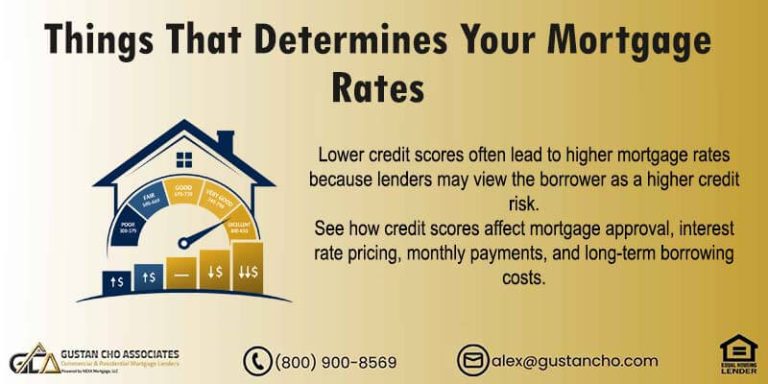
Credit profiles still dictate which loan options borrowers can choose from. Depending on credit score, the rate and terms of the loan will vary. A person with credit can still get a loan. People who want to buy a house should check their credit score. Make sure it is correct before they apply for a loan. They should also try not to get into debt.
Can Buyers Afford to Wait For Lower Mortgage Rates?
It is dangerous to expect lower rates. Mortgage rates can change without warning. Rates can fall, increase, or stagnate. Buyers should not concern themselves with the rate market rock bottom; they should be ready to buy when they can afford the loan.
Market Timing is Impossible
No one can predict how the economy will affect rates or who will buy what. Buyers should be ready to act on current options, understanding that rates and terms will remain unchanged.
Best Possible Approach is Being Ready
A serious buyer has everything in place to make an informed purchase. A home purchase is possible only when rates are uncharacteristically favorable to the buyer. The buyer can still purchase a home with uncharacteristically favorable rates, and favorable rates are always possible.
Have Your Mortgage Numbers Reviewed
While mortgage rates are trending downward, your personal mortgage rates will be based on your complete loan profile. At Gustan Cho Associates, we analyze your credit, income, debt, down payment, and loan options to help you understand your potential mortgage scenarios. For a mortgage options assessment, call Gustan Cho Associates at 800-900-8569, text for a faster response, or email gcho@gustancho.com.
Loan Options to Consider as Rates Decrease
As mortgage rates decrease, it is even more important to evaluate multiple loan options. A variety of factors will determine the best loan option, including credit score, down payment, payment status for military service, income, location, and the type of property and goals you have in the long term.
FHA Loans
An FHA Loan may provide options for borrowers with low credit scores, higher debt-to-income ratios, and lower or no down payment. FHA loans require mortgage insurance; thus, a borrower should evaluate the total payment, including FHA insurance.
VA Loans
Borrowers who are veterans, active-duty service members, or eligible surviving spouses may consider VA loans as a zero-down-payment option with no monthly mortgage insurance. VA loans are an option based on VA loan requirements and lender flexibility in determining credit history, income, and residual income.
Conventional Loans
Borrowers may consider conventional loans as an option with stronger credit and mortgage insurance if they have sufficient equity in the property and wish to avoid FHA insurance. Conventional loans will also assist borrowers with high, stable incomes who can provide adequate down payments.
USDA Loans
For eligible buyers looking to purchase in rural and suburban areas, USDA loans can be an option. An attractive feature is the potential of having no down payment. USDA loans come with requirements, including limits on income, property location, credit, and underwriting.
Non-QM Loans
If an individual cannot meet the requirements of a traditional mortgage, then a Non-QM loan can be an option. This is especially true for the self-employed, those who need to provide income to a bank in other ways, those who invest in property, and those with one-of-a-kind income. While Non-QM loans are accessible, they come at a steep cost.
How to Lock a Mortgage Rate When Rates are Moving
To safeguard a borrower from ever-changing market conditions, a mortgage rate can be locked for a designated period. A lender is obligated to honor the locked rate if the loan is locked and closed within the lock period with no changes.
Lock Periods Matter
A rate can be locked for 15, 30, 45, or 60 days, with the cost increasing as the period lengthens. The buyer must choose a lock that provides enough time for all work to be completed before closing the loan. This work includes the underwriting, the appraisal, and satisfying all closing requirements.
Locked Rates are not Immune to Changes.
When you are trying to get a loan you have to be careful because the interest rate can change. This can happen if your credit score changes or if you want to borrow money. You should not take on debt or change jobs while you are waiting for the loan.
Common Borrowing Mistakes at Rate Lows

Sometimes people get excited when interest rates go down. They think they can save money by getting a loan with a rate.. It is better to think carefully before you make a decision.
Only Looking at the Rate and Not the Loan
Most lenders say they have interest rates but this is not always true. They usually say this because they think you have credit and you are putting a lot of money down on the house. You need to look at all the costs of the loan including the payment and how much you will pay in the long run.
Ruining Loan Approval with New Debt
Closing on a new car, new credit cards, new furniture on credit, or a new, increased limit credit card can alter an automated underwriter’s calculations. All of these will likely increase your Debt-to-Income ratio, which will lead to a decline in your mortgage approval.
Delaying the Update of Your Pre-Approval
Pre-Approvals that were good yesterday will likely be bad tomorrow if any of the following change: income, rate, credit, debts, or assets. Pre-Approvals need to be updated as soon as a borrower is ready to make an offer, especially if market conditions change.
Where Are Mortgage Rates Headed with Unemployment Numbers and the Recent Government Shutdown
Nobody can predict where mortgage rates are headed. The unemployment numbers seem very inaccurate. This is because so many people gave up looking for work and millions are not reporting their unemployment or are underemployed. With the recent federal government shutdown, the uncertainty has been greater than ever before. The new Federal Reserve Board Chair Kevin Warsch seems confused at best. He also seems more like he is totally lost and needs to think things through before he makes statements like he has been doing. His statements shake up the whole mortgage markets and affect the economy due to his uncertainty.
Actions of the Federal Reserve Board
The Federal Reserve Board may still restrict bond purchasing in December, but who knows. It all depends on how many jobs are added to the U.S. economy, economic growth, inflation figures, and unemployment numbers.
Federal Reserve Board Chairman Kevin Warsh is expected to recommend an interest rate drop: We are predicting that the mortgage markets will be extremely volatile from now and throughout 2027.
Mortgage Rates Have Recently Been Dropping may be great news for home buyers. When Mortgage Rates Have Recently Been Dropping may also spike up the value of homes nationwide
How Gustan Cho Associates Helps Borrowers in a Changing Rate Market
A confusing rate market is frustrating for borrowers and homeowners alike. Gustan Cho Associates is ready to help with the borrower’s full file, not just one isolated advertised rate, and focuses on all of the borrower’s options.
The important thing is to think about whether you can really afford the loan. You need to consider how debt you have how much money you make and what you own.
Some people, with credit might want to look at different types of loans like FHA or VA loans. We may need to look more closely at your finances if you have weak credit, higher DTI ratios, recent credit events, self-employment income, or income documented in an atypical way. A more comprehensive analysis may be required. The right loan strategy considers your complete mortgage profile.
Final Thoughts on Mortgage Rates Dropping
Mortgage rates have been dropping, with positive effects for Homebuyers and Homeowners alike. The possibility of improved monthly payments and a stronger DTI result in more options for borrowers who previously could not afford a loan. Borrowers should look beyond recent rate changes. The better option is to perform a complete mortgage profile analysis and fully compare the options to understand the cost of each. The cost of a loan can change quickly, and the most optimal choice for a borrower is to be fully prepared.
Talk to a Mortgage Expert Today
Gustan Cho Associates can help you if you are buying, refinancing, or trying to qualify after being denied by others. e have different types of loans including FHA, VA and conventional loans. If you want to talk to someone about a loan you can call Gustan Cho Associates at 800-900-8569. Send a text message. You can also send an email to gcho@gustancho.com. We are available to talk every day on weekends and holidays.
Frequently Asked Questions About Falling Mortgage Rates
Will Mortgage Rates Keep Going Down?
We do not know if interest rates will keep going down. They might go down more. They might start going up. It depends on what’s happening in the economy. Of waiting for rates to go down you should think about whether you can afford a loan right now.
Is it a Good Idea to Buy a House?
It might be an idea to buy a house now if you can afford the monthly payment and you are ready to buy a house.
How Much is the Effect of a Lower Mortgage Rate?
A lower mortgage rate will save more or less, depending on the amount financed, the loan term, and the size of the lower rate. Small improvements in the rate will yield savings on the monthly payment. Rate inquiries should include a payment estimate.
Is it a Good Idea to Lock in My Mortgage Rate Now?
Locking in your rate depends on how you feel about current rates versus how you expect the rate market to move. The payment may be preferable to the market’s uncertainty if you can close soon. If you do not lock in your rate, the market may improve, but you could also end up locking in a higher rate.
Can I Refinance After I Buy if Mortgage Rates Drop?
You can try to refinance your loan if you meet the requirements. The lender will look at your credit score how money you make and how much your house is worth. They will also consider how much it will cost to refinance the loan.
Do Lower Interest Rates Make it Easier to Get a Loan?
Lower interest rates can make it easier to get a loan because your monthly payment will be lower.. You still need to have good credit and meet the other requirements. Just because the interest rate is lower it does not mean you will automatically get a loan.
Why is My Mortgage Rate So Different from the Average?
Averages are not personal quotes. Your rate is the product of your credit score, down payment, loan amount, property type, who lives in the property, what loan you are using, your DTI, discount points, and who you get the loan from. This is why two people can get different mortgage rates the same day.
This Guide on Mortgage Rates Have Recently Been Dropping Was Updated on June 4, 2026.
See How Much Home You Can Afford With Today’s Rates
Rates change buying power fast. Get a realistic payment estimate (taxes, insurance, HOA included) and a safe price range before you shop.