Managing debt in 2026 can feel stressful, especially when credit card balances, loan payments, interest charges, and everyday living costs keep rising. The good news is that most debt problems become easier to handle with the right plan. By listing what you owe, creating a realistic budget, paying high-interest debt first, and avoiding missed payments, you can take back control of your finances. This guide explains the key steps to manage your debt in 2026 and protect your credit while working toward long-term financial stability.
What Does It Mean To Manage Your Debt?
Managing your debt means knowing exactly what you owe, making payments on time, reducing high-interest balances, and avoiding new debt that worsens your financial situation. It does not always mean paying everything off overnight. For most people, debt management is a step-by-step process that helps lower stress, protect credit, and create a more stable monthly budget. A good debt-management plan should help you answer important questions:
- How much total debt do I owe?
- Which debts have the highest interest rates?
- Which payments are due first?
- Can I afford my current monthly payments?
- Am I falling behind or just trying to get ahead?
- Do I need professional help, or can I handle this myself?
Once you know the answers, it becomes easier to choose the right debt payoff strategy.
Why Debt Management Matters In 2026
Debt management matters in 2026 because many consumers are dealing with higher living costs, expensive credit card balances, student loans, auto loans, medical bills, and rising monthly obligations. When debt is not managed properly, minimum payments can eat up too much income, making it harder to save money, qualify for financing, or handle emergencies. A strong debt plan can help you:
- Lower the amount of interest you pay
- Avoid missed payments and late fees
- Protect or rebuild your credit score
- Improve your debt-to-income ratio
- Reduce financial stress
Prepare for future goals, such as buying a home or refinancing a mortgage The goal is not just to pay bills. The goal is to regain control of your money.
What Are The Best Steps To Manage Your Debt In 2026?
The best steps to manage your debt in 2026 start with a clear look at your full financial picture. Before calling a debt relief company, applying for a consolidation loan, or considering bankruptcy, you should first understand exactly what you owe, how much interest you are paying, and which payments are creating the most pressure on your monthly budget.
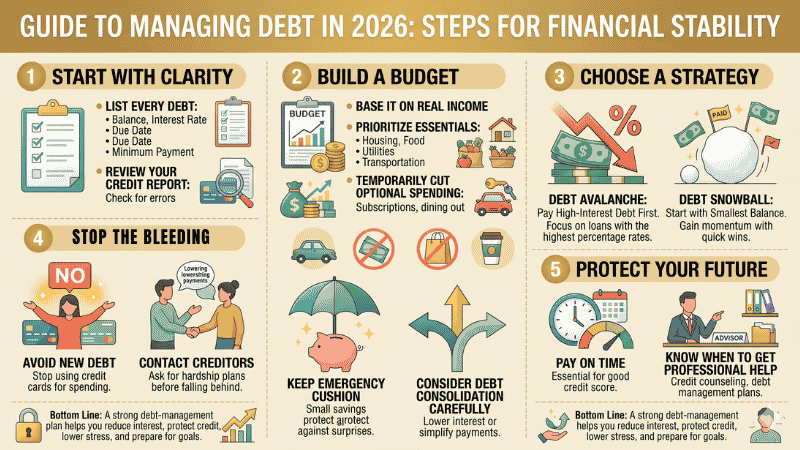
Most consumers can begin with simple debt-management steps they can do on their own. Start by listing every debt, including credit cards, personal loans, auto loans, student loans, medical bills, collections, and mortgage payments. Write down the balance, interest rate, minimum payment, due date, and whether the debt is secured or unsecured.
Once you know what you owe, review your interest rates and payment terms. High-interest debts, especially credit cards and short-term loans, usually cost the most over time. These debts should often be prioritized first because they can grow quickly if you only make minimum payments. Next, build a realistic budget based on your actual income and necessary monthly expenses. Your budget should cover housing, utilities, food, transportation, insurance, and minimum debt payments first. After that, any extra money can be used to pay down debt faster. A smart debt plan usually includes these basic steps:
Step 1: List Every Debt You Owe
Begin by documenting all your debts in one location. This should include credit cards, personal loans, auto loans, student loans, medical bills, collections, tax liabilities, mortgage payments, and any amounts owed to family or friends. For each debt, make note of the balance, interest rate, minimum monthly payment, due date, and the name of the lender or creditor. These steps to manage your debt will provide a clear overview of what requires your immediate attention.
Step 2: Review Your Credit Report
Your credit report can show debts, late payments, collections, charge-offs, and possible errors. Reviewing your credit report helps you confirm which accounts are being reported and whether any inaccurate information needs to be disputed. Checking your credit report is also important if you plan to apply for a mortgage, refinance, auto loan, or personal loan in the future.
Step 3: Build A Budget You Can Actually Follow
A successful debt plan depends on having a realistic budget. Start by figuring out how much money you make each month. Then, take away your must-have expenses like rent, bills, groceries, transportation, insurance, and the basics for any debts you have. After covering these essential costs, figure out how much extra money you can allocate for debt repayment each month. The best budget isn’t necessarily the strictest; it’s the one you can consistently stick to without falling further behind. These are important steps to manage your debt effectively.
Step 4: Pay High-Interest Debt First
High-interest debt, like credit card debt, can pile up fast if you’re only paying the minimum each month. Paying extra toward the highest-interest debt can help reduce the total interest you pay over time. This is often called the debt avalanche method. It may save more money than paying smaller debts first, but it requires discipline and patience.
Step 5: Consider The Debt Snowball Method If You Need Motivation
The debt snowball method is all about starting with your smallest debts. You pay those off first while just making the minimum payments on everything else. Once you eliminate the smallest debt, you take the payment amount from that debt and apply it to the next smallest one. While this approach may not be the most efficient, it is one of the most effective steps to manage your debt, giving a feeling of achievement as debts are settled more rapidly.
Step 6: Avoid Taking On New Debt
While paying down debt, avoid opening new credit cards, financing furniture, buying a more expensive car, or taking on unnecessary loans. New debt can erase your progress and make your budget harder to manage. The goal is to stop the financial bleeding before speeding up repayment.
Step 7: Contact Creditors Before You Fall Behind
If you’re having difficulty meeting your payment obligations, it’s a good idea to contact your creditors promptly. They might offer hardship plans, temporary payment reductions, alterations to due dates, lower interest rates, or other alternatives as part of the steps to manage your debt. Always remember to obtain any agreement in writing before relying on it.
Step 8: Consider Debt Consolidation Carefully
Debt consolidation may help if it lowers your interest rate, simplifies your payments, and helps you pay off your debt faster. Common options include personal loans, balance transfer credit cards, home equity loans, and HELOCs. However, debt consolidation can backfire if you continue using the credit cards or loans you just paid off. The goal is to replace expensive debt with a better repayment plan, not create more available credit to spend again.
Step 9: Protect Your Credit While Paying Down Debt
Timely payments are important for safeguarding your credit. Late payments, elevated credit card balances, collections, and charge-offs can impede your ability to secure financing in the future. To protect your credit while implementing steps to manage your debt, concentrate on making at least the minimum payment on every account and use any extra funds to tackle one debt at a time.
Step 10: Know When To Get Professional Help
Some debt problems require professional help. If you’re dealing with money issues, think about credit counseling, debt management plans, debt settlement, or even bankruptcy, depending on what you’re going through. Professional help may make sense if you cannot afford minimum payments, are facing collections, have been sued by a creditor, are considering bankruptcy, or need guidance before applying for a mortgage.
Bottom Line On Managing Debt In 2026
Managing debt in 2026 starts with clarity. Know what you owe, build a realistic budget, pay high-interest debt first, avoid new debt, and ask for help before the situation gets worse. A strong debt plan can help you protect your credit, reduce stress, and move closer to long-term financial stability.
Why Managing Debt Matters More In 2026
Debt becomes harder to manage when interest rates are high, everyday living costs rise, and minimum payments take up too much of your monthly income. Many consumers are dealing with credit card balances, auto loans, student loans, medical bills, personal loans, and mortgage payments at the same time. Without a clear plan, debt can quickly become overwhelming. A strong debt-management plan can help you reduce interest charges, avoid missed payments, protect your credit score, and improve your overall financial stability. It can also help you prepare for future goals, such as buying a home, refinancing a mortgage, qualifying for better loan terms, or building emergency savings. Handling debt involves more than simply making monthly payments; it requires taking charge of your finances before late fees, elevated balances, collections, or increasing monthly payments lead to larger issues. By following essential steps to manage your debt and organizing what you owe, along with developing a practical payoff strategy, you can open up more financial options for yourself in 2026 and beyond.
Take First Step Toward Making Your Dream A Reality
Apply Now And Get recommendations From Loan ExpertsBuild A Budget Based On Your Real Income
A budget only works if it is based on your real income and real monthly expenses. Many people fail at budgeting because they use numbers they hope will work rather than those that match their actual bank account. If you are already struggling with debt, a basic 50/30/20 budget may not be realistic. You may need a temporary hardship budget that cuts back sharply on optional spending until your debt is under control. Nail down your monthly take-home pay. Then list your necessary expenses, minimum debt payments, and any irregular costs that come up during the year. The goal is to see how much money is truly available after your basic needs are covered.
Start With Housing, Food, Utilities, And Transportation
Your budget should first protect the basics. These include your rent or mortgage payment, food, utilities, transportation, insurance, and minimum payments on debts. These are the expenses that keep your household stable and help you avoid bigger financial problems. If your basic expenses exceed your income, your debt problem may require more than simple budgeting. You may need to contact creditors, look for hardship options, increase income, reduce major expenses, or speak with a credit counselor.
Cut Optional Spending Temporarily
When debt is creating pressure, optional spending may need to be reduced for a season. This can include subscriptions, dining out, entertainment, shopping, travel, upgrades, delivery apps, and other non-essential expenses. This does not mean you can never enjoy your money again. It means you are creating temporary breathing room so you can stop falling behind, avoid late fees, and make faster progress on debt.
Use Extra Cash To Attack High-Interest Debt
Once your basic expenses are covered, use extra money to pay more than the minimum on high-interest debt. Credit cards, personal loans, payday loans, and other high-rate balances can become very expensive if they are not paid down aggressively. Even a small extra payment can help if you make it consistently. The key is to choose one priority debt and focus your extra money on that account while continuing to make minimum payments on all other accounts.
Keep A Small Emergency Cushion
Do not put every extra dollar toward debt if it leaves you with no emergency cushion. Without savings, one car repair, medical bill, or income disruption can force you to use credit cards again. Start with a small emergency cushion that can cover minor surprises. Once that cushion is in place, you can put more money toward debt with less risk of falling back into the same cycle.
Can Biweekly Payments Help You Pay Debt Faster?
Biweekly payments can help some borrowers pay debt faster, especially on mortgages, auto loans, and other installment loans. However, it is important to understand the difference between paying twice a month, paying every two weeks, and using a true biweekly payment plan. These are not always the same thing.
Twice A Month Payments
Twice a month means you make two payments each month, usually on set dates such as the 1st and 15th. This equals 24 half-payments per year, or the same as 12 full monthly payments. This may help with budgeting, but it does not create an extra payment each year unless you pay more than the required monthly amount.
Every Two Weeks Payments
Every two weeks means you make a payment every 14 days. Since there are 52 weeks in a year, this results in 26 half-payments, totaling 13 full monthly payments per year. That extra full payment can reduce the principal balance faster and lower the total interest paid over time.
True Biweekly Payments
A true biweekly payment plan means the lender applies each payment correctly and credits the extra amount toward the loan balance. This can shorten the loan term if the payments are applied to principal and there are no unnecessary fees. Before setting up a biweekly payment plan, ask your lender these questions:
- Will each payment be applied when received?
- Will the extra payment go toward principal?
- Are there setup fees or monthly fees?
- Can I cancel the plan if needed?
- Will this change my regular due date or payment agreement?
Biweekly payments can be beneficial, but it’s essential that the lender applies these payments correctly. Before entering any payment plan, borrowers should take steps to manage your debt by confirming how their payments will be credited. For those with mortgages, this issue is also closely linked to the calculation of monthly mortgage payments, the method of interest charging, and the effect of making additional principal payments on the loan balance over time.
Bottom Line On The Steps To Manage Your Debt In 2026
Managing debt starts with knowing exactly what you owe, building a realistic budget, paying high-interest balances first, and avoiding new debt while you work through the plan. Some borrowers can handle debt repayment on their own. Others may need help from a credit counselor, a debt management professional, a bankruptcy attorney, or a mortgage expert.
The most important step is to act early. Missed payments, high credit card balances, collections, and rising debt can hurt your credit and make it harder to qualify for future financing. With the right plan, you can lower stress, protect your credit, and move closer to financial stability.
If your debt is affecting your ability to qualify for a mortgage, refinance, or buy a home, Gustan Cho Associates can help review your situation and explain the options available to you.
FAQs About Steps To Manage Your Debt
What Are The First Steps To Manage Your Debt?
The first steps to manage your debt are to list every account you owe, write down each balance, interest rate, minimum payment, and due date, then compare those payments to your monthly income. Once you know the full picture, you can build a budget, pay high-interest debt first, and avoid taking on new debt while you work through the plan.
What Is The Best Way To Pay Off Debt Faster?
The best way to pay off debt faster is to make minimum payments on all accounts and put extra money toward one debt at a time. The debt avalanche method focuses on the highest-interest debt first, which can save the most money. The debt snowball method is all about tackling the smallest balance first. This approach can really boost your motivation as you see those small wins add up.
How Can I Manage Debt If I Cannot Afford My Payments?
If you cannot afford your payments, review your income and expenses first, then contact your creditors before you fall further behind. Ask about hardship plans, lower payments, due date changes, or temporary relief options. The CFPB recommends adding up income and expenses, calling the credit card company, considering credit counseling, and being careful with debt settlement companies if you cannot pay credit card bills.
Is Debt Consolidation A Good Step To Manage Your Debt?
Debt consolidation can be a good step to manage your debt if it lowers your interest rate, combines multiple payments into one easier payment, and helps you pay off debt faster. However, it can backfire if you use the paid-off credit cards again or convert unsecured debt into secured debt against your home. The CFPB says there are several ways to consolidate credit card debt, but consumers should understand the risks before moving forward.
Does Managing Debt Help Your Credit Score?
Managing debt can help your credit score over time when you make payments on time, lower credit card balances, avoid unnecessary new credit, and correct errors on your credit report. Running late on payments, piling up credit card debt, having stuff sent to collections, or getting charge-offs can really mess with your credit score. This makes it much harder to get approved for loans or a mortgage down the line.
When Should I Get Professional Help With Debt?
You should consider professional help if you cannot afford minimum payments, are already behind, are facing collections, have been sued by a creditor, or feel unsure about your options. Credit counselors can help consumers manage money and debt and create a budget to pay down balances, according to the CFPB.
This article about “Steps To Manage Your Debt Before It Gets Worse” was updated on April 4th, 2026.