Some borrowers file amended tax returns to correct errors, update income, or reflect missed deductions, particularly when applying for a mortgage with amended income tax returns. When that happens, mortgage lenders may need to review both the original and amended returns to determine qualifying income. The key question is not whether an amendment exists, but how the change affects income, documentation, and underwriting timing.
Key Takeaways
Amended tax returns do not automatically stop you from qualifying for a mortgage, but they can trigger extra lender review. What matters most is how the amended return changes your income, whether the lender can verify the update, and whether the new information affects your debt-to-income ratio or overall file strength.
Borrowers should expect lenders to review the original return, the amended return, proof of the amendment, and any IRS payment agreement if additional taxes are owed. If the amended return changes self-employed income, business deductions, or net profit, the lender may need more documentation before issuing final approval.
The biggest risk is usually not the amended return itself. The bigger issue is timing, incomplete paperwork, or unexplained differences between the original and amended tax records. Being transparent early in the mortgage process can reduce delays and help the lender calculate qualifying income more accurately.
For most borrowers, the best approach is simple: provide complete records, explain the reason for the amendment clearly, and be prepared for added underwriting review if the change affects income. A mortgage with amended income tax returns is possible, but clean documentation and consistency matter.
Can You Amend Income Tax Returns?

Each year, when you do your tax returns, you are operating under the impression that everything is accurate and that you are claiming all the tax debt you owe. However, mistakes can be made, omissions occur, and there are times when you need to amend your returns. What if this has happened and you have not been aware but now wish to purchase a home? If this is the case, you may need to amend your tax return in order to get the most accurate information for your mortgage application.
Making Corrections on Your Tax Returns To Qualify For a Mortgage
When you file your returns every year, the IRS will allow you to make corrections and amendments. If you discover that you made a mistake on your tax return, you can file an amended return to correct the error. And if you need to adjust your income, deductions, or credits, an amended return can also help with that. If you’ve filed an amended tax return, you may have questions about how this will impact your ability to get a mortgage.
Is Amended Income Tax Returns To Qualify For Mortgage Against The Law?
If you are legitimately amending your income tax returns because you have under-declared your unreimbursed business expenses, it is not illegal. However, if you are amending your tax returns to inflate your income and then expect to revise your tax returns again after you close on your mortgage, then that would be questionable.
Is Qualifying For Mortgage With Amended Income Tax Returns Illegal?
Amending your tax return is not a negative process in and of itself. It can prove to lenders that you are financially aware and taking steps to report any changes in your income or expenses. This is also helpful if you have had a past life-changing event that impacted your finances, such as a significant medical event or a job loss.
Other Reasons For Amending Income Tax Returns To Qualify For a Mortgage
Another example is if you initially filed your taxes as single, but you have since gotten married, an amendment could actually help you qualify for a mortgage. This is because lenders typically use a higher income threshold for couples than they do for single borrowers.
What you Need to Know When Applying For Mortgage With Amended Income Tax Returns?
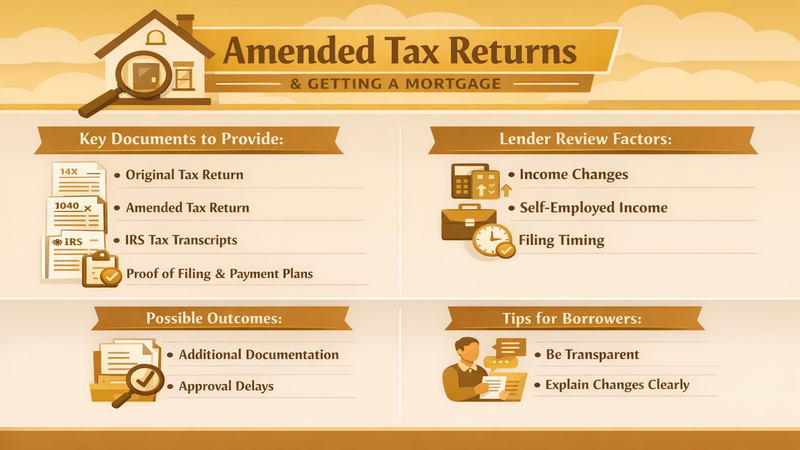
Filing a mortgage with amended income tax returns does not automatically disqualify you from obtaining a mortgage, but it can influence the underwriting process. Lenders may require a review of the original return, the amended return, proof of filing, and any associated payment plans. The effect on your mortgage application depends on how the amendment alters your income, the timing of the filing, and the specific loan program involved.
Which Tax Returns Goes To Lender When Applying For Mortgage With Amended Income Tax Returns
Typically, a lender will want to see copies of your tax returns for the past two years. Once you get your amended return, you will need to provide that as well. If you have amended tax returns for both years, you will need to provide both. Lenders will then use the income information from your amended return to qualify you for a mortgage.
In most cases, if your amended return shows a lower income than your original return, it shouldn’t impact your ability to qualify for a mortgage.
This is because lenders typically use your average income from the past two years to determine whether you are eligible for a loan. This is why it is essential to have a loan officer with whom you have a good relationship. Every lender is different, and you will want to show the loan officer the amended return so that they can advise you and give you an idea of how this might impact your ability to qualify for a mortgage.
If you’re considering filing an amended tax return, remember that it could impact your ability to get a mortgage. But in most cases, the impact will be positive. So if you need to make changes to your return, don’t hesitate. It could help you qualify for the loan you need to buy your dream home.
Applying For Mortgage With Amended Income Tax Returns For Self-Employed Borrowers
You may need an amended tax return if you are self-employed or have income from investments. Lenders typically require two years of amended tax returns to verify your income and calculate your debt-to-income ratio (DTI). Self Employment is complicated, and there is a ton of documents that you need to keep to support your business.
Documents Required for a Mortgage With Amended Income Tax Returns
When applying for a mortgage with amended income tax returns, lenders may ask for more than just the updated return. In many cases, borrowers should be prepared to provide the original tax return, the amended tax return, proof of the amendment filing, and IRS transcripts, if available. If the amendment resulted in taxes due, the lender may also request a copy of any IRS payment agreement and proof that payments are current.
Self-employed borrowers may need to provide additional records because lenders often review business income closely when tax returns are amended. These documents can include profit and loss statements, business bank statements, year-to-date income records, and other documents that help explain changes in income or expenses.
A letter of explanation may also be required so the lender can understand why the return was amended and whether the change affects qualifying income.
The documents you need will depend on the loan program, what type of income you have, and where you are in the mortgage process. Providing complete and accurate records early can help reduce underwriting delays and prevent surprises before closing.
Qualifying For Self-Employed Mortgage With Amended Income Tax Returns
Self-employed borrowers may face closer review if an amended return changes business income, expenses, or net profit. Lenders often look for consistency, documentation, and a clear explanation of the change. If you also receive income from assets or investments, the lender may review whether that income is stable and usable under the loan program’s guidelines.
Conclusion: What Amended Tax Returns Mean for Mortgage Approval
Mortgage applications can still be considered even when you have amended income tax returns. What is crucial is how the amendments impact your income, the lender’s ability to document the changes clearly, and if the revised information raises any new underwriting questions.
In some situations, having a mortgage with amended income tax returns may have a minimal effect. In contrast, in others, it may trigger additional document requests, a closer inspection of your income, or delays in final approval.
Borrowers seeking a mortgage with amended income tax returns should be ready to provide the original return, the amended return, proof of the amendment filing, and any relevant IRS payment agreements if taxes are owed. Self-employed borrowers, in particular, may undergo a more thorough review because lenders typically scrutinize business income, expenses, and consistency over the years. The key is to be transparent from the outset, so the lender can accurately evaluate the changes and avoid surprises later in the process.
Frequently Asked Questions About Mortgage with Amended Income Tax Returns
Can You Get a Mortgage with Amended Income Tax Returns?
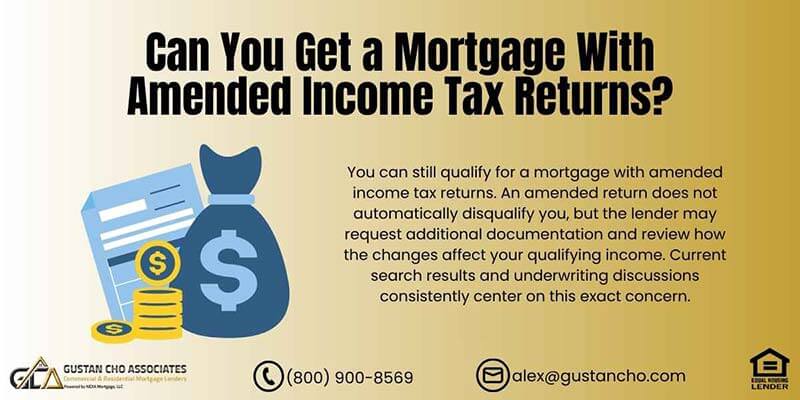
- Yes, you can still qualify for a mortgage with amended income tax returns. An amended return does not automatically disqualify you, but the lender may request additional documentation and review how the changes affect your qualifying income. Current search results and underwriting discussions consistently center on this exact concern.
Do Lenders Verify Amended Tax Returns with the IRS?
- Lenders may verify tax information through IRS transcripts when you authorize them to do so. The IRS Income Verification Express Service lets lenders access tax records with your consent, which is why amended returns can lead to additional review during underwriting.
Will an Amended Tax Return Delay Mortgage Approval?
- It can. If your amended return changes income, deductions, or the amount you owe, the lender may request additional documents before issuing final approval. Delays are more likely when the amendment was filed recently or when the updated information does not match the file the lender has already reviewed. This is a common concern in current search results about amended returns and mortgage approval.
What Documents do Lenders Need When a Tax Return was Amended?
- In many cases, lenders may ask for the original return, the amended return, proof that the amendment was filed, and any IRS payment agreement if additional taxes are owed. The exact document list can vary by lender and loan type, but borrowers should expect more documentation when an amended return affects qualifying income.
Do Amended Tax Returns Affect Self-Employed Mortgage Borrowers More?
- Often, yes. Self-employed borrowers are more likely to be affected because lenders rely heavily on tax returns to calculate usable business income. If an amended return changes write-offs, net profit, or business expenses, the lender may need to recalculate income and review whether that income is stable and likely to continue.
Should You Amend Your Tax Return During the Mortgage Process?
- That depends on why the return is being amended and where you are in the loan process. If you need to correct a legitimate error, transparency matters. But if a return is amended while the loan is being underwritten, it can trigger extra questions, updated income calculations, and possible delays.