The Feds announce rate cuts and this is a big deal, for people who own homes and those who want to buy a home. The Feds announce future rate cuts is something that homeowners and buyers will be watching closely. This one decision can make a difference in whether you save a lot of money on your mortgage or miss out on a chance to refinance at really low rates.
Before you decide to refinance your home you should think about a things. These things include your mortgage rate, how much you still owe on your house your credit profile, how much your home is worth the costs of refinancing and how long you plan to live in your home.
The Federal Reserve is changing its plans because the economy is complicated now. So this is a time to learn what the Feds announce future rate cuts mean for you and how they can affect your dream of owning a home.
Why Is Everyone Talking About the Fed’s Rate Cuts?

The Federal Reserve uses interest rates to keep the economy stable and secure. When the economy is slow the Federal Reserve can cut rates to help it grow. For people who borrow money this means they can get mortgages and loans at rates, which can save them money.
The Federal Reserve said they might cut rates in the coming months. Why did the Federal Reserve say this?
The Central Bank is Looking to Support an Economy That Has Shown Mixed Signals:
- Inflation is slowing down. Still above the Federal Reserves target of 2 percent.
- Job growth remains steady. The Federal Reserve sees that wage gains have cooled.
- Global trade tensions have calmed down a bit compared to before. The Federal Reserve knows that there’s still a lot of uncertainty out there.
As the Federal Reserve deals with these challenges their decisions on cutting interest rates could have an impact on the financial world and directly affect the Federal Reserve and mortgage rates.
How Federal Reserve Rate Cuts Affect Mortgage Rates
When the Federal Reserve announces they’re cutting rates mortgage rates usually go down too. The Federal Reserves lower interest rates mean banks borrow money cheaply which often leads to lower mortgage rates for people, like homebuyers and homeowners.
What This Means for Homebuyers
If You’re Looking to Buy a Home Federal Reserve Rate Cuts Can:
- * Make monthly payments more affordable for homebuyers.
- * Help homebuyers qualify for a loan amount.
- * Create a competitive market as affordability improves for homebuyers.
What This Means for Homeowners
If you already own a home now may be the time to refinance your mortgage. Borrowers who locked in rates during 2023 could potentially save hundreds each month by refinancing into a lower rate.
Federal Reserve Rate Cut Signals: Should You Refinance Now. Wait?
While influenced by the Federal Reserves short-term rates mortgage rates are mainly determined by the bond market, inflation, investor demand and the 10-year Treasury yield. Therefore mortgage rates may change independently of the Federal Reserve actions either anticipating or responding to policy changes. As of June 4 2026 Freddie Mac reported rates of 6.48 percent for a 30-year fixed mortgage and 5.79 percent for a 15-year fixed mortgage. These rates were slightly lower than the week.
What Fed Rate Cut Signals Mean for Homeowners
The Federal Reserve Funds Rate is Not the Same as a Mortgage Rate
The Federal Reserve’s projections are estimates based on economic assessments and anticipated policy. The Federal Reserve acknowledges uncertainty about the future path of the federal funds rate. Reductions in the Federal Reserve’s rate can put pressure on borrowing costs.
However mortgage rates often adjust in anticipation of the Federal Reserve actions reflecting market expectations before changes. So when the Federal Reserve cuts rates it does not mean that mortgage rates will definitely go down for people like homebuyers and homeowners.
Why Is the Federal Reserve Thinking About Cutting Rates?
The Federal Reserve is considering a lot of factors including:
Slowing down inflation::
- The Federal Reserve raised rates a lot in 2022 and 2023 which helped to slow down inflation. However inflation is still a little higher, than the Federal Reserve wants it to be.
- If the Federal Reserve cuts rates now it can help keep the economy moving and make sure inflation does not get too high.
Global Economic Stability:
- The United States has made some new trade agreements and things are a little better with countries like China and the European Union.
- This has made the economy a bit more stable. However the Federal Reserve is still worried, about what might happen in the world economy.
Housing Market Challenges:
- Home prices went up a lot in 2023. Mortgage rates were very high which made it hard for people to buy homes.
- If the Federal Reserve cuts rates it might make it easier for people to buy homes.
Is This the Right Time to Buy or Refinance a home?
A lot of people are wondering if they should wait for rates or do something now. The truth is that it is hard to know what will happen in the market. Mortgage rates change every day because of what’s happening in the market and how investors are feeling. The Federal Reserve and the economy also affect mortgage rates.
Why You Shouldn’t Wait
Mortgage Rates Are Already Trending Down:
- Even before the Fed’s official announcement, mortgage rates began to soften later this year.
- Lenders anticipate rate cuts and often adjust pricing accordingly.
Your Financial Situation Matters:
- Mortgage rates are not the thing that matters when you want to buy a home or refinance your mortgage.
- Your credit score and how debt you have compared to your income are also very important. If these things are not in order waiting for rates will not help you.
Refinance Opportunities Are Limited:
- Homeowners with rates above 6% have a unique window to refinance before competition heats up.
- Don’t miss the chance to lower your monthly payments or tap into your home equity.
How to Prepare for Lower Rates
When the Feds announce future rate cuts, you want to be in a strong position to take advantage of better rates.
Here’s How to Prepare:
Check Your Credit Score:
Your credit score has a huge role in the interest rate you qualify for. Strive for a 700 or higher credit score to get the best offers.
If your Score is Below This, Consider:
-
- Paying down credit card balances.
- Correcting errors on your credit report.
- Avoiding new credit inquiries.
Save for Closing Costs:
- You should get your finances ready now so you can take advantage of rates when they come.
- This means having money saved up for things like closing costs.
Get Pre-Approved:
- A pre-approval shows lenders you’re serious and helps you lock in a rate before it changes.
- It also clarifies your budget.
The Current Mortgage Market
Mortgage rates are 6.25% for 30-year loans, which is lower than it was earlier this year. There are a reasons why rates are like this.
- * Lenders think the Federal Reserve might lower rates so they are already planning for that.
- * Not many people are buying homes so home prices are a bit lower.
- * More people are looking to refinance their homes because rates are lower.
Case Studies: Some people have already taken advantage of rates.
- Lisa refinanced her home loan. Saved $250 per month.
- Carlos and Maria were able to buy a home they wanted because they could get a loan.
- Mike refinanced the loan on a property and was able to invest in other things.
Factors on Mortgage Rates in Relation to Federal Rates
Is it Better to Refinance Now. Wait for More Favorable Rates?
- Refinancing decisions should be based on benefits from your current financial situation not on guessing about future rates.
Refinance if Savings Justify the Action
If a homeowner can save hundred dollars per month and the break-even point is short waiting might not be the best option. If rates stay good refinancing again might be possible depending on the program, equity and credit.
Waiting might be better if the new rate is a little lower and closing costs are high. If the break- period is several years refinancing for a small monthly payment reduction is usually not a good idea. Refinancing should be based on financial reasons, not reactions to what the media says about interest rates.
Avoid the Trap of Trying to Time Rates
The practical approach is to review your refinance numbers clarify your goals and decide which rate makes refinancing worthwhile.
Net Tangible Benefits of Refinancing
Refinancing your mortgage should give you some benefits, such as monthly payments, a shorter time to pay off your loan not having to pay private mortgage insurance or getting some cash through a cash-out refinance. The current mortgage rate is what you compare everything to. You need to look at the rate the cost of refinancing and what your monthly payments will be.
Usually refinancing to a rate isn’t a good idea if it costs a lot. Estimate monthly payments (principal and interest) mortgage insurance, escrow amounts, closing costs and loan duration.
The break- point is the time needed for monthly savings to cover refinancing costs. For example if refinancing costs $4,000 and monthly savings are $200 the break- point is 20 months. If you plan to sell before then refinancing is usually not an idea. Staying in the home for years might make refinancing a good idea. Refinancing into a 30-year loan usually lowers monthly payments but restarts the loan term. This might help cash flow. Increase total interest paid. To save interest term a shorter loan term might be better if the monthly payment fits your budget.
Refinance Options When Rates May Drop Later
If you do a rate-and-term refinance you replace your mortgage with a new loan that has a lower rate, a lower payment or a different term. You can also switch from a loan with a rate that can change to one with a fixed rate. This option is usually the best, for homeowners who do not need to get cash from the value of their home.
Cash-Out Refinance Options
Cash-out refinance is for homeowners with equity in their homes. The cash can be used for debt consolidation, home renovations or an emergency fund. Since it increases your mortgage balance it should be evaluated carefully.
Monthly payments, closing costs and interest should be calculated based on the loan amount, term and rate. For those with an FHA loan an FHA Streamline Refinance offers a process, with minimal documentation usually to reduce payments or get a better FHA rate. This does not mean there are no costs. Borrowers should assess mortgage insurance, closing costs and the net benefit.
VA IRRRL Refinance
Refinancing FHA to Conventional Loans
Homeowners who fixed their credit and then waited for interest rates should check their current mortgage details figure out how much refinancing will cost and see when they will break even.
Gustan Cho Associates can help you decide if refinancing is an idea right now. You can call them at 800-900-8569 or email gcho@gustancho.com for a review of your mortgage. If you wait to refinance you might get a deal if interest rates go down but it could hurt you if your finances get worse. The Importance of Credit in Refinancing
The Importance of Credit in Refinancing
Getting loans or credit cards can also affect your debt-to-income ratio, which could make it harder to refinance especially if your income does not change.
After you have a mortgage if the value of homes in your area goes down it could affect your ability to refinance. Changes in mortgage rules and what investors require can also make it harder for people who already have loans to refinance. Someone who can refinance today might not be able to in the future.
When it is Worth it to Refinance a Loan Today
Homeowners who have a lot of equity in their home can switch from an FHA loan to a loan and stop paying mortgage insurance every month. Sometimes you do not need a lower interest rate to lower your monthly payments.
Refinancing can also help families deal with rising expenses handle a pay cut or free up money for things they want to do.
Transition Away from an Adjustable-Rate Mortgage
Closing Costs
You Are Extending the Loan Too Much
Avoid New Debt Before Applying
You need to know how much your home is worth and how much you still owe on your mortgage. This information is important for deciding what to do about refinancing your mortgage. If you have equity in your home you might be able to get a better interest rate. You might even be able to stop paying mortgage insurance. Do not make decisions about refinancing your mortgage based on things you heard from people or guesses. You should base your decision on your financial situation and what you think is best, for your refinancing needs.
Mortgage Rates Move for Many Reasons
There are a lot of things that can affect mortgage interest rates, such as
- * inflation
- * bond yields
- * how much investors want to buy
- * what lenders charge
- * the economy
Even if the Federal Reserve lowers interest rates it does not always mean you will get a better deal on your loan.
Personal Loan Files Create Different Rates
The best time, to refinance is when you can see that it will really help you the costs make sense and it fits with your goals. If it will take long to recover the costs of refinancing or the savings are small or you plan to sell your home soon it might be better to wait.
Do not just guess what you should do. Look at your mortgage compare it to what is available today and make a decision based on how much you can save how long it will take to break even the terms of the loan and the total costs. While what the Federal Reserve does is important your own financial situation should be your priority.
See if You Can Get a Net Tangible Benefit by Refinancing
Do Not Wait for the Perfect Time
The time to do something is now. If you wait for mortgage rates to go down more you might miss out on some great deals that are available today. Whether you are buying your home moving to a new one or refinancing the one you have it is a good idea to stay on top of things so you can get the best mortgage rate possible.
At Gustan Cho Associates we help people who are borrowing money navigate the changing mortgage market. Our team is ready to help you figure out what your options are and get you the mortgage rate we can. You can call us today at 800-900-8569 send us a text message for an answer or email us at gcho@gustancho.com to get started.
When you match your goals with what is happening in the market you can take advantage of the good things that are coming. Do not let the market tell you what to do. Be proactive stay informed and make your move today.
Frequently Asked Questions About the Fed Announce Future Rate Cuts:
What Happens When the Federal Reserve Says They Will Lower Interest Rates?
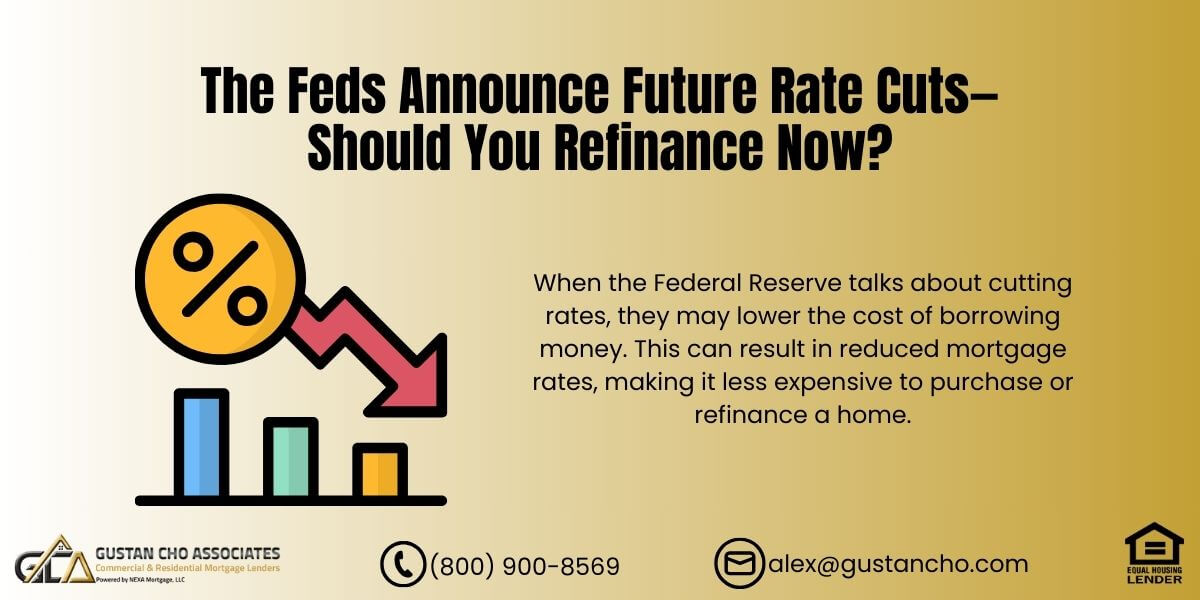
When the Federal Reserve talks about lowering interest rates it might make it cheaper for people to borrow money. This can make mortgage rates go down which makes it less expensive to buy or refinance a home.
How Do Lower Interest Rates Affect Mortgage Rates?
When the Federal Reserve says they will lower interest rates mortgage rates often go down too. Banks can borrow money at a rate and then they can offer lower mortgage rates to people who want to borrow money from them.
Is Now a Good Time to Refinance My Mortgage?
Yes it is. If the Federal Reserve says they will lower interest rates soon refinancing your mortgage might help you save money by lowering your payments. You need to make sure your credit is good and your finances are strong so you can get the mortgage rate possible.
Can I Get a Loan if Interest Rates Go Down?
Yes you can. When interest rates are lower your monthly payments are smaller. This means you might be able to get a loan, which can help you buy a nicer home.
Should I Wait for Interest Rates to Go Down More?
It is not an idea to wait. Mortgage rates can change quickly. Lenders might change their rates if the Federal Reserve lowers interest rates. You should act when you find a mortgage rate that works for you.
Why is the Federal Reserve Lowering Interest Rates?
The Federal Reserve is trying to help the economy by lowering interest rates. They do this when inflation is slowing down jobs are not growing fast and global trade is not doing well. When the Federal Reserve lowers interest rates they are trying to keep the economy strong.
How Low Can Mortgage Rates Go?
It is hard to say but mortgage rates might go below 6% if the Federal Reserve lowers interest rates and the economy does well.
How Do Lower Interest Rates Affect People Who Want to Buy Homes?
Lower interest rates make monthly payments more affordable so more people can buy homes. It also helps people qualify for loans and it makes sellers price their homes more competitively.
What Should I Do if I am Not Ready to Buy or Refinance a Home Yet?
You should start improving your credit saving money for closing costs and paying down your debts. When the Federal Reserve lowers interest rates you will be ready to take advantage of the deals that are available.
This Guide About “The Feds Announce Future Rate Cuts—Should You Refinance Now?” Was Updated on June 4, 2026.
Take First Step Toward Making Your Dream A Reality
Apply Now And Get recommendations From Loan Experts