Choosing a loan officer can have a major impact on your homebuying experience. A good loan officer helps you understand your mortgage options, gives you accurate numbers, communicates clearly, and keeps your loan on track from pre-approval to closing. A poor loan officer can cause delays, confusion, unexpected costs, or even a denied loan. If you want a smoother mortgage process, choosing the right loan officer is one of the most important decisions you will make.
Key Takeaways
- Communication matters as much as the interest rate when choosing a loan officer.
- A good loan officer clearly explains your loan options, fees, and next steps.
- Compare two or three loan officers before deciding who to trust with your mortgage.
- Ask for a real pre-approval review, not just a quick quote or basic pre-qualification.
- Make sure you understand your estimated payment, closing costs, and cash to close early.
- Watch for red flags like slow replies, vague answers, rushed calls, or changing numbers.
The Real Job of a Loan Officer
A loan officer:
- Reviews your income, credit, assets, and debts
- Recommends the best program (FHA, VA, Conventional, USDA, or Non-QM)
- Explains rates, fees, and monthly payments
- Guides you through pre-approval, processing, underwriting, and closing
- Coordinates with your agent, title, and the underwriter to keep the file moving
When choosing a loan officer, find someone who really listens to you, breaks things down clearly, and then lays out a straightforward plan.
Seven Red Flags When Choosing a Loan Officer
1. Slow Replies
If a loan officer takes too long to respond now, communication may get worse once your loan is in process.
- Example: You leave a message on Monday and do not hear back until Wednesday.
2. Rushed Conversations
A good loan officer should make things clearer, not more confusing. If calls feel rushed, important details may be getting missed.
- Example: You ask about closing costs, but get a vague answer before the call ends.
3. Promises That Sound Too Easy
Be careful when someone guarantees approval or says everything will be simple before reviewing your full file.
- Example: You are told “You’re definitely approved” before documents are reviewed.
4. Vague Numbers
You should get clear explanations of your rate, fees, payment, and cash to close.
- Example: The payment sounds good on the phone, but no one gives you the numbers in writing.
5. No Clear Next Steps
A strong loan officer tells you what is needed, what happens next, and what could delay the process.
- Example: You are asked for documents but never told why they matter or what comes next.
6. One-Loan-Fits-All Advice
Different borrowers need different loan options. A loan officer should explain which program fits your situation and why.
- Example: Every borrower is pushed toward the same loan without discussing alternatives.
7. “Company Policy” That is Never Explained
Some lenders add stricter rules than the base loan program requires. A loan officer should be able to explain whether a denial is truly a guideline issue or just lender policy.
- Example: You are told you need a higher credit score, but no one explains whether that rule comes from the loan program or the lender.
If you see these signs, it’s okay to switch. Many clients come to us mid-process and close smoothly.
What Are Lender Overlays?
Lender overlays are additional rules some lenders add to standard mortgage guidelines. These rules can make it harder for some borrowers to qualify, even when they may meet the basic requirements of the loan program.
Some lenders may have their own rules, requiring a higher credit score or more savings than the program requires. This can affect your loan options, your approval, and how smoothly the underwriting process goes.
Lender policy is just one factor to consider when choosing a loan officer. A solid loan officer should be able to clarify whether a problem with the loan is due to official program rules or comes from the lender’s own guidelines.
Simple Checklist for Choosing a Loan Officer
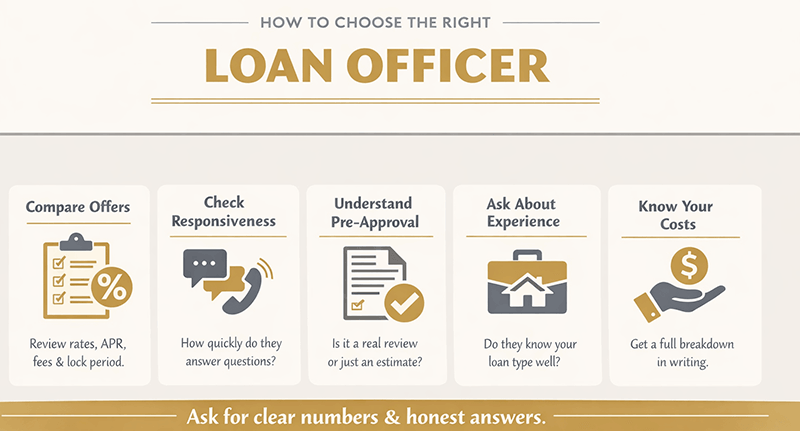
When comparing loan officers, use this checklist to see who is most likely to give you a smooth, reliable mortgage experience.
1. Communication and Availability
A strong loan officer responds quickly, answers questions clearly, and tells you what happens next.
Look for someone who replies within the same day, explains things in plain language, and does not leave you guessing.
2. Loan Program Knowledge
A good loan officer should understand the major loan options and explain which one best fits your situation.
They should be able to walk you through FHA, VA, conventional, USDA, or other relevant programs without pushing the same loan on every borrower.
3. Clear Rates and Fees
You should be able to get clear written numbers, not vague verbal estimates.
Look for a loan officer who explains your rate, lender fees, monthly payment, and estimated cash to close in a way that is easy to understand.
4. Real Pre-Approval Process
A strong pre-approval should involve more than a quick conversation or basic credit pull.
A good loan officer reviews income, assets, credit, and potential documentation issues early to avoid surprises later.
5. Honest Explanations
A trustworthy loan officer should explain why a loan works, why it does not, and what could improve your approval chances.
If something is a lender policy issue, they should be able to explain it clearly rather than giving vague answers.
6. Problem-Solving Ability
Some loans are straightforward. Others involve credit issues, income complexity, documentation gaps, or tight timelines.
Choose a loan officer who can explain how they handle obstacles and what they would do if a file hits a problem.
7. Closing Reliability
A loan officer should tell you how long the process usually takes, what can delay closing, and how they help keep the file on track.
You want someone who is organized, proactive, and realistic about timelines.
Quick Questions to Ask Before You Decide
Before choosing a loan officer, ask:
- How quickly do you usually reply to calls or emails?
- Which loan program fits me best, and why?
- Can you provide me with the estimated fees and cash to close in writing?
- What documents do you review before issuing a pre-approval?
- Are there any lender-specific rules I should know about?
- What issues could delay my closing?
How the Right Loan Officer Helps You Avoid Delays and Surprises
A great officer will:
- Pick the right program on day one
- Pre-underwrite your file for a smooth clear-to-close
- Time your rate lock to protect you
- Explain cash to close early so there are no surprises
- Coordinate with your agent and title so everything stays on schedule
Rate Shopping vs. Relationship: Why You Need Both
When comparing loan officers, do not focus only on the interest rate. A slightly lower rate may not be the better deal if the fees are higher, the lock period is too short, or communication is poor.
Here are the main things to compare:
- Interest rate: the note rate offered for the loan
- APR: a broader measure that includes certain loan costs
- Lender credits or points: whether you are paying to lower the rate or receiving credits to reduce closing costs
- Fees: lender fees, origination costs, and other charges
- Lock period: how long the quoted rate is protected
- Responsiveness: how quickly the loan officer answers questions and provides updates
- Closing track record: whether the loan officer has a reputation for keeping files on schedule
The best loan experience usually comes from balancing both price and process. A loan officer should be able to offer competitive terms while also giving clear answers, accurate numbers, and dependable follow-through.
If you are comparing loan officers, ask each to present the full picture in writing so you can compare costs, communication, and closing reliability side by side.
Local, Online, or Hybrid: Which Type of Loan Officer Is Best?
When choosing a loan officer, the best fit depends on how you prefer to communicate and how much support you want during the mortgage process.
Local Loan Officer
A local loan officer may understand your market, local closing timelines, and area-specific expectations. Some borrowers also like the option of in-person meetings and nearby support.
Online Loan Officer
An online loan officer can offer speed and convenience. Uploading documents, signing forms, and receiving updates digitally may work well for borrowers who want a faster, more flexible process.
Hybrid Loan Officer
A hybrid approach combines digital convenience with real personal support. This can be a strong option for borrowers who want easy online tools but also want a loan officer who knows their file and is available when questions come up.
The right choice depends on your comfort level, the complexity of your loan, and how much communication you want throughout the process.
What Happens If the Automated System Says No?
There are instances when a loan file does not receive automatic approval from the lender’s system, but that doesn’t necessarily mean the borrower is ineligible. In certain situations, an underwriter may conduct a manual review, allowing a closer examination of the borrower’s complete financial situation.
This process is called manual underwriting, and it’s helpful for people with limited credit, unusual credit histories, or income situations that don’t fit the usual automated systems.
When choosing a loan officer, it’s essential to find someone knowledgeable who can clarify whether a manual review is an option for you, outline any additional documentation required, and determine if this approach is the best fit for your circumstances.
What You Should Receive in Writing
A good loan officer should give you clear written estimates so you understand the real cost of the loan before you get too far into the process. Ask for:
- Your interest rate and how long it can be locked
- Your estimated monthly payment
- Lender fees and total closing costs
- Any credits or points that affect your pricing
- Your estimated cash to close
- A full payment breakdown, including taxes and insurance
- HOA dues if the property has them
These numbers help you compare loan officers more accurately and avoid surprises later.
How to Start: A 15-Minute Action Plan
If you are getting ready to choose a loan officer, here are four simple steps to take first:
1. Define Your Budget
Know your target monthly payment, down payment amount, and timeline for buying or refinancing.
2. Gather Your Basic Documents
Have recent pay stubs or income documents, bank statements, W-2s, or tax returns if needed, and a copy of your ID ready to go.
3. Compare Two or Three Loan Officers
Ask each one how they communicate, what loan programs they recommend, how they explain fees, and what their pre-approval process includes.
4. Ask for a Real Pre-Approval
A strong pre-approval should involve reviewing your income, assets, credit, and any possible documentation issues, not just giving you a quick quote.
These steps can help you in choosing a loan officer with more confidence and avoid problems later in the mortgage process.
Example: Why the Right Loan Officer Can Change the Outcome
One borrower was denied for an FHA loan after being told her credit score did not meet the lender’s minimum requirement. But the issue was not the FHA program itself. The denial came from the lender’s own stricter policy.
After a second review, the borrower’s income, assets, and overall profile supported a workable approval path. Once the file was documented correctly and reviewed more carefully, the loan moved forward and closed successfully.
Takeaway: A different loan officer or lender can sometimes lead to a very different result, especially when the original denial was based on lender-specific policy rather than the underlying loan program.
How We Can Help
If you are looking for a loan officer who communicates clearly, explains loan options, and helps you understand potential issues before they become delays, our team can help. We focus on providing borrowers with straightforward guidance so they can compare options, understand the numbers, and navigate the mortgage process with more confidence.
Work with a loan officer who says yes when others say no. Borrowers who need a five-star national mortgage company licensed in 48 states with no overlays and who are experts on choosing a loan officer, please contact us at 800-900-8569, text us for a faster response, or email us at alex@gustancho.com.
Final Word
Choosing a loan officer is about more than getting a rate quote. The right loan officer should communicate clearly, explain your options honestly, review your file carefully, and help you avoid delays or surprises during the mortgage process. Taking time to compare loan officers, ask the right questions, and review your numbers in writing can help you make a more confident decision.
If you are speaking with loan officers now, use the checklist in this guide to compare your options side by side before moving forward.
Frequently Asked Questions About Choosing a Loan Officer:
What Questions Should I Ask Before Choosing a Loan Officer?
Ask which loan program fits your situation best, what your interest rate and APR may be, what fees and cash to close you should expect, how long the rate can be locked, what documents are needed for a real pre-approval, and how quickly the loan officer typically responds to calls or emails. Those are some of the most common comparison questions borrowers are encouraged to ask before moving forward.
How Many Loan Officers Should I Compare Before Making a Decision?
Most borrowers should compare at least two or three loan officers. That gives you a better sense of differences in communication, loan options, estimated fees, responsiveness, and how clearly each person explains the process. Comparing more than one loan officer can also help you spot vague answers or inconsistent pricing early.
Is the Lowest Mortgage Rate Always the Best Deal?
No. A lower rate is important, but it is not the only number that matters. You should also compare APR, lender credits, discount points, total fees, lock period, and estimated cash to close. In some cases, a slightly higher rate may still be the better overall deal if the upfront costs are lower or the structure better fits your timeline.
What is the Difference Between a Pre-Qualification and a Pre-Approval?
A pre-qualification is basically a fast, rough estimate based on some basic info, while pre-approval is a deeper dive into your credit, income, assets, and paperwork. Getting a solid pre-approval can make your house hunt feel more secure and help you avoid any surprises down the road.
Is it Better to Work with a Local Loan Officer or an Online Loan fficer?
Either can work well. A local loan officer may offer more market familiarity and personal contact. In contrast, an online loan officer may offer more digital convenience and flexibility. For many borrowers, the better choice comes down to responsiveness, clarity, and how well the loan officer handles the file, not just whether they are local or online.
How Do I Know if a Loan Officer is a Good Fit for Me?
A good fit usually means the loan officer explains your options clearly, gives written numbers, answers questions promptly, understands the loan programs relevant to your situation, and helps you understand possible issues before they turn into delays. Experience, communication, and transparency are the qualities most consistently emphasized across guidance on choosing a loan officer.
This article about “Choosing a Loan Officer With No Mortgage Lender Overlays” was updated on March 17th, 2026.
Self-Employed? Work With a Pro at Complex Files
Bank-statement and full-doc paths tailored to your income.