
Buying a home in Florida is a dream for many people. Sunshine, beaches, no state income tax, and year-round outdoor living make the state very attractive to both local renters and out-of-state buyers. But buying a home in Florida also comes with unique rules, costs, and risks that many buyers do not discover until it is too late.
In this guide, we’ll walk you through everything you need to know about buying a home in Florida, from choosing the right area and understanding insurance to getting approved for a mortgage even if you have less-than-perfect credit. The goal is to keep things simple so you can focus on your move, rather than getting confused by mortgage jargon.
Why So Many People Are Buying a Home in Florida
Before you start buying a home in Florida, it’s helpful to understand why the state is experiencing such rapid growth. People are moving to Florida for a few key reasons:
- Warm weather and outdoor lifestyle
- No state income tax
- Large job markets in healthcare, tourism, logistics, technology, and construction
- Popular second-home and retirement destination
- There’s a lot of interest in rental properties and vacation homes right now.
All of this demand means buying a home in Florida can be very competitive in many areas. Having your financing lined up and working with a lender who understands Florida guidelines can give you a big edge over other buyers.
Guide to Purchasing a Home in Florida: A Step-by-Step Approach
Buying a home in Florida is easier when you follow a clear plan. Here is a simple step-by-step roadmap.
1. Check Your Budget and Goals
Start by deciding what you want and what you can afford:
- How much monthly payment feels comfortable?
- Do you want a single-family home, condo, townhome, or new construction?
- Is this a primary home, second home, or rental property?
A good rule of thumb when buying a home in Florida is to ensure you still have room in your budget for higher insurance premiums, possible HOA dues, and maintenance costs such as AC, roof, and landscaping.
2. Get Pre-Approved With a Florida-Friendly Lender
The next step in buying a home in Florida is getting a strong pre-approval. This demonstrates to sellers that you are committed and prepared to finalize the deal.
Gustan Cho Associates is a national lender with no lender overlays on FHA, VA, USDA, and conventional loans. We can often approve buyers that big banks turn away.
During pre-approval, your loan officer will review:
- Credit scores and credit history
- Income and employment
- Debts and monthly obligations
- Down payment and asset documentation
With a valid pre-approval, you will know your price range before you start house hunting.
3. Choose Your Florida Location
Florida is a big state. When buying a home in Florida, location choices matter just as much as the house itself. Think about:
- Do you need to be near a specific job, school, or family?
- Do you prefer coastal areas with higher insurance and HOA costs or inland regions with lower costs?
- Are you okay with tourist traffic in areas near beaches or theme parks?
- Do you want a quiet suburban neighborhood, a 55+ community, or a walkable downtown area?
Short Spotlight: Manatee County
Manatee County, on the Gulf Coast near Bradenton and Anna Maria Island, is a good example of a popular area for buying a home in Florida. It offers:
- Beautiful beaches and parks
- It’s a blend of brand-new homes and older neighborhoods.
- Strong school options, including charter and private schools
- A blend of tourism, healthcare, education, and manufacturing jobs
Areas like Manatee County show why buying a home in Florida is not only about lifestyle, but also about long-term growth and job stability.
4. Start House Hunting With a Local Realtor
Once you are pre-approved, you and your realtor can start touring homes. When buying a home in Florida, your agent should help you evaluate:
- Flood zone status and whether flood insurance is required
- Age and condition of the roof, HVAC, plumbing, and windows (critical for insurance)
- HOA or condo rules, fees, and reserves
- Distance to work, schools, shopping, hospitals, and beaches
Your realtor and loan officer should work together so that every home you see is realistic for your budget and loan program.
5. Make an Offer and Negotiate
When you find the right property, your realtor will help you write an offer. In many parts of the state, buying a home in Florida still means competing with multiple offers, especially for well-priced and move-in-ready homes.
Your offer package may include:
- Purchase price and earnest money deposit
- Closing date
- Financing type (FHA, VA, conventional, USDA, or Non-QM)
- Inspection and financing contingencies
- Requests for seller credits toward closing costs, if any
6. Inspections, Appraisal, and Insurance
After your offer is accepted, the next steps in buying a home in Florida are:
- Home inspection – To check for hidden issues like roof damage, plumbing leaks, electrical problems, or structural concerns.
- Appraisal – Your lender orders an appraisal to ensure the home’s value supports the loan amount.
- Insurance quotes – In Florida, this is a big one. You’ll need homeowners insurance, and depending on the area, you may also need separate flood insurance and sometimes windstorm coverage.
Never skip the inspection or rush the insurance step when buying a home in Florida. These two items can make or break your budget and your peace of mind.
7. Closing Day
On closing day, you sign your final loan and title documents, bring your down payment and closing costs (or wire them ahead of time), and receive your keys. At this point, you are officially done with the home-buying process in Florida. You can start moving in and setting up your utilities.
Worried You Don’t Have 20% Down for a Florida Home?
Learn about low-down-payment FHA, VA, and first-time buyer options.
Florida-Specific Costs You Need to Know
One of the biggest surprises for many people buying a home in Florida is the cost structure. Even if the purchase price seems reasonable, the ongoing costs can be higher than expected.
Property Taxes and Homestead Exemption
Florida doesn’t have a state income tax, which is a plus; however, you’ll still encounter property taxes and local fees to fund services. The good news is that if you make your home your main place, you might be able to snag a homestead exemption. This can help lower your property tax bill and keep future increases in check.
Homeowners Insurance and Hurricanes
Insurance is a major factor when buying a home in Florida. Due to hurricanes, wind, and water risks, homeowners’ insurance premiums can be significantly higher than in other states, particularly for older homes or properties located on the coast.
Key points:
- Newer roofs, impact windows, and solid construction can help lower premiums.
- Flood insurance is separate and based on federal flood maps.
- Your lender will require enough coverage to protect the structure and your loan.
HOA and Condo Association Fees
Many communities in Florida, especially condos and townhomes, have HOA or condo association fees. When buying a home in Florida, always ask:
- How much are the monthly or quarterly fees?
- What do they cover (cable, internet, landscaping, security, amenities)?
- Are there any upcoming special assessments?
Closing Costs and Prepaid Items
Besides your down payment, expect additional costs when buying a home in Florida, including:
- Lender fees
- Title and closing fees
- Recording and transfer costs
- Prepaid taxes and insurance
Seller credits and lender credits can sometimes help reduce the amount of cash you need to bring to closing.
Mortgage Options for Buying a Home in Florida
The right mortgage can make buying a home in Florida much easier. Here are the main options Gustan Cho Associates offers with no lender overlays on government and conventional loans.
FHA Loans
- Great for first-time buyers and buyers with lower credit scores
- Minimum 3.5% down payment with a 580+ credit score
- Flexible guidelines on past credit issues
- Higher debt-to-income ratios often allowed
VA Loans
- For eligible veterans, active-duty service members, and some surviving spouses
- 0% down payment in many cases
- No monthly mortgage insurance
- Very competitive interest rates
Conventional Loans
- Suitable for buyers with stronger credit and larger down payments
- Often better for higher price points or second homes
- Can be cheaper over time if you avoid or remove private mortgage insurance (PMI)
USDA Loans
- Available in certain rural and suburban areas
- 0% down payment for eligible borrowers
- Income and area limits apply
Non-QM Loans
Non-QM (non-qualified mortgage) programs can help when buying a home in Florida if you:
- Are self-employed and use bank statements to qualify
- Have had recent credit issues, such as a bankruptcy, foreclosure, or collections
- Want to buy investment properties using DSCR (debt service coverage ratio) loans
Buying a Home in Florida With Bad Credit
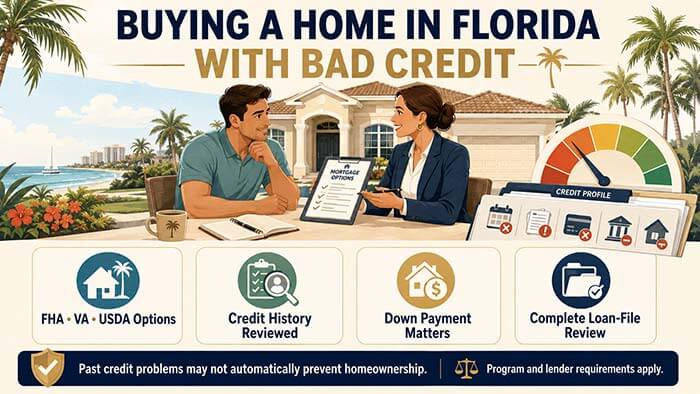
Many renters and out-of-state buyers think buying a home in Florida is impossible with bad credit. That is not true.
- We do not have lender overlays on FHA, VA, and USDA loans.
- We can usually approve FHA buyers with credit scores as low as 580, and even lower in some cases, if they make a larger down payment and undergo manual underwriting.
- We consider the entire story, not just the credit score.
If you had late payments, collections, charge-offs, or even a prior bankruptcy or foreclosure, you may still be able to focus on buying a home in Florida sooner than you think. The key is working with a lender who understands flexible guidelines and the unique Florida market.
Pros and Cons of Buying a Home in Florida
Like any big move, buying a home in Florida comes with trade-offs.
Pros
- Warm climate and outdoor lifestyle
- No state income tax
- Strong demand for rentals and vacation homes
- A large variety of cities, towns, and neighborhoods
- Big choice of loan programs for primary homes, second homes, and investment properties
Cons
- Higher homeownership and flood insurance costs in many areas
- Hurricane and storm risk
- HOA and condo fees in many communities
- Traffic and congestion in fast-growing metro areas
- Higher property prices in popular coastal markets
How Gustan Cho Associates Helps With Buying a Home in Florida
Gustan Cho Associates is a mortgage company licensed in multiple states with a strong focus on helping buyers who have been turned down elsewhere.
When it comes to buying a home in Florida, our team:
- Offers FHA, VA, USDA, conventional, and Non-QM loans
- There are no additional rules from the lender for government and conventional loans.
- Works with credit scores that many other lenders will not consider
- Understands Florida insurance, flood, and HOA issues that can derail a deal
If you are thinking about buying a home in Florida, don’t talk yourself out of it before you explore your options. Get a free consultation and pre-approval review so you know exactly where you stand.
Call Gustan Cho Associates at 800-900-8569, text us for a faster response, or email us at alex@gustancho.com, and let’s take the next step toward buying a home in Florida together.
Frequently Asked Questions About Buying a Home in Florida:
How Much Down Payment do I Need When Buying a Home in Florida?
With FHA, you can buy with as little as 3.5% down if your credit score is 580 or higher. VA and USDA loans can offer 0% down for eligible buyers. Conventional loans typically require a down payment of 3% to 5% for primary homes, with higher down payments required for second homes and investments.
Can I Buy a Home in Florida from Out of State?
Yes. Many people are buying a home in Florida while still living in another state. You can complete most of the process by phone, email, and secure online portals. Your closing can often be done by mail-away or with a mobile notary.
Is it Harder to Get Insurance When Buying in Florida?
Insurance can be more complex when purchasing a home in Florida, especially for older homes or properties located near the coast. Start getting insurance quotes early in the process and ensure that the roof, electrical system, and other significant items meet insurance guidelines.
Can I Buy a Home in Florida with Recent Credit Issues?
In many cases, yes. Buying a home in Florida after experiencing late payments, collections, bankruptcy, or foreclosure is possible with the right loan program and timing. FHA, VA, and Non-QM loans are often the best starting points.
This article about “Buying a Home in Florida: Simple Guide for First-Time Buyers” was updated on December 2nd, 2025.
Ready to Turn Sunshine Dreams Into a Florida Address?
Let Gustan Cho Associates turn our Buying a Home in Florida: Simple Guide for First-Time Buyers into your real-life closing