In this guide, we will cover and discuss when I am committed to a mortgage lender for a home loan. Mortgage loan officers do a lot of work to get a clear-to-close from the mortgage underwriter. Many borrowers are under the impression that once they sign the loan estimate, they are obligated to go through with the mortgage loan until it closes.
While the act of signing a mortgage form likely makes you assume that you’ll be stuck with that lender, the truth is, there are many steps, forms, fees, approvals, etc. that make up the process of obtaining a mortgage.
The question of “When Am I Committed to Mortgage Lender?” is most commonly asked when an applicant has received a Loan Estimate, or has scheduled an appraisal, or has a locked interest rate, or has obtained conditional mortgage approval. In the large majority of home purchases, you are not committed to a mortgage lender until you have signed the final loan documents.
Mortgage Rules and Regulations
As discussed in the opening paragraph, mortgage laws can be confusing and make it very difficult to understand when it is legally permissible to change mortgage lenders. This guide has been created to provide you with the information you need to change mortgage lenders, avoid the traps that could cost you, prevent delays in closing, and cause the least amount of disruption in the real estate contract you are working to complete. This is not correct. Borrowers can close the mortgage loan up to the day of the home loan closing. In this guide, we will cover when I am committed to a mortgage lender for a home loan. In the following paragraphs, we will cover when am I committed to mortgage lender for a home loan.
How Long Does the Mortgage Process Take?

After getting pre-approved, borrowers can shop for the best lender that offers them the best terms, including interest rates, loan types, and fees. You are not committed to any lender at this stage.
Borrowers can cancel a mortgage loan up to the date of the closing without any obligation. Most mortgage loans take at least 30 days normally to close. Some may go into 45 days to 60 days depending on the mortgage conditions on the conditional mortgage loan approval. Once you’ve chosen a lender, you must formally apply for the mortgage. This involves submitting a complete application with your financial information, employment history, and other relevant details.
When Am I Committed to a Mortgage Lender?
For the most part, you are not committed to a mortgage lender when you get a preapproval, sign a Loan Estimate, express your intent to proceed, pay for an appraisal, lock your rate, or receive conditional approval.
According to the Consumer Financial Protection Bureau, a borrower is not committed to a lender until the final closing documents are signed.
You may still switch lenders before closing, but you could lose appraisal or application fees and delay the transaction. Your mortgage application and home purchase contract are separate. Canceling the loan does not automatically cancel your obligation to purchase the house.
When Are You Legally Committed to the Mortgage Loan?
A mortgage application goes through several stages before closing. Each stage has a different meaning. Some of the documents explain your desire for the lender to continue working on the application. Others show estimated fees or confirm that the lender has approved the loan. Most of the documents do not require you to complete the mortgage transaction.
Does a Mortgage Preapproval Commit You to a Lender?
A mortgage preapproval generally does not commit you to the lender that issued it.
A Preapproval Letter Shows That a Lender Has Preliminarily Reviewed Some or All of Your:
- Credit history
- Income
- Employment
- Assets
- Monthly debts
- Estimated down payment
The letter may help you make an offer on a home, but you may continue comparing mortgage rates, loan programs, lender fees, and service.
Credit Check and Underwriting Mortgage Process
The lender will check your credit history and underwrite your application. This is a critical step in the process, as the lender will assess your creditworthiness and ability to repay the loan. The lender will issue a loan commitment letter if your application is approved. This letter states that the lender will provide you with a mortgage loan under specific terms and conditions. It’s important to review this letter carefully.
Once you receive the loan commitment letter, you can accept the lender’s offer. Accepting the offer is the point at which you commit to that specific lender for the mortgage.
After accepting the offer, you’ll begin the closing process. This involves finalizing the loan details, signing the closing documents, and transferring the property deed. It’s also when you’ll make a down payment and pay closing costs. So, you commit to a mortgage lender when you formally accept their loan offer after receiving the loan commitment letter. It’s important to consider the terms and conditions of the loan before making this commitment, as it is a significant financial decision. According to the CFPB, signing a preapproval demonstrates to sellers that you are a serious buyer without being committed to that mortgage lender
Are You Committing to the Lender If You Sign the Loan Estimate?
Signing the Loan Estimate does not mean you have agreed to close the loan.
The Signature Usually Confirms That You Received the Disclosure. It Does Not Mean:
- The mortgage has received final approval.
- The lender must make the loan.
- You have accepted every estimated charge.
- You must stop shopping for another lender.
- You must complete the mortgage transaction.
What is the Loan Estimate
- A Loan Estimate describes the interest rate, monthly payment, closing costs, loan program, cash to close, and other estimated charges.
- The lender generally must provide the Loan Estimate within 3 business days of receiving a complete mortgage application containing the required information.
- Receiving the form does not mean the loan has been approved.
Are You Locked In If You Express an Intent to Proceed?
Expressing an intent to proceed means you want the lender to keep working on that specific mortgage application. It allows the lender to begin collecting supporting documents, order services, and charge certain fees. It usually does not require you to close the loan.
The CFPB indicates that lenders cannot use silence as affirmation for proceeding. You must advise the lender of your intent to proceed.
Generally, a lender must maintain the specific Loan Estimate terms requested for 10 business days, subject to applicable rules and any variations in circumstances.
After the Lender Notes Your Intent to Proceed, the Lender May Request That You:
- Pay for an appraisal.
- Pay an application fee.
- Provide income and asset documents.
- Provide homeowners’ insurance documents.
- Sign mortgage disclosure documents.
- Address underwriting concerns
You still have the right to withdraw the mortgage application, but some fees may become non-refundable.
Can a Lender Charge Fees Before Intent to Proceed?
Prior to providing a Loan Estimate, a lender may charge only reasonable fees for obtaining a credit report. The lender must wait until you receive the Loan Estimate and express your intent to proceed before charging other fees, such as an application fee or an appraisal fee.
Once You Have Communicated Your Intent to Proceed, the Lender May Ask You to:
- Pay an appraisal fee.
- Pay an application fee.
- Provide income and asset documents.
- Provide homeowners’ insurance documents.
- Execute mortgage disclosure documents.
- Address underwriting concerns.
- You may still have the right to withdraw the mortgage application, but some fees may become nonrefundable.
Do Locked Mortgage Rates Tie You to That Lender?
“A mortgage rate lock” does not mean you have finalized your loan agreement. A rate lock means that the lender has agreed to that specific agreed-upon rate for a specific agreed-upon time period, and that you close the loan on time, and that no agreed rate change specific to that time requested occurred,
Review the Confirmation of Your Rate Lock For:
- Specific rate
- Points requested or lender credit requested
- Date the lock expires.
- Fees requested for lock extension,
- Float down requested
- Property address
- Amount borrowed, loan program, and loan purpose
- Terms agreed for rate lock cancellation.
- Once the loan is finalized and the rate lock agreement is in place, both you and the lender have completed your commitments for that mortgage.
- Changing lenders can still allow you to make rate locks, but the rate lock remains with the original lender.
- The new lender will set their own loan and make their own rate lock.
- Additional rate lock changes may still be needed, but if any original rate lock extensions are charged a fee, the new lender may also be charged a fee for a new rate lock.
Is a Mortgage Commitment Letter Binding to the Borrower?
A mortgage commitment letter indicates that the lender has agreed to assign the loan under the terms of the agreement.
A Conditional Commitment Can Still Require:
- Final verification of income
- Final confirmation of employment
- Acceptable homeowners insurance
- Clear title
- Satisfactory appraisal
- Updated bank statements
- No new debts or late payments
- Proof that closing funds are available
- The commitment letter is often more important to the seller and the real estate contract than it is to the borrower as a final promise.
- You shouldn’t think that signing a commitment letter will stop you from changing lenders.
- Be careful when reading documents.
- Relying on your understanding of individual terms of the document, sentiment can differ.
- The Consumer Financial Protection Bureau says borrowers aren’t expected to be loyal to a particular lender until the real closing papers are signed.
Take First Step Toward Making Your Dream A Reality
Apply Now And Get recommendations From Loan ExpertsWill Conditional Approval or Clear-to-Close Commit You?
As in a previous example, the same applies to conditional mortgage approvals and clear to close. A conditional approval means the underwriter has approved the file, subject to remaining mortgage conditions.
A clear to close means the lender has completed most underwriting requirements and is preparing the loan for closing. It is a major approval milestone, but it is not the same as signing the promissory note and mortgage.
You can refuse to sign the final closing documents if your expected interest rate, loan amount, monthly payment amount, closing costs, or other terms are different from what you expected.
When Does the Mortgage Become Final?
For a home purchase, the mortgage becomes final when you sign the closing documents.
The Hard Copy Documents Typically Include:
- Promissory note
- Mortgage or deed of trust
- Final Closing Disclosure
- Initial escrow disclosure
- Tax and insurance forms
- Occupancy and compliance certifications
- Once all documents are signed, the pending transaction is complete, and the property’s sale and financing are finalized.
- The borrower is now responsible for the mortgage.
- A purchase mortgage does not usually provide the three-business-day right to cancel a mortgage signing.
Mortgage Application versus Real Estate Purchase Contract
Your mortgage application and purchase contract are different kinds of contracts. You might be able to cancel an application to one lender without being obligated to that lender for the full mortgage loan. However, you may still have obligations under the contract you signed with the seller.
The Contracts May Contain:
- A contingency for the mortgage financing
- A deadline for the mortgage loan commitment
- An appraisal contingency
- A home inspection contingency
- A closing date that is certain
- A provision to establish an escrow account
- Rules to change the loan program that was selected
- Rules to change the lender
- Notice and extension rules
- The selection of a new lender does not extend these deadlines.
- If the new lender does not close by this deadline, you will need to ask the seller to approve a written extension.
- The seller may refuse to keep the earnest-money deposit when permitted by the contract, or pursue another remedy.
- The CFPB noted that by abandoning a mortgage closing, buyers may incur financial losses, including the forfeiture of lender fees and buyer deposits.
- This may also result in other losses governed by the terms of the purchase contract.
- Legal language and real estate laws vary from state to state.
- Because of these differences, it is in your best interest to hire a licensed real estate attorney or a real estate professional to explain the purchase contract before abandoning the loan or failing to meet funding deadlines.
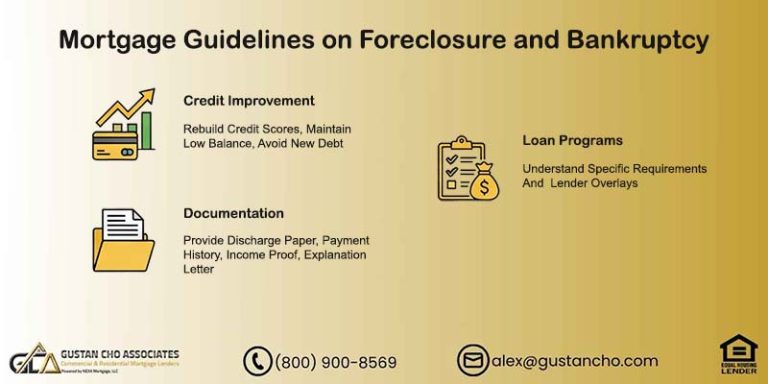
Documents Required to Process Mortgage Loan
Borrowers Also Need to Provide Personal Financial Documents to Their Lenders Such as the Following:
- two years’ tax returns
- 60 days bank statements
- two years W-2s
- 30 days paycheck stubs
- bankruptcy documents
- foreclosure paperwork
- multiple letters of explanations
- other documents
When am I committed to mortgage lender? There is no obligation for borrowers to be committed to the mortgage loan. The borrower can cancel their mortgage loan up to the date of the closing. Borrowers are not obligated to go through the mortgage loan with their lender.
When Am I Committed to Mortgage Lender After Signing the Real Estate Purchase Contract?
Once a home buyer gets pre-approved by a lender, the loan officer will issue a pre-approval letter. With a pre-approval letter, homebuyers can go shop for a home and enter into a real estate purchase contract. The real estate purchase contract will have several contingencies. Examples of contingencies include mortgage loan contingency, home inspection contingency, appraisal contingency, and other contingencies where the home buyer can back out of the real estate purchase contract. Real estate purchase contracts are legally binding contracts and can be enforced if it is not written up the right way.
Do I Need a Real Estate Attorney Buying a House?
It is recommended that home buyers retain a real estate attorney to review the real estate contract. Borrowers should make sure that the contract has the proper contingencies to protect them from an out. The real estate contract should state if something goes wrong that the home buyer can get their earnest money back. Real Estate Purchase Contracts are different than mortgage loan applications where there are stipulations with them and not with mortgage loan applications.
Can I Cancel a Home Purchase Contract Before Closing?

On refinance mortgage transactions, borrowers can cancel three business days after closing which is called the rescission period for the lender to be able to fund the loan.
Homeowners can cancel their refinance transaction after closing or until the loan funds are which is three business days after closing. Refinance mortgage loan funds three business days after closing.
Cases Where Borrowers Cancel Loan During Mortgage Process
The majority of borrowers do not cancel their mortgage loan applications during the loan application and approval process. However, there are cases where borrowers cancel the application and decide to go with another lender. Whether it is due to delays in turnaround times or due to mortgage lender overlays or sometimes not getting along with the loan originator. Whatever the reason may be, borrowers are not obligated to the loan from a particular lender.
Can You Switch Mortgage Lenders Before Closing?
You can generally switch mortgage lenders before signing the final closing documents.
Borrowers Commonly Change Lenders Because of:
- A lower interest rate
- Lower lender fees
- Better communication
- Faster underwriting
- Fewer lender overlays
- A more suitable mortgage program
- Problems documenting income
- An unexpected loan denial
- Delays in ordering the appraisal
- A better FHA, VA, USDA, conventional, jumbo, or non-QM option
- Changing lenders late in the process may still place the transaction at risk.
- The CFPB notes that the new lender may need to restart the mortgage process, which could delay or endanger the closing.
What Happens When You Change Mortgage Lenders?
The New Lender May Need To:
- Pull or update your credit.
- Complete a new mortgage application.
- Issue a new Loan Estimate.
- Verify your income, employment, debts, and assets.
- Review the purchase contract.
- Obtain or review an appraisal.
- Order title and flood services.
- Submit the file through automated underwriting.
- Complete manual or lender underwriting.
- Issue a new Closing Disclosure.
- Meet the required disclosure waiting periods.
- Coordinate a new closing date.
- Even when another lender has already reviewed your file, the new lender remains responsible for completing its own approval and compliance process.
Can an Existing Appraisal Be Transferred?
An appraisal may sometimes be transferred or reassigned, but transfer rules depend on the loan program, lender, appraisal status, and property. Do not assume that the new lender can use the old appraisal.
Before Switching, Ask:
- Can the appraisal be transferred?
- Does the new lender accept transferred appraisals?
- Will an appraisal review be required?
- Will a new appraisal be ordered?
- Who pays for the second appraisal?
- Will the transfer delay underwriting?
- Even if the report can be transferred, the original appraisal fee may remain non-refundable because the service has already been performed.
What Money Could You Lose by Canceling a Mortgage Application?
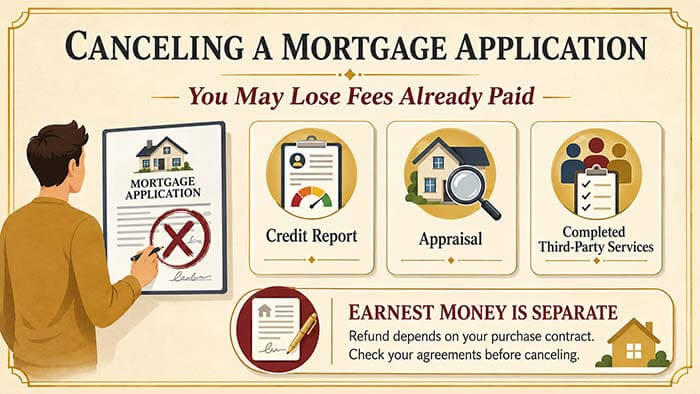
You usually do not owe the lender all of the interest or closing costs shown on the Loan Estimate when you withdraw before closing. However, you may lose money that has already been paid for completed services.
Possible Non-refundable Costs Include:
- Credit report fee
- Appraisal fee
- Application fee
- Condo questionnaire
- Property inspection
- Rate-lock extension
- Certain titles or third-party services
- Other charges allowed by the signed agreement
- Application and appraisal fees are often collected after the borrower expresses intent to proceed.
- Whether those charges are refundable depends on the lender’s policy, the signed agreement, applicable law, and whether the work has been completed.
- The earnest-money deposit is different.
- It is normally held under the real estate purchase contract rather than the mortgage application.
- Whether you receive it back depends on the contract, contingencies, deadlines, notices, and applicable state law.
How to Compare Mortgage Lenders Before Choosing One
The best time to compare lenders is before paying for multiple appraisals or getting close to the financing deadline.
Request Loan Estimates for the Same:
- Loan type
- Loan term
- Loan amount
- Down payment
- Occupancy
- Credit profile
- Rate-lock period
Then Compare the Following Items.
Compare the Interest Rate and APR
The interest rate helps determine the principal-and-interest payment. The annual percentage rate, or APR, includes the interest rate and certain finance charges. It may help compare the cost of similar mortgage offers, but it should not be the only factor you review.
Compare Discount Points and Lender Credits
A low advertised interest rate may require discount points. A higher rate may come with lender credits that reduce closing costs. Compare the rate, points, lender credits, cash-to-close, and the expected time you will keep the mortgage.
Compare Total Loan Costs
Review the Loan Costs section of each Loan Estimate.
Pay Close Attention To:
- Origination charges
- Underwriting fees
- Processing fees
- Discount points
- Appraisal charges
- Title-related charges
- Lender credits
Ask whether any fee is refundable if you withdraw the application.
Compare the Estimated Cash to Close
A low rate does not always mean a low amount due at closing.
Compare:
- Down payment
- Closing costs
- Earnest-money credit
- Seller concessions
- Lender credits
- Escrow deposits
- Prepaid interest
- Property-tax adjustments
Compare the Lender’s Ability to Close
The cheapest offer may not be the best choice when the lender cannot meet the contract deadline.
Ask:
- Has an underwriter reviewed my income?
- Are there lender overlays that could affect approval?
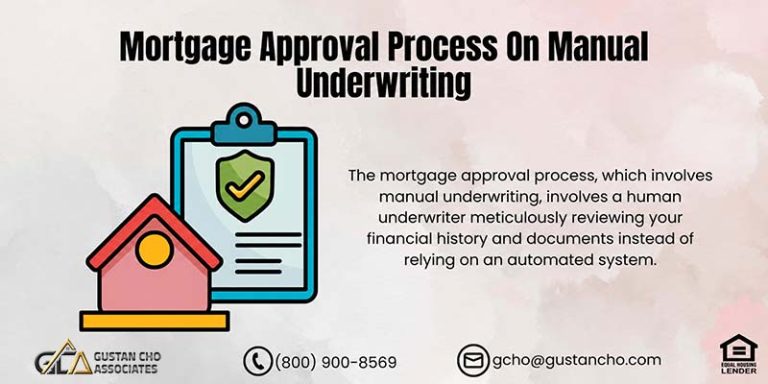
- Can the lender handle manual underwriting?
- How long does underwriting take?
- When will the appraisal be ordered?
- Who will manage my file?
- Can the lender meet the contract closing date?
The CFPB recommends comparing both the loan cost and your confidence in the lender’s ability to meet the required closing timeline.
How the Closing Disclosure Protects the Borrower
The Closing Disclosure provides the final or near-final terms of the mortgage. You should generally receive it at least three business days before closing. This gives you time to compare it with the most recent Loan Estimate and ask questions.
Review the Following:
- Interest rate
- Monthly principal and interest
- Estimated total payment
- Loan amount
- Mortgage insurance
- Prepayment penalty
- Balloon payment
- Discount points
- Lender credits
- Closing costs
- Cash to close
- Ask for an explanation when a rate, fee, lender credit, or loan term has changed.
- You do not have to sign the closing documents if the final mortgage differs from what you were promised.
- The CFPB advises borrowers not to sign until they are satisfied with the written terms.
Purchase Mortgage versus Refinance Cancellation Rights
The cancellation rules after closing depend on the mortgage transaction.
Home Purchase Mortgage
A mortgage used to purchase a home generally does not have a federal right of rescission after the closing documents are signed. Review every document before signing. Once the mortgage closes on the purchase, canceling it typically requires selling the property, paying off the loan, or refinancing.
Mortgage Refinance
Many refinances and certain home-equity transactions secured by a principal residence have a three-business-day right of rescission. The cancellation period generally begins after the required loan documents and rescission notices have been provided and signed. Exceptions apply; review the notice provided by the lender and seek legal advice when necessary.
Hypothetical Mortgage Lender Change Example
Consider a borrower purchasing a $325,000 home. The borrower receives conditional approval from Lender A and pays for an appraisal. During underwriting, Lender A determines that the borrower’s overtime income cannot be used in accordance with its internal requirements. Without that income, the debt-to-income ratio is too high. The borrower contacts Lender B. After reviewing the overtime history and applicable loan guidelines, Lender B determines that the income may be eligible if all documentation and continuance requirements are satisfied. The borrower is not forced to close with Lender A merely because the appraisal was completed or conditional approval was issued.
However, the Borrower Must Consider:
- Whether Lender B can close on time
- Whether the appraisal can be used
- Whether the seller must approve an extension
- Whether any fees paid to Lender A are refundable
- Whether the financing contingency remains active
- Whether Lender B’s rate and closing costs are competitive
The borrower should not cancel the first application until the new lender has completed a detailed review and confirmed a realistic path to closing.
Steps to Take Before Switching Mortgage Lenders
Before Changing Lenders, Complete These Steps:
- Ask the current lender to explain the problem in writing.
- Request the most recent Loan Estimate and approval conditions.
- Obtain a detailed Loan Estimate from the new lender.
- Confirm that the new lender has reviewed your credit, income, assets, and property type.
- Ask whether the existing appraisal can be used.
- Compare the new rate, APR, points, lender credits, and cash-to-close.
- Confirm the new lender’s estimated closing date.
- Review the financing and closing deadlines in the purchase contract.
- Ask whether the seller must approve the change of lender.
- Notify the appropriate parties in writing.
- Keep copies of all cancellation and transfer requests.
- Do not let both lenders order duplicate services without your approval.
Do not switch based solely on a verbal interest rate quote. Obtain a written Loan Estimate based on the same loan terms.
Questions to Ask Before Committing to a Mortgage Lender
Ask each lender:
- Is my interest rate locked?
- How long is the rate-lock period?
- Are discount points included?
- What lender overlays could affect my approval?
- Has an underwriter reviewed my file?
- Are any application fees refundable?
- When will the appraisal be ordered?
- What happens if the appraisal is low?
- Who pays for a rate-lock extension?
- Can you meet my purchase-contract deadline?
- What conditions remain before closing?
- Could my interest rate or lender credits change?
- How quickly will I receive the Closing Disclosure?
- Who should I contact when I have an urgent question?
Final Thoughts on When Am I Committed to Mortgage Lender
A preapproval, a Loan Estimate, intent to proceed, appraisal payment, rate lock, mortgage commitment letter, conditional approval, or clear to close does not normally make the borrower responsible for the mortgage debt. For most home purchases, that commitment occurs when the final loan documents are signed at closing.
The ability to cancel a mortgage application should not be confused with the right to cancel a home purchase contract. Changing lenders could cause delays, non-refundable fees, an expired rate lock, loss of earnest money, or other contract consequences.
Before changing lenders, compare the complete loan offer and verify that the new lender can approve the file and close by the required date. A lower quoted rate offers little value when the lender cannot complete the mortgage transaction. Borrowers with questions about mortgage qualification, lender overlays, conditional approval, or changing lenders during underwriting can speak with a licensed mortgage professional for a complete review of their loan options.
Frequently Asked Questions About Mortgage Lender Commitment
Can I Have Mortgage Applications with Two Lenders?
You may compare and apply with more than one mortgage lender. However, avoid paying duplicate appraisal or application fees unless necessary. The CFPB recommends requesting Loan Estimates from multiple lenders. Mortgage credit checks made within a 45-day shopping window are generally recorded as a single inquiry for scoring purposes.
Can I Change Lenders After My Offer Is Accepted?
Yes, but review the purchase contract first. Changing lenders may affect the financing deadline or scheduled closing date. The seller may need to approve an extension or amendment.
Can I Switch Lenders After Locking My Interest Rate?
You can generally change lenders before closing, but the original rate lock normally does not transfer. The new lender must provide its own pricing and rate-lock agreement.
Can I Back Out After Receiving a Clear-to-Close?
A clear-to-close does not normally require you to sign the mortgage. You may refuse to close, but you could incur lender fees, forfeit earnest money, or lose other rights under the purchase agreement.
Will the Lender Refund My Appraisal Fee if I Cancel?
Not necessarily. An appraisal fee may be non-refundable once the appraisal has been ordered or completed. Review the lender’s written refund policy before paying the charge.
Can the Seller Cancel Because I Changed Mortgage Lenders?
Possibly. The answer depends on the purchase contract, financing contingency, lender-change provisions, closing deadline, notices, and state law. Ask your real estate attorney or qualified real estate professional to review the contract.
Can I Cancel a Purchase Mortgage After Signing at Closing?
A home purchase mortgage generally does not have a federal three-business-day right of rescission. Once the closing documents are signed, you normally cannot simply cancel the loan.
This Guide About When Am I Committed To Mortgage Lender for a Home Loan Was Updated on August 5, 2026.