Buying a home during economic uncertainty can feel scary. News headlines discuss layoffs, inflation, rising prices, and shifting interest rates. You might ask yourself:
- “Is this the right time to buy?”
- “What if I lose my job?”
- “What if home values go down after I close?”
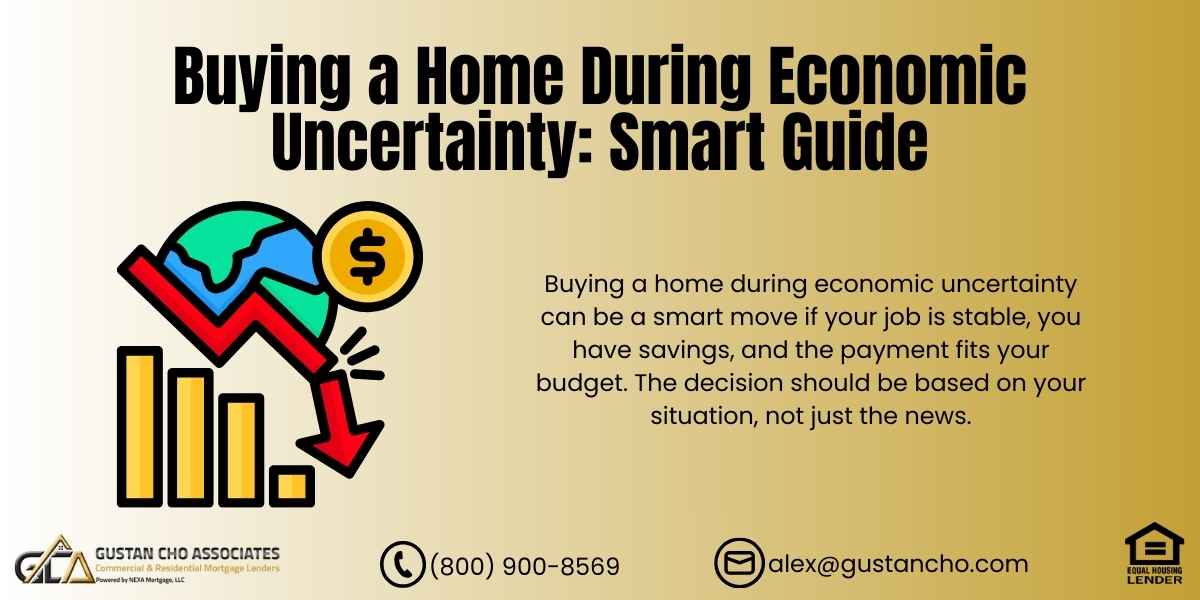
The truth is, people are always buying homes in good times and bad. Buying a home during economic uncertainty is not automatically a bad idea. You just need a smart plan, a realistic budget, and a lender who understands how to work with bumps in the road.
In this guide, we’ll break down buying a home during economic uncertainty in plain language so you can make a confident choice for you and your family.
Key Takeaways
- Buying a home during economic uncertainty can make sense if your job, income, and savings are stable.
- Focus on a monthly payment that feels comfortable, not just the maximum home price you qualify for.
- Build an emergency fund before buying so you have a cushion if expenses rise or income changes.
- Review loan options carefully, especially if you have lower credit scores, limited savings, or past credit issues.
- Work with a lender who can explain more than one loan option and look at your full financial picture.
What Does “Buying a Home During Economic Uncertainty” Really Mean?
Economic uncertainty can manifest differently at various times. It can include:
- High or rising interest rates
- High inflation (cost of food, gas, and basics going up)
- Talk of recession or slow economic growth
- Layoffs in certain industries
- Stock market swings
Buying a home during economic uncertainty means you are buying while the future feels shaky. You may not know if rates will go up or down. You may worry about home values. You may fear losing your job.
The goal is not to find a “perfect” time. The goal is to make sure buying a home during economic uncertainty still makes sense for your situation:
- Your job and income
- Your savings
- Your credit
- Your family plans
- How long you plan to stay in the home
If these pieces are strong, buying a home during economic uncertainty can still be a wise choice.
Pros of Buying a Home During Economic Uncertainty
You might be surprised, but there are also benefits to buying a home during economic uncertainty.
Why a Slower Market Can Help Some Buyers
Then explain that fewer buyers can help, but only if the reader already has:
- stable income
- enough savings left after closing
- a payment they can comfortably handle
When Buying During Economic Uncertainty Can Work in Your Favor
Then explain that negotiating power helps most when:
- The buyer is not stretching financially
- The property has been on the market for a while
- The buyer has time to inspect carefully
- The buyer is willing to walk away from a bad deal
Long-Term Buyers Are Usually in a Stronger Position
Then explain that short-term price swings matter less when the buyer:
- plans to stay put for several years
- has an emergency fund
- is not relying on quick appreciation
- can afford the payment even if life gets more expensive
If you plan to own a home for the long term, buying during economic uncertainty may still put you ahead compared to renting and waiting.
Who Should Move Forward and Who Should Pause
Buyers who may be ready
- Steady job or reliable income
- Emergency savings after closing
- Manageable monthly payment
- Plan to stay in the home for several years
Buyers who may want to wait
- Unstable job or reduced hours
- Very little cash left after closing
- Relying on overtime or bonus income to qualify
- Stretching to the top of the approval range
Risks of Buying a Home During Economic Uncertainty (and How to Protect Yourself)
There are real risks when buying a home during economic uncertainty. The key is to plan for them.
Risk 1: Job Loss or Reduced Hours
This is the biggest fear. If you lose income, paying the mortgage becomes hard.
How to protect yourself:
- Make sure your job is as stable as possible before buying.
- Create an emergency savings reserve containing enough funds to manage approximately 3 to 6 months’ worth of expenses.
- Avoid taking on new debt (such as cars or credit cards) right before or immediately after closing.
Risk 2: Home Values May Drop Short-Term
When the economy is unstable, home values may remain flat or decline in certain areas.
How to protect yourself:
- Plan to stay in the home for at least 5–7 years if possible.
- Focus on a home payment you can afford, not the maximum the lender approves.
- Don’t stretch to “just barely” qualify when buying a home during economic uncertainty.
Risk 3: Rate Changes
Rates can fluctuate rapidly. You may worry about locking too early or too late.
How to protect yourself:
- Work with a lender who monitors rates daily and informs you of your options.
- Ask about rate-lock periods and any options for floating down rates.
Remember: a slightly higher rate with a comfortable payment is better than chasing the lowest rate with a risky payment.
First-Time Homebuyer Worried About the Economy?
We’ll guide you step by step so you don’t make an emotional decision with long-term money
How to Know If You’re Ready to Buy a Home During Economic Uncertainty
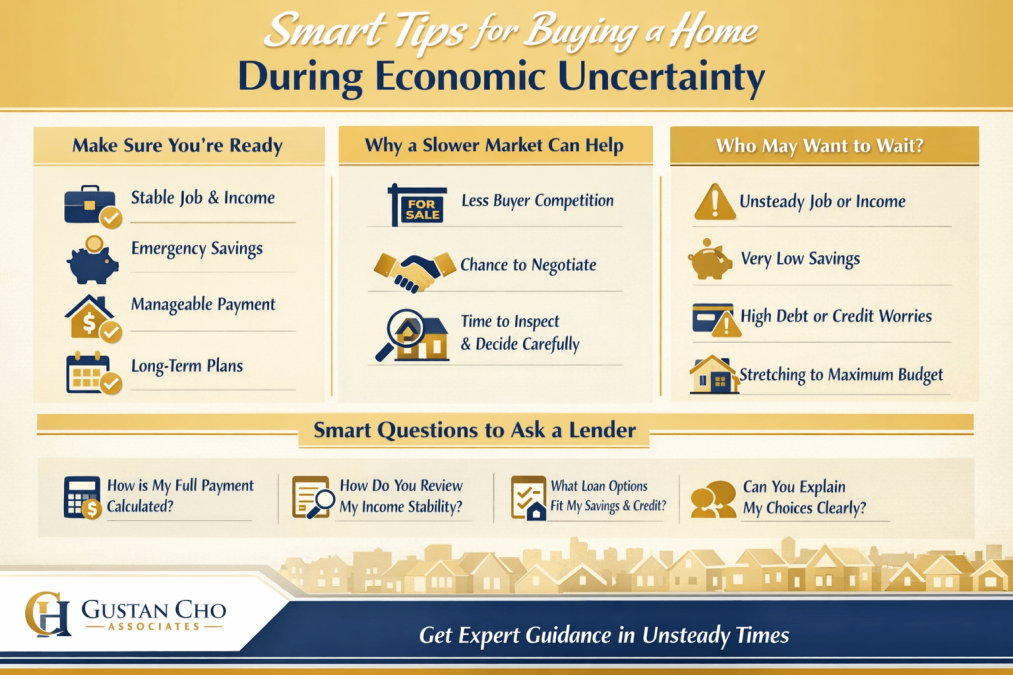
Ask yourself these simple questions:
- Is my job stable?
- Has your company been steady or growing?
- Are you in a high-demand field?
- Do I have savings?
- Can you cover down payment, closing costs, and moving costs?
- Do you still have 3–6 months of bills left after closing?
- Is my credit under control?
- Do you know your credit scores?
- Are there any recent late payments, collections, or judgments?
- Is my budget realistic?
- Do you know the total payment (principal, interest, taxes, insurance, HOA)?
- Does that payment still feel safe if prices go up a bit elsewhere (food, gas, utilities)?
If you can answer “yes” to most of these, buying a home during economic uncertainty might be the right move.
Loan Options That May Fit Different Buyers
Buyers with Limited Savings
FHA loans can help buyers who need a lower down payment and more flexible credit standards.
Buyers with Lower Credit Scores
Some government-backed loan programs may be more forgiving than conventional loans, depending on the full file and current guidelines.
Veterans and Active-Duty Service Members
VA loans can be a strong option because they often allow no down payment and no monthly mortgage insurance.
Self-Employed Buyers or Buyers with More Complex Income
Some alternative loan programs may help when tax returns do not fully reflect true cash flow. However, buyers should still focus on payment safety and reserve.
Smart Money Tips When Buying a Home During Economic Uncertainty
Here are basic money rules that can protect you:
1. Keep Your Total Payment Comfortable
When buying a home during economic uncertainty, do not chase the max approval. Ask:
“What payment would still feel safe if my income dropped a little or my expenses went up?”
Build your budget around that number, not around the bank’s top limit.
2. Don’t Empty Every Dollar for the Down Payment
It’s tempting to use all your savings to lower your monthly payment. But buying a home during economic uncertainty with zero cushion is risky.
Better to:
- Keep some cash in the bank
- Use down payment assistance if available
- Ask for seller credits if possible
3. Avoid Big Purchases Before and After Closing
Wait on:
- New car
- New furniture on credit
- Big credit card purchases
Maintain your credit and cash strength while purchasing a home during economic uncertainty. You can upgrade later once you’re settled.
Worried About Job Stability and Qualifying?
We’ll look at your income history, reserves, and loan options to build a solid file
Common Myths About Buying a Home During Economic Uncertainty
Myth 1: “You should never buy in a bad economy.”
Not true. Many people who bought during “bad” times ultimately did very well in the long run. The key is a stable income, a reasonable budget, and a realistic plan.
Myth 2: “You need perfect credit to buy during a shaky market.”
Also not true. Buying a home during economic uncertainty is possible with lower credit scores if you work with a lender that allows:
- Lower credit score programs
- Manual underwriting
- Some lenders are more flexible than others within program rules
Myth 3: “If home prices drop, you made a mistake.”
Short-term dips are normal. If you plan to stay in the home and can afford the payment, buying a home during economic uncertainty can still be a better option than renting year after year.
How to Compare Lenders During Uncertain Economic Times
Not all lenders look at risk the same way, especially when the economy feels uncertain. If you are thinking about buying a home, focus on finding a lender who explains your options clearly and helps you choose a payment that still feels manageable if life gets more expensive.
Find out how they calculate your monthly payment, covering things like taxes, insurance, and any HOA fees. A low interest rate won’t do you any good if the overall payment messes with your budget.
Ask how they review income stability. If your pay includes overtime, bonus income, commissions, or self-employment earnings, you want to understand how those numbers are being evaluated before you commit to a home search.
Ask which loan options best fit your credit profile, savings, and long-term goals. The right loan is not always the one with the lowest headline rate. It is the one that gives you a payment and structure you can realistically manage.
Ask whether they can explain more than one path forward. A strong lender should be able to walk you through your choices in plain English and help you compare trade-offs without pressure.
When the economy feels uncertain, clarity matters as much as pricing. Choose a lender who helps you understand the full picture before you make a decision.
Frequently Asked Questions About Buying a Home During Economic Uncertainty:
Is Buying a Home During Economic Uncertainty a Bad Idea?
Not always. Buying during economic uncertainty makes sense if your income is stable, you have savings left after closing, and the monthly payment fits your budget comfortably. The bigger issue is not timing the headlines perfectly. It is whether you can handle the payment if rates, prices, or everyday expenses stay high for a while.
Do Home Prices Always Drop During a Recession?
No. A recession does not automatically mean home prices will fall sharply. Prices may soften in some markets, stay flat in others, or keep rising if housing supply remains tight. Local inventory, job conditions, and affordability pressures usually matter more than the word “recession” by itself.
Do Mortgage Rates Go Down During Economic Uncertainty?
Sometimes, but not always. Mortgage rates can fall during a downturn, but they are influenced by many moving parts and do not always drop in a straight line. Trying to wait for the perfect rate can backfire, so buyers are usually better off focusing on payment comfort, savings, and the potential to refinance later if rates improve.
Should First-Time Buyers Wait for the Economy to Improve Before Buying?
Not automatically. First-time buyers should focus less on predicting the economy and more on personal readiness. If you have a stable job, cash reserves, manageable debt, and plan to stay in the home for several years, buying may still be a reasonable option. If your income feels shaky or you would be left with very little cash after closing, waiting may be the safer move.
How Much Savings Should I have Before Buying a Home During Uncertain Times?
A safer target is enough money for your down payment, closing costs, moving expenses, and an emergency cushion after closing. Many buyer-focused recession guides emphasize reserves because economic uncertainty increases the risk of job disruptions, higher living costs, or unexpected home repairs soon after move-in.
What Matters More During Economic Uncertainty: the Interest Rate or the Monthly Payment?
For most buyers, the monthly payment matters more. A lower rate is helpful, but a home only works if the full payment still feels comfortable after taxes, insurance, utilities, and normal life expenses. In an uncertain economy, affordability and cash reserves usually matter more than trying to time the market perfectly.
This article about “Buying a Home During Economic Uncertainty: Smart Guide” was updated on March 11th, 2026.
lready Pre-Approved Somewhere Else but Still Feel Unsure?
Get a second opinion from a team that specializes in buying a home during economic uncertainty with no overlays