
The Illinois pension crisis is not just a state budget story. It can affect homeowners and buyers in a very real way through higher property taxes, larger escrow payments, and tighter mortgage affordability. If taxes rise, your monthly housing payment can rise too, even if your interest rate stays the same.
This guide explains the Illinois pension crisis in plain English. It shows how it can impact your budget, pre-approval, refinance options, and long-term housing costs in Illinois. Whether you are buying your first home, reviewing your current escrow payment, or trying to understand why affordability feels tighter, this article breaks down what matters most.
How It Can Affect Property Taxes, Mortgages, and Home Affordability
The Illinois pension crisis can put pressure on state and local budgets, potentially leading to higher property taxes in some areas. Higher taxes can increase your monthly mortgage payment because lenders collect property taxes through escrow. That can affect your debt-to-income ratio, reduce buying power, or make refinancing more difficult if your payment rises too much.
What You’ll Learn in This Guide
In this article, you will learn:
- How the Illinois pension crisis can affect property taxes
- Why higher taxes can raise your monthly mortgage payment
- How escrow increases can change affordability
- What buyers should check before making an offer
- What current homeowners can do if taxes or escrow jump
Why This Matters for Illinois Home Buyers and Homeowners
For most people, the biggest concern is simple: Can the Illinois pension crisis make owning a home more expensive? The answer is that it can indirectly affect affordability when rising public costs are passed through to local tax bills. That matters because lenders use your full monthly housing payment, not just principal and interest, when deciding how much home you can afford.
If you are buying in Illinois, refinancing, or planning your monthly budget, understanding the Illinois pension crisis can help you avoid payment shock and make smarter housing decisions.
What is the Illinois Pension Crisis?
The Illinois pension crisis refers to the persistent shortfall between what public pension systems owe to current and future retirees and the assets set aside to cover those benefits. Years of underfunding, optimistic return assumptions, benefit enhancements without corresponding revenue increases, and market volatility all contributed to a liability that strains budgets at both the state and local levels.
How Pension Funding Pressure Can Affect Homeowners
When pension systems do not have enough money to cover promised benefits, state and local governments have to find more revenue over time. In Illinois, that pressure can contribute to higher property taxes, special levies, or tighter local budgets.
For homeowners and buyers, the takeaway is simple. When pension costs rise, housing affordability can get squeezed because higher taxes can raise your escrow payment and total monthly mortgage cost.
Why Illinois Fell Behind
Illinois fell behind because required pension payments were not fully made for many years, investment results did not always meet expectations, and retirement costs kept growing as workers lived longer and more employees reached retirement age. At the same time, past policy decisions increased long-term obligations without bringing in enough new revenue to keep up.
The basic problem is straightforward: When pension costs take up a bigger share of public budgets, governments have less flexibility. That can increase pressure to raise revenue, including property taxes that affect homeowners and buyers.
What Homeowners Should Watch Instead of the Politics
You do not need to follow every political debate to understand the practical risk. What matters most for homeowners is whether budget pressure leads to higher property taxes, larger escrow payments, or tighter affordability when buying or refinancing.
For buyers and current owners, the real question is simple: Will rising public costs increase the monthly cost of owning this home? That is why it makes sense to focus on local tax bills, assessment changes, and total monthly payments rather than federal bailout headlines.
How the Illinois Pension Crisis Hits Your Monthly Mortgage Payment
Property Taxes → Escrow → Total Payment
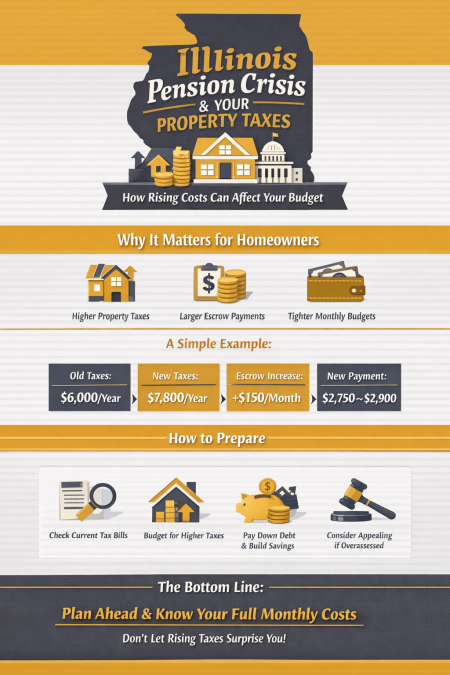
Lenders collect 1/12 of your annual property tax bill with each mortgage payment and hold it in escrow. If taxes rise because of budget pressure tied to the Illinois pension crisis, your escrow increases—and so does your total monthly payment (PITI).
Example: How Higher Property Taxes Can Raise Your Mortgage Payment
Here is a simple example of how this can work in real life:
- Old property taxes: $6,000 per year
- New property taxes: $7,800 per year
- Annual increase: $1,800
- Monthly escrow increase: $150
If your original monthly payment was:
- Principal and interest: $2,100
- Homeowners insurance: $150
- Property taxes: $500
Your old PITI payment was $2,750 per month.
After the tax increase, your new monthly tax portion becomes $650, so your new PITI payment becomes $2,900 per month.
Why this matters: Your interest rate did not change, but your housing payment still increased by $150 per month due to higher property taxes. That increase can reduce affordability, tighten your budget, or push your debt-to-income ratio too high when buying or refinancing.
Debt-to-income (DTI) Implications
Lenders compare your monthly debt payments to your monthly income. When taxes go up, your housing payment goes up, which can push that ratio too high.
Buying vs. Refinancing: What to Check
Before buying: Check the latest tax bill, confirm whether exemptions will transfer, and estimate the full monthly payment using current tax data.
If refinancing or already owning: Review whether a refinance, recast, or tax appeal could help offset a higher escrow payment after property taxes rise.
Appeal your assessment after you buy
Step-by-step guidance on comps, deadlines, and forms to cut your bill
Buying a Home in Illinois: Compare the Total Cost of Ownership
Do not focus only on the purchase price. In Illinois, the better comparison is the total monthly cost of ownership, especially in areas where property taxes may rise over time.
Before buying, compare:
- current property taxes and recent tax history
- possible exemption changes after closing
- special assessments or local levies
- homeowners insurance
- HOA or condo dues
- commuting costs and access to employment
A home with a slightly higher price but lower property taxes can sometimes be more affordable each month than a cheaper home with a heavier tax burden. That is why buyers should look at the full payment, not just the listing price.
Loan Program Strategy
- FHA Loans: useful when credit is limited, but higher taxes still affect payment shock
- VA Loans: strong if total payment remains manageable
- Conventional Loans: can work well when credit is strong, and tax modeling is precise.
- Non-QM/DSCR/Bank-statement loans: Alternative documentation paths when the Illinois pension crisis complicates DTI or self-employed income patterns.
How Borrowers Can Offset Higher Tax Payments
Extra reserves, verified rent history, strong residual income, lower LTV, or stable overtime/bonus. These help offset affordability pressure tied to the Illinois pension crisis.
Action Plan to Protect Your Budget
- Budget for a higher tax scenario
- Verify current taxes through county records
- Check whether exemptions will transfer after closing
- Appeal the assessment if the value looks too high
- Pay down credit cards before applying
- Keep more cash reserves
- Avoid stretching to the maximum price point
- Review your escrow statement each year
Call Us Now
If taxes make your monthly payment unpredictable, we’ll run a side-by-side cost of ownership analysis and structure financing that absorbs volatility tied to the Illinois pension crisis—without derailing your approval.
Borrowers who need a five-star national mortgage company licensed in 50 states with no overlays and who are experts on Illinois pension crisis, please contact us at 800-900-8569, text us for a faster response, or email us at alex@gustancho.com. Apply now, get a custom quote, or book a 10-minute tax & DTI review with a GCA loan officer today.
Frequently Asked Questions About Illinois Pension Crisis:
Why are Property Taxes so High in Illinois?
Illinois property taxes are influenced by several factors, including local government budgets, school funding needs, and long-term pension obligations. When pension costs take up a larger share of public budgets, local governments may face more pressure to raise revenue through property taxes or other levies.
Can the Illinois Pension Crisis Affect My Mortgage Approval?
Yes. Lenders look at your full monthly housing payment, including principal, interest, property taxes, insurance, and sometimes HOA dues. If property taxes are high or increase after reassessment, your total monthly payment rises, which can make it harder to stay within debt-to-income limits. This is one of the most practical ways the Illinois pension crisis can affect home buyers.
How Can I Estimate Illinois Property Taxes Before Buying a Home?
Check the latest county assessor or treasurer records, not just the MLS listing. You should also verify whether the current owner has exemptions that may not transfer after closing, because that can change your future tax bill. Illinois tax authorities note that buyers are generally responsible for property tax bills due after closing, and lenders may require escrow for those future bills.
Do Illinois Property Tax Exemptions Transfer to a New Buyer?
Not always. Some exemptions apply only if the new owner qualifies and files properly after closing. That means a buyer may inherit a property with a tax bill that looks lower on paper than what they will actually pay later, unless they confirm which exemptions will remain in place.
Can I Appeal My Property Tax Assessment in Illinois After I Buy a Home?
Yes, if you believe the assessed value is too high, you may be able to appeal through your local assessor or review board. Illinois property tax guidance emphasizes that homeowners should understand the system and challenge assessments when they appear unfair.
Is the Illinois Pension Crisis the Only Reason Housing Feels Less Affordable?
No. Mortgage rates, insurance costs, HOA dues, utilities, and home prices also affect affordability. But in Illinois, property taxes are a major part of the monthly cost of ownership, so pension-related budget pressure can make an already expensive housing payment harder to manage.
This article about “Illinois Pension Crisis: What It Means for Home Buyers Today” was updated on March 5th, 2026.
Build a city vs. suburb game plan
Balance commute, services, and tax load to make the smartest purchase