Chicago property taxes have risen sharply in many parts of Cook County, leaving homeowners worried about higher monthly housing costs and larger annual tax bills. If your property taxes increased, the most important things to understand are what caused the jump, whether your assessment is accurate, what exemptions may reduce your bill, and when you may have the right to appeal. This guide explains why Chicago area property taxes are rising, which homeowners are being hit the hardest, and what steps you can take next.
Chicago Property Taxes Hit All-Time Highs: What Every Chicago Homeowner Must Know
In 2025, Chicago homeowners are reeling from skyrocketing property taxes that have soared to record highs across Cook County. Data shows that roughly 240,000 households now face 25% or more year-over-year hikes. John Strange, a long time Chicago resident and an associate contributing editor at GCA Forums says the following about Chicago property taxes hitting a historic high:
Many Chicago homeowners are seeing higher property tax bills because of changes in assessed values, shifts in the local tax burden, and rising budget pressures across taxing districts. When property values are reassessed and the tax burden is redistributed, some homeowners may see much larger increases than others, even if overall market conditions feel uneven.
The average household hit by this wave of increases has seen its tax bill jump by about $1,700, pushing the total extra revenue from this group past $500 million. Average Chicago Area Property Taxes for both residential and commercial real estate increased over 3.7% throughout Cook County.
Why Reassessments Are Raising Property Tax Bills
Cook County regularly reassesses property values, and those updates can change how much of the overall tax burden falls on homeowners. In Chicago, reassessments increased the total taxable value of many properties. Even after appeals reduced some of those increases, residential property still accounted for a larger share of the tax base. In plain English, that means homeowners in many areas are now responsible for a bigger portion of the overall property tax burden. When that happens, some tax bills can rise sharply, even if a homeowner did not renovate the property or buy recently. This is one reason many Chicago homeowners were surprised by large increases.
Some Neighborhoods Are Seeing Larger Property Tax Increases Than Others
Property tax increases have not been spread evenly across the Chicago area. In some neighborhoods, particularly those that experienced sharper assessment increases, homeowners may notice significantly larger jumps in their Chicago-area property taxes than residents in other parts of the city. For homeowners, this disparity is important because a steep increase could signal it’s time to review your new assessed value. Verify that your home was valued fairly in comparison to similar nearby properties, ensure that all eligible exemptions were applied, and explore your appeal options if the assessment seems excessively high. Even when the broader tax system feels unfair, taking these steps can help you respond more effectively to changes in Chicago area property taxes.
Financial Relief Measures: What’s Being Done
One-Time Payments for Struggling Homeowners
To help homeowners hit hard by higher property taxes, Cook County commissioners just approved a \$15 million fund. This money will give $1,000 payments to people facing big tax jumps. The goal is to immediately put cash in the pockets of those who need it.
Property Tax Exemptions and Appeals
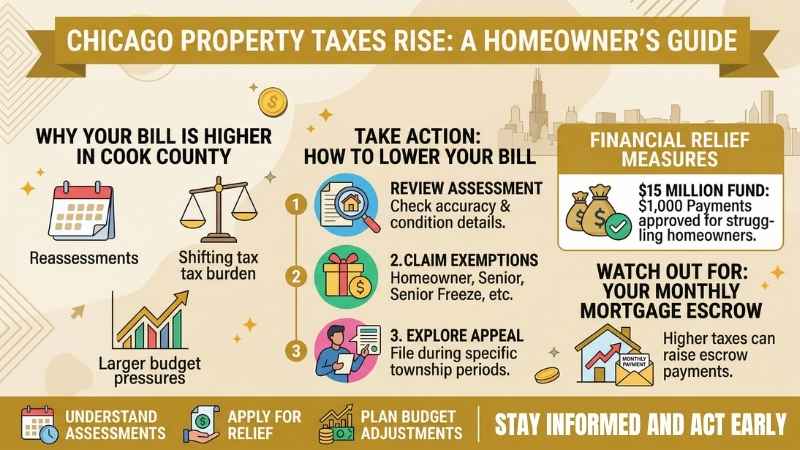
Homeowners can lower taxes by applying for exemptions like the General Homestead Exemption, the Senior Citizens Homestead Exemption, and the Senior Citizens Assessment Freeze Homestead Exemption. These programs lower the official value of a home for tax purposes. If you think the assessed value of your home is too high, you can appeal. Start at the Cook County Assessor’s Office and follow through to the Board of Review for help.
Staying Informed About Property Assessments
Keeping an eye on your property’s annual assessment can help you spot big changes and budget for them. Learn what factors go into the assessment and property tax formulas. The Cook County Assessor’s Office has tools and guides to help you understand and prepare for what’s coming next.
What Homeowners Can Do Next
If your Chicago property tax bill increased, start by reviewing your new assessment notice and confirming that your property details are accurate. Next, check whether exemptions such as the General Homestead Exemption or Senior exemptions were applied correctly. If the assessed value seems too high compared with similar homes in your area, you may want to explore an appeal. It is also smart to adjust your household budget early, especially if your mortgage servicer will increase your monthly escrow payment.
What Homeowners Should Watch Right Now
If your property taxes increased, keep an eye on three things: your assessment notice, your exemption status, and any changes to your monthly mortgage escrow payment. A higher tax bill can raise your monthly housing cost if your mortgage servicer adjusts your escrow requirement. Homeowners should also watch local deadlines for appeals and review whether the assessed value on record matches the home’s actual condition, size, and comparable neighborhood properties.
Chicago Area Property Taxes Most Affected
Mike Gracz got his source on the above data from the Yarbrough’s Report. Reasons For Property Tax Increase: The Cook County Clerk’s Office is not the office that implements the property tax levy which is the amount of money the County takes. The Clerk’s Office is to calculate and distribute the total revenues collected by property taxes by the new real estate assessments. The share a particular homeowner and/or property owner is billed is dependent by the amount the Clerk divides the total revenues of taxes by the new assessments.
What Chicago Homeowners Should Know About Property Taxes in 2026
In 2026, rising Chicago area property taxes remain a serious concern for homeowners trying to manage housing costs and protect long-term affordability. Higher tax bills can affect more than just annual expenses. They can also increase monthly mortgage escrow payments, reduce budget flexibility, and add pressure on families already dealing with higher costs in other areas. That is why homeowners need clear, practical information rather than political commentary or broad statewide debate.
The most important step in 2026 is to stay focused on what you can control. Review your property assessment carefully, make sure all available exemptions have been applied, understand how your new tax bill may affect your monthly payment, and explore an appeal if your assessed value seems too high. Chicago area property taxes can be complicated, but homeowners who stay informed and act early are better positioned to avoid surprises and make smarter financial decisions.
If your property tax bill increased, the best response is not to panic. It is to understand why the increase happened, confirm the numbers are accurate, and take advantage of any relief options that may apply. In a year when property taxes continue to impact affordability across Chicago and Cook County, informed homeowners will be in the strongest position to protect their finances and plan ahead.
Frequently Asked Questions About Chicago Area Property Taxes:
Why Did My Chicago Property Taxes Go Up So Much?
Your Chicago property taxes may have gone up because of a higher assessed value, a shift in how the tax burden is distributed, changes in local tax rates, or missing exemptions on your property. In Cook County, your assessed value, tax rate, and exemptions all affect the property tax bill you later receive.
How Do I Know If My Cook County Property Assessment is Too High?
A good starting point is to review your property details, compare your assessed value with similar nearby homes, and confirm the record accurately reflects your home’s size, condition, and features. If you believe the assessed value is too high, Cook County allows residential appeals during specific filing periods.
What Exemptions Can Lower My Chicago Property Tax Bill?
Many homeowners may qualify for exemptions such as the Homeowner Exemption, Senior Citizen Exemption, Senior Freeze Exemption, or Longtime Homeowner Exemption, depending on eligibility. The Cook County Assessor says exemptions are savings that help lower a homeowner’s property tax bill, and the Homeowner Exemption is one of the most common.
How Can I Check Whether My Homeowner Exemption Was Applied?
You can check your Chicago area property taxes record and review the exemption history and status listed for the home. Cook County’s official homeowner exemption page specifically says homeowners can see which exemptions were applied by checking the Property Details and then reviewing the Exemption History and Status section.
When Can I Appeal My Cook County Property Taxes?
You can only file an appeal during certain timeframes, so timing matters. The Cook County Assessor’s Office says appeals may be filed only during specific periods, and homeowners can check whether their township is open to appeals online.
Will Higher Property Taxes Affect My Monthly Mortgage Payment?
They can. If you escrow taxes through your mortgage servicer, a higher property tax bill may lead to a higher monthly escrow payment. That is why it is important to review your bill, confirm exemptions, and budget for possible payment changes after a tax increase. Cook County also advises homeowners to check bills, payments, refunds, and exemptions through its online tools.
This article about “Chicago Area Property Taxes Soar To Record High Levels” was updated on March 27th, 2026.