In this guide, we will cover the best strategies for buying and selling a ome at the same time. Buying and selling a home at the same time can feel like juggling fireballs—exciting but stressful. If you’ve ever wondered how to handle both without losing your mind, you’re not alone. Many homeowners find themselves in this tricky situation. Whether upgrading to accommodate a growing family or downsizing as an empty nester, the process can seem overwhelming. But don’t worry! With the right plan, you can move smoothly from one home to another. This guide will show you buying and selling a home at the same time—without stress.
Why Is Buying and Selling a Home at the Same Time So Stressful?

If you’ve ever bought or sold a home, you know how stressful it can be. Now, imagine doing both at the same time! That’s a whole new level of complexity. Why? You’re trying to coordinate two big transactions simultaneously, each with its own timelines, paperwork, and potential problems.
There is also the risk of market changes. If you are selling in a slower market while buying in a hot one, you could find your current home sitting on the market longer than expected, while the homes you want to buy are moving quickly. This mismatch can make buying and selling a home simultaneously feel especially difficult.
Buying and selling a home at the same time often demands precise timing, as multiple significant tasks must be managed concurrently. These may include preparing your current home for sale, listing it, negotiating with buyers, searching for a new residence, securing financing, scheduling inspections, and coordinating the move within a limited timeframe.
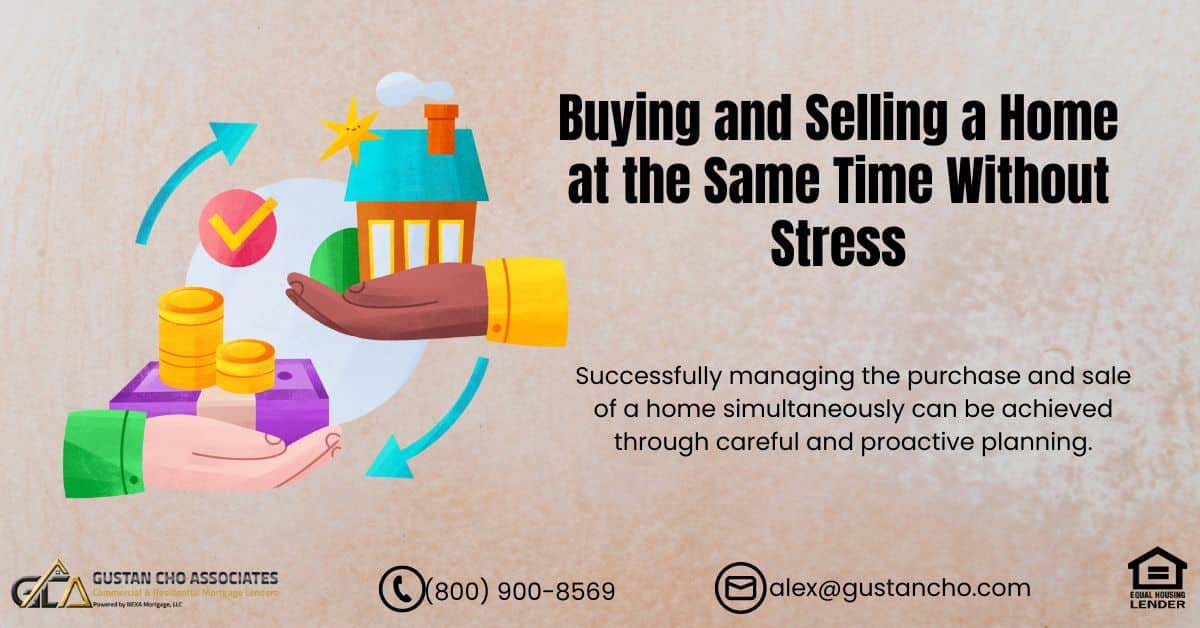
Buying and Selling a Home at the Same Time Without Stress
Buying and selling a home at the same time is often a complex process, as each step directly influences the next. Many homeowners rely on the equity in their current property to make a down payment on their next home. Without a clear strategy, this process can quickly become stressful and financially risky.
Careful planning, a defined timeline, and informed decisions about financing and real estate can help you successfully manage the simultaneous buying and selling of a home.
Whether you are upsizing, downsizing, relocating for work, or looking for a new home before selling your current one, understanding the process increases confidence and helps prevent costly errors. This guide outlines the process of buying and selling a home simultaneously, identifies key challenges, explains available financing options, and provides practical tips for each stage.
What Does Buying and Selling a Home at the Same Time Mean?
Buying and selling a home at the same time means you are coordinating the sale of your current house with the purchase of your next property within a similar time frame. In many cases, homeowners want to use the proceeds from the sale of their current home to fund the down payment, closing costs, or reserve requirements on the next purchase.
When planning to buy and sell a home simultaneously, consider your payment obligations, transaction timing, and risks together, rather than prioritizing convenience alone.
For some homeowners, the process goes smoothly because their current property sells quickly and the next home is available at the right time. For others, delays in either transaction can create stress, financial pressure, or temporary housing issues. That is why buying and selling a home at the same time requires a strategy, not just hope.
Why Buying and Selling a Home at the Same Time Feels So Stressful
The biggest reason this process feels stressful is uncertainty. You may worry about selling too soon and having nowhere to live, or buying too soon and ending up with two housing payments. The emotional pressure can increase if you are trying to manage family needs, school schedules, work relocation, or a competitive housing market.
Another major source of stress is that both transactions often have different timelines. Your current home may get an offer quickly, but the buyer’s financing could take longer than expected.
On the other hand, you may find the perfect new home before your existing property is under contract. When timelines don’t align, you may feel forced to make rushed decisions. Financing is also a concern. Some borrowers qualify for their new mortgage only if their existing home sells first. Others may qualify while carrying both homes temporarily, but that does not always mean they should. Understanding your mortgage options early is one of the best ways to reduce the stress associated with buying and selling a home at the same time.
The Biggest Challenges of Buying and Selling a Home at the Same Time
One of the biggest challenges is not knowing which transaction should happen first. Selling first can reduce financial risk, but it may leave you scrambling to find your next home. Buying first can give you more control over your move, but it may increase pressure if your current home does not sell quickly. Another challenge is accessing home equity.
Many homeowners have significant equity in their current property, but that money is tied up until the home closes. If you need those funds for your next down payment, the timing of the sale becomes even more important.
Factors such as property appraisals, inspections, loan approvals, repairs, and documentation can impact both closings. Even minor delays may escalate into more significant issues. For instance, if the buyer of your current home requires additional time, it could disrupt the closing schedule for your new purchase. If the seller of your new home is unable to accommodate delays, you may need temporary housing or alternative financing solutions.
How to Prepare Before Buying and Selling a Home at the Same Time
Preparation is essential for a smoother experience. Before listing your home or searching for a new property, assess your financial situation. Determine your outstanding mortgage balance, current home value, estimated sale proceeds, monthly expenses, savings, and purchasing capacity.
Consult a mortgage professional early to evaluate whether selling first or buying before selling is more appropriate. Setting clear financial boundaries in advance helps prevent emotionally driven decisions.
Preparing your current home for the market before starting your search for a new property is beneficial. Address minor repairs, declutter, enhance curb appeal, and research local market values. These actions can make the sales process smoother and more efficient. When you buy and sell a home at the same time, being prepared helps you avoid surprises. The more organized you are before starting, the easier it is to handle deadlines, negotiations, and financing.
Understanding Your Home Equity Before Listing
Your home equity plays a major role in the process. Equity is the difference between your home’s market value and the amount you still owe on your mortgage. If your current home has enough equity, the proceeds from the sale may cover your down payment, closing costs, moving expenses, and possibly some reserves for the new mortgage.
Some sellers let fear rush their decisions. They might accept lowball offers, skip important protections, or stretch their finances too thin just to make everything line up.
In truth, safeguarding your finances is far more important than chasing a perfect timeline. Before proceeding, calculate your net proceeds from the sale instead of focusing only on the sale price. Consider agent commissions, taxes, legal fees, transfer costs, repairs, and any concessions to the buyer. Accurately estimating your take-home amount enables effective planning and reduces the chance of unexpected financial stress during the process.
Here’s Why People Get Stressed Buying and Selling a Home at The Same Time:
Coordinating Timelines:
- What if you find your dream home, but your current house hasn’t sold yet?
- Or what if you sell your home and haven’t found a new one?
- Timing is everything.
Managing Finances:
- Most people need the money from selling their current home to buy their next one.
- But what if you need to make an offer before selling?
- You might wonder how to afford two mortgages or worry about your debt-to-income ratio.
Handling Moving Logistics:
- Moving from one home to another while keeping everything in order can feel impossible.
- Where will you live in between?
- How will you move out and move in all at once?
These challenges might sound scary, but with a plan and the right experts on your side, you can buy and sell your home at the same time—without all the stress.
Ready to Buy and Sell a Home at the Same Time? Let’s Make It Stress-Free!
Contact us today to learn how we can simplify the process and make it as smooth as possible.
Can I Buy and Sell a Home at the Same Time?
Yes! It’s possible to buy and sell a home at the same time. Thousands of people do it every year, and you can too. But how? Let’s dive into the steps you need to take to make this happen smoothly.
Step 1: Get Pre-Approved for a Mortgage
- Before you even think about buying a new home, make sure you’re pre-approved for a mortgage.
- Getting pre-approved shows sellers you’re serious, giving you a clear idea of your budget.
- It also helps you know whether you can afford both mortgages if your home doesn’t sell as quickly as you hope.
- Talk to a loan officer early if you’re upgrading to a larger home or buying in a hot real estate market.
- They can help you explore loan options and make sure you meet the 2026 mortgage requirements.
- It will be easier to go through the entire process once you understand the amount of house you can afford.
Pro Tip:
- Inquire with your loan officer to see if you meet the requirements for a bridge loan.
- Bridge loans allow you to borrow against your current home’s equity to finance the purchase of your new home before selling the old one.
- It’s a great option if you’re in between selling and buying.
Step 2: Decide Whether to Buy or Sell First
Many homeowners wonder, “Should I buy first or sell first?” The answer depends on your situation.
If You Sell First:
- You’ll have cash in hand for a down payment on your new home.
- However, you may need temporary housing while you search for your next home.
If You Buy First:
- You get to move into your new home right away, but you’ll have to juggle two mortgages if your old home doesn’t sell quickly.
Pro Tip:
Some buyers negotiate a lease-back agreement where the buyer of their current home allows them to stay in the house after the sale for a short period. This gives you extra time to find your next home without worrying about temporary housing.
Step 3: Make Your Home Move-in Ready
- If you decide to sell first, focus on preparing your home for the market.
- Clean it up, make any necessary repairs, and stage it to look its best.
- This will help you sell quickly and at a great price.
Step 4: Here’s A Checklist To Prepare Your Home For Sale:
- Declutter: Remove personal items and unnecessary furniture to make your home feel larger.
- Make Small Repairs: Fix leaky faucets, patch holes in walls, and make sure all doors and windows work properly.
- Clean Thoroughly: Make sure every room is spotless, including the baseboards, windows, and carpets.
- Boost Curb Appeal: First impressions matter!
- Make sure the outside of your home looks as good as the inside.
- Mow the lawn, plant flowers, and paint the front door if necessary.
Step 5: Understand the 2026 Mortgage Requirements
- One of the biggest concerns when buying and selling a home at the same time is qualifying for two mortgages.
- This depends on your debt-to-income ratio (DTI) and whether you have enough income to cover both payments.
Financing Options When Buying and Selling a Home at the Same Time
There is no single loan option that works for everyone in this situation. The best choice depends on how much equity you have, your income, your debts, your savings, and how fast homes are selling in your area.
Some homeowners choose to sell first and then buy. This is often the safest financial route because you know exactly how much money you will have after closing. It also reduces the risk of having to carry two housing payments. The downside is that you may need temporary housing if you do not find your next home quickly.
Others choose to buy first and sell later. This can make moving easier because you can go straight into your new home. However, you may need to meet stricter loan rules, have more savings, or use a short-term loan called a bridge loan. A bridge loan lets you use your home’s value before it sells, but it can cost more, come with extra rules, and be risky if your old home doesn’t sell quickly.
Some people may also use a home equity line of credit or other ways to borrow money before selling. But you should think carefully about these options, because taking on more debt can make it harder to get a new loan.
Selling Your House First versus Buying First
In selling your house first is often the more conservative strategy. It helps you clearly understand your budget, avoid double payments, and make a non-contingent offer on your next home if you are already under contract or have closed. This can make your offer stronger in competitive markets. The trade-off is that you may need to move twice or secure short-term housing.
Buying first may be attractive if you want more control over your move or if you have strong finances and do not want to rush your home search.
This strategy can work well for borrowers who have enough income and reserves to carry both homes temporarily. However, it also carries more risk if the current home takes longer to sell or sells for less than expected.
There is no single answer. The best choice depends on your comfort with risk, available funds, borrowing power, and local market conditions.
How Contingencies Work When Buying and Selling a Home at the Same Time
Contingencies are important tools in these transactions. A home sale contingency allows a buyer to make an offer on a new home that depends on selling their current property. This can protect you from being forced to own two homes at once.
In a strong seller’s market, home sale contingencies may make your offer less attractive than those of buyers who are already fully approved and not dependent on another sale.
A settlement contingency is slightly different and may be used when your current home is already under contract but has not yet closed. This can give the seller of the new home more confidence because your sale is further along in the process.
The primary drawback of contingencies is that they may complicate negotiations. Sellers typically prefer certainty, and any element of uncertainty can weaken your offer. Therefore, it is important to discuss contingency strategies with your real estate agent and lender.
How Contingencies Work When Buying and Selling a Home at the Same Time
If you are planning to buy and sell a home at the same time, contingencies can help, but they should be clear and well-defined. A rent-back agreement can significantly reduce stress during the transition. This arrangement allows you to sell your home, finalize the sale, and remain in the property for a specified period while paying rent to the new owner. It provides access to sale proceeds and additional time to secure your next home.
If your current home sells quickly but your new residence is not yet available, a rent-back agreement can help you avoid temporary housing, multiple moves, or rushed decisions.
However, the details are important. Make sure your rent-back agreement clearly states how long you can stay, how much rent you will pay, who will pay for utilities and repairs, and what happens if your move-out date changes. A clear contract helps everyone understand what to expect.
Financing Options When Buying and Selling a Home at the Same Time
Mortgage pre-approval is one of the smartest first steps in the process. A pre-approval gives you a better understanding of your purchasing power and helps clarify whether you need to sell your existing home first. It also shows sellers that you are serious and financially prepared.
In some cases, the lender may review different scenarios. For example, they may evaluate your qualification with your current mortgage included, and then also review the scenario where your current home is sold.
This helps you understand the range of what is possible and what conditions need to be met. When buying and selling a home at the same time, pre-approval is more than just getting a loan. It helps you build a strategy for timing, affordability, and risk.
How Timing Affects Both Transactions
Timing is very important in this kind of move. Even when both deals seem to align, unexpected issues can delay closing dates. The buyer of your current home might ask for repairs, loan approval could be slow, the home value might come in lower than expected, or paperwork issues could delay things.
At the same time, the home you want to buy may have its own deadlines and conditions. That is why flexibility is important. Build extra time into your schedule whenever possible.
Try not to schedule movers, utility transfers, or travel plans too close to the closing date. Real estate closings often change, even when everyone is doing their best. The more realistic you are about timing, the smoother and less stressful your buy-and-sell journey will be.
Tips to Reduce Stress When Buying and Selling a Home at the Same Time
One effective way to manage stress is to simplify decision-making. Establish your maximum payment, minimum acceptable sale price, and preferred moving timeline before emotions influence your judgment. These parameters help prevent impulsive decisions that may lead to future regret.
Keeping your expectations grounded also goes a long way. You may not land every term you want on both sides of the deal. Sometimes, peace of mind is worth more than squeezing out every last dollar.
Open communication is just as important. Make sure your lender, real estate agent, title company, and attorney (if you have one) all know your timeline for both transactions. When everyone is in the loop, they can spot potential issues early and help keep your deadlines on track.
How to Buy and Sell a House at the Same Time Without Costly Mistakes
Maintaining extra savings is wise, as unexpected expenses such as repairs, moving, storage, or temporary housing may arise. Adequate reserves help manage unforeseen costs with less stress. Effective collaboration is also essential.
Your real estate agent should know your loan timeline, and your lender should be aware of your sale schedule. Coordinated efforts among all parties contribute to a smoother process.
For instance, if your lender requires a signed sales contract before approving your new mortgage, your agent needs to know. If your agent is drafting an offer with a settlement contingency, your lender should be ready to highlight your financial strength. Clear communication helps prevent mix-ups that could slow down either closing.
Common Mistakes to Avoid When Buying and Selling a Home at the Same Time
A common mistake is assuming your current home will sell immediately or at a price higher than the market supports. Overpricing can delay your sale and cause problems for the buyer.
Another mistake is starting the home search before understanding your financing options. Falling in love with a replacement home before knowing whether you need to sell first can create emotional pressure and poor decisions.
Some homeowners also underestimate total costs. They focus on mortgage payments but forget moving expenses, repairs, staging, and storage. Another mistake is failing to consider contingencies, such as a buyer withdrawing, an appraisal coming in low, or a delayed closing. Proactively evaluating these scenarios improves preparedness and promotes stability throughout the process. Scenarios do not invite negativity—they build stability.
How to Protect Yourself From Delayed Closings
Delayed closings are common enough that every homeowner should plan for them. One way to protect yourself is by negotiating flexibility into your contracts whenever possible. This may include rent-back terms, contingency windows, or closing date ranges rather than one narrowly fixed target.
You should also avoid making big financial changes while both transactions are happening. Do not open new credit accounts, change jobs, make unexplained deposits, or take on new debt without talking to your lender first.
Don’t open up new credit, don’t buy big ticket items like furniture and autoas this can affect your mortgage approval. Staying organized helps, too. Keep your financial documents ready, respond quickly to your lender, and track important dates. While some delays are beyond your control, being prepared can help prevent them on your end.
Selling a Home at the Same Time: Is It the Right Move for You?
For many homeowners, the answer is yes. Coordinating both transactions can be efficient and financially smart, especially if you need your equity for the next home. It can also help you avoid leaving an empty property after moving out or missing a favorable market opportunity. However, this is not the best choice for everyone.
If money is tight, your local market is hard to predict, or you do not like dealing with uncertainty, it may be better to sell first and make a clear plan before buying.
In other cases, buying first may work if you have enough savings and need to move quickly.
The best choice depends on your financial situation, the local market, the level of risk you are comfortable with, and your moving plans. There is no single answer, but by looking closely at your finances, you can usually find a safer and smarter way to move forward.
Here’s A Quick Breakdown Of The 2026 DTI Limits For Various Loan Types:
FHA Loans:
- The back-end DTI should be 56.9%, and the front-end DTI should be 46.9%, provided the credit scores are 620 or higher.
- If the credit score falls below 620 and down to 500 FICO, you should get an approve/eligible with a front-end debt-to-income ratio of 31% and back-end debt-to-income rato of 43%.
Conventional Loans:
- Fannie Mae and Freddie Mac cap your DTI at 45%.
- However, if you have higher credit scores (680 or higher) debt-to-income ratio can cap at 50%.
VA Loans:
- There is no specific DTI limit.
- Gustan Cho Associates has no lender overlays can it is not uncommon to get approve/eligible with a 65% debt-to-income ratio with strong residual income.
- However, most lenders of VA loans have overlays and normally cap debt-to-income ratio on VA loans between 40% and 55%.
USDA Loans:
- 31% front-end and 41% back-end debt-to-income ratio caps.
If you don’t meet the DTI requirements for both mortgages, you can explore creative financing options, such as renting your current home or paying down debt, to improve your DTI.
Step 6: Get Creative with Financing
- If you’re worried about managing two mortgages, there are options to help:
Rent Out Your Current Home:
- If you can’t sell your home quickly, you can rent it out to generate income.
- Most lenders allow you to use 75% of the rental income to help you qualify for your new mortgage.
- Just make sure you have at least 25% equity in the home.
Take Out a HELOC:
- If you have significant equity in your current home, consider taking a Home Equity Line of Credit (HELOC).
- You can use the funds from the HELOC for your down payment and closing costs on your new home.
Use a Bridge Loan:
- As mentioned earlier, bridge loans are a great way to finance a new home purchase while waiting for your current home to sell.
Pro Tip:
Talk to your loan officer about the best financing options for your situation. They’ll help you figure out how to afford your new home without stretching your finances too thin.
Step 7: Close Both Deals
- Finally, once you’ve sold your current home and bought your new one, it’s time to close both deals.
- Work closely with your loan officer and real estate agent to coordinate closing dates.
- Sometimes, you can close on both homes on the same day, so you won’t have to worry about temporary housing.
Pro Tip:
Ask your lender if they offer a simultaneous closing option. This allows you to sell your old home and use the proceeds to close on your new home immediately. It’s the smoothest way to handle buying and selling at the same time.
Buying and Selling a Home at the Same Time? Let Us Help You Make It Seamless!
Contact us today for expert guidance to help you navigate both processes without the stress.
The Bottom Line: It’s All About Planning
Buying and selling a home at the same time doesn’t have to be a nightmare. By strategizing thoughtfully, assembling the appropriate team of experts, and considering innovative financial solutions, you can effectively manage both deals. If you follow these steps, whether moving to a larger space, downsizing or relocating, the process can be hassle-free.
Buying and selling a home at the same time presents significant challenges, but a well-structured plan can simplify the process. This guide offers strategies to manage both transactions and avoid common pitfalls, minimizing risk.
If you are considering buying and selling a home simultaneously, start by evaluating your budget, assessing your home equity, and exploring available mortgage options. These steps can help you proceed with greater confidence and reduced stress.
If you’re ready to buy and sell a home at the same time, we’re here to help. Contact our expert loan officers today to learn how to make the process stress-free. Call us at 800-900-8569 or email us at alex@gustancho.com for personalized advice and guidance. Let’s get you into your dream home without the headaches!
Frequently Asked Questions About Buying and Selling a Home at the Same Time:
Can I Buy and Sell a Home at the Same Time?
- Yes, it is feasible to purchase and sell a home simultaneously.
- It simply necessitates thorough planning and coordination.
- Initiate the process by obtaining pre-approval for a mortgage and collaborating closely with your loan officer and real estate agent.
What Should I Do First, Sell My Home or Buy a New One?
- It depends on your situation. Selling first gives you the money for a down payment on a new home, but buying first lets you move in immediately.
- Both options have pros and cons.
What Financing Options Can Help When Buying and Selling a Home at the Same Time?
- You can explore options like bridge loans, HELOCs (Home Equity Line of Credit), or renting out your current home to help cover the cost of your new home before your old one sells.
What Happens if I Sell My Home But Can’t Find a New One Right Away?
- You might need temporary housing or negotiate a lease-back agreement with the buyer of your current home.
- This lets you stay in your old house briefly until you find your new home.
Can I Use Rental Income From My Current Home to Qualify for a New Mortgage?
- Yes!
- If you have at least 25% equity in your current home, lenders may allow you to use 75% of the rental income to help you qualify for a mortgage on your new home while you’re still selling.
What is the Biggest Challenge of Buying and Selling a Home at the Same Time?
- The most common challenge is coordinating both transactions—selling your current home while closing on your new one.
- Timing is everything to avoid temporary housing or paying two mortgages.
How Do I Prepare My Home for Sale While Looking For A New One?
- Declutter, clean, and make necessary repairs to get your home market-ready.
- Start looking for your new home early to move forward once your current home sells.
Do I Need to Qualify for Two Mortgages When Buying and Selling a Home at the Same Time?
- Yes, you’ll need to qualify for both mortgages unless you sell your current home before closing on the new one.
- Make sure to check your debt-to-income ratio with your loan officer.
How Can I Avoid Stress When Buying and Selling a Home at the Same Time?
- It’s important to prepare in advance.
- Work with experienced professionals, like loan officers and real estate agents, who can help you handle both deals and provide creative financing options.
What’s The Best Way To Close The Sale And Purchase Of My Homes On The Same Day?
- Some lenders offer simultaneous closings, allowing you to sell your current home and immediately use the proceeds to close your new home.
- This is one of the smoothest ways to handle buying and selling a home at the same time.
Final Thoughts on Buying and Selling a Home at the Same Time
Buying and selling a home simultaneously need not be overwhelming. While managing two major transactions can be stressful, thorough preparation, clear financing, realistic timelines, and effective communication can streamline the process.
Successful homeowners approach this process with a comprehensive plan. They assess their home equity, investigate financing options early, anticipate potential challenges, and avoid emotionally driven decisions.
Whether you choose to sell first, buy first, utilize contingencies, or pursue temporary financing, the primary objective is to minimize risk and facilitate a seamless transition.
If you are considering buying and selling a home simultaneously, begin by reviewing mortgage options, estimating probable sale proceeds, and establishing a flexible timeline. Concentrate on controllable factors rather than striving for perfect timing. Yes, it can be challenging because you are coordinating two separate transactions with different timelines, financing requirements, and potential delays. However, with proper preparation and the right strategy, buying and selling a home simultaneously can be successfully managed.
This blog about “Buying and Selling a Home at the Same Time Without Stress” was updated on March 13th, 2026.
Buying and Selling a Home Doesn’t Have to Be Complicated—Let’s Make It Easy!
Reach out now for advice and guidance to ensure a smooth transition into your new home.