Real Estate Referral Agent for Homebuyers: Find the Right Buyer’s Agent
This guide will cover the preferred real estate referral agent network at Gustan Cho Associates. Are you investigating buying or selling a property but feeling overwhelmed by the process? Or you may require financial assistance but need to know where to turn for reliable lending options. Dale Elenteny, NMLS 904444, a senior mortgage loan originator at Gustan Cho Associates says the following about a real estate referral agent:
Working with a preferred referral agent can save time and reduce stress levels associated with buying or selling property while providing access to top-notch professionals who have yet to do much research from scratch.
Working with a referral agent can make all the difference in these situations! Referral agents are experts who connect clients with trusted real estate and lending professionals that fit their unique needs. This blog post explores what referral agents do, how they work, and why they benefit buyers and sellers. So get ready to learn about real estate and lending referral agents!
What is a Preferred Real Estate Referral Agent?

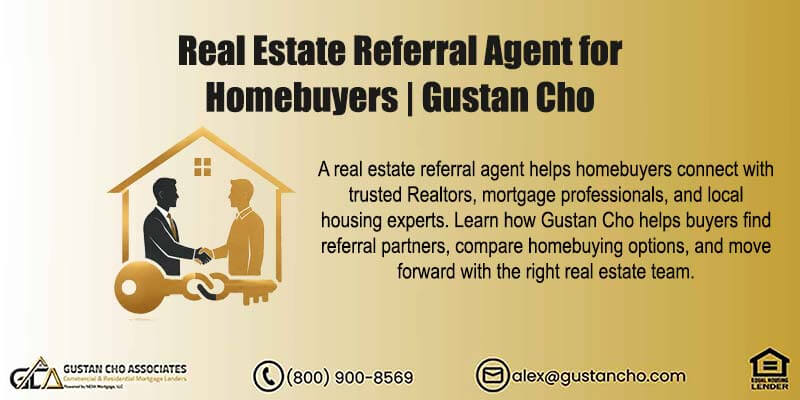
A real estate referral agent is an intermediary who connects clients with real estate and lending professionals. They act as a bridge between buyers, sellers, lenders, and realtors to make the buying or selling process smoother for everyone involved. Referral agents usually have extensive networks of trusted professionals in the industry. John Strange, NMLS 230932, is a mortgage loan officer at Gustan Cho Associates and explains the role of a preferred real estate referral agent as follows:
The real estate referral agent continue to stay involved throughout the transaction process by checking in on progress and ensuring all parties are satisfied with how things are going.
The role of a preferred real estate referral agent isn’t limited to simply making introductions. When clients reach out to them, they assess their needs and match them with suitable experts within their network. The clients can rest assured that they are connected with reputable individuals experienced in handling similar situations. It’s important to note that referral agents only sometimes handle transactions themselves. Instead, they provide recommendations based on their knowledge of the local market and personal connections in the industry.
What Is a Real Estate Referral Agent?
A real estate referral agent works like matchmakers, connecting homebuyers and sellers with the right licensed professionals based on location, property type, budget, and transaction needs. A real estate referral agent is typically licensed real estate agents who connect buyers and sellers with licensed agents or brokers who can assist with the transaction.
If the agent will not represent the client for the entire transaction, the referral agent’s role is to identify the right licensed professional for the client’s specific needs.
For example, if an Illinois resident is relocating to Florida and cannot connect with a local agent, their Illinois agent can refer them to a Florida buyer’s agent. Mortgage borrowers may need a specialized real estate agent if they are using an FHA loan, purchasing a VA home, buying a condominium, a manufactured home, new construction, or a property requiring seller concessions.
Proper Matching is Essential
Referrals should not be based only on whether an agent is available. Buyers should check the referred agent’s license, experience, knowledge of the local market, communication skills, availability, and understanding of the loan type.
A real estate referral agent just makes the introduction. The buyer’s agent works for the homebuyer and handles many tasks required by state law and the contract.
These include helping find properties, setting up showings, analyzing the market, preparing offers, negotiating, managing contract deadlines, coordinating inspections, and working with the mortgage professional and others involved in closing. After receiving a referral, buyers should confirm who will represent them and understand the full scope of services provided.
Real Estate Agent Referrals vs Mortgage Referrals
These real estate agent referrals are not the same as mortgage referrals. The RESPA federal regulations generally prohibit the payment, offering, or solicitation of any fee, kickback, or thing of value for the referral of settlement service business concerning a federally related mortgage loan.
Regulation X offers a carve-out for certain cooperative brokerage and referral arrangements between real estate agents and real estate brokers acting within a real estate brokerage context.
This carve-out does not apply to referral fee arrangements between Real Estate Brokers and Mortgage Brokers or Mortgage Lenders. Consumers should have the right to select their mortgage lender, real estate agent, title service, attorney, inspector, and other service providers, as regulated by law and contractual obligation.
How a Real Estate Referral Agent Aids Homebuyers
Finding a real estate agent online is simple, but finding one who truly understands your unique needs and mortgage situation is the real challenge. A referral is most helpful when it considers more than just location.
For buyers, the right referral is very important when special mortgage financing is involved, because it’s more than just finding any available agent.
If you’re buying with a loan, your referred agent should know about the pre-approval process, different loan types, property appraisals, seller discounts, and the details of financing conditions. Your agent will stand by your side from the very first offer all the way to the closing table.
The Role of a Real Estate Referral Agent
Sometimes, a referral agent’s best quality is patience—especially when helping first-time buyers navigate contracts, deposits, inspections, appraisals, financing, seller discounts, closing costs, and the important final walkthrough.
- A veteran homebuyer may require an agent who understands VA Appraisal and VA loan property requirements.
- A homebuyer using an FHA loan may choose an agent who understands potential property condition issues that may be of concern to FHA loan financing.
- A USDA loan homebuyer may require an agent who understands the eligible rural and suburban areas.
- A real estate agent working with a self-employed buyer using a bank statement loan or a similar loan may need specialized knowledge of the unique financing and paperwork involved compared to regular loans.
A great referral puts your needs and the details of your transaction first, not just how close an agent happens to be.
Get Mortgage Pre-Approved Before You Start Touring Homes

Buying a home is both an emotional milestone and a big financial step. Getting your mortgage financing ready before you start looking at homes can make the process easier. Your income, job, down payment, and loan choices all affect what you can afford after pre-approval.
Receiving a pre-approval does not guarantee a final mortgage approval. Final approval is contingent on the property, the appraisal, the title, updated borrower information, and other mortgage underwriting requirements.
Pre-approval can reveal any issues that might stop you from finding a home you love. Things that may affect your chance to get a mortgage include having too much debt compared to income, late payments, collections, student loans, irregular income, self-employment, bankruptcy, foreclosure, large deposits, and not enough savings; these can also affect if a property qualifies.
Why Mortgage Pre-Approval Helps Your Real Estate Agent
Mortgage pre-approval gives your real estate agent a basic idea of the type of loan your lender will provide. For example, a borrower who is qualified for a $350,000 FHA mortgage will need a different home search strategy than a borrower who is approved for a $700,000 jumbo loan. The purchase price also takes into account property taxes, mortgage insurance, interest rate, HOA fees, homeowners’ insurance, and the buyer’s debt compared to income. With a solid mortgage pre-approval in hand, your agent can zero in on homes that truly fit your budget and wish list.
How a Real Estate Referral Agent and Mortgage Pre-Approval Work Together
The mortgage and real estate parts of the deal must work together for a successful home purchase. Each side should keep professional honesty and independence.
Your Mortgage Qualification
Speak with a licensed mortgage loan officer before shopping for a home to understand your finances. Eligible borrowers can explore a range of loan options, including FHA, VA, USDA, conventional, jumbo, down payment assistance, and Non-QM mortgage programs, among others. A basic understanding of financing will help you with more than just obtaining a pre-approval letter. You will better understand your homebuying budget and may discover hurdles that would obstruct underwriting.
Financing Strategy and Finding Your Real Estate Agent
A financing strategy can help you determine how to find a realtor. You may need a referral agent or network, especially if you are buying in a new area. Ask potential realtors about their experience with your preferred mortgage program. Experience is important for FHA, VA, USDA, and other financing, purchasing a condo, appraisals, seller concessions, and unique underwriting.
Buying a Home Representation Agreement
A signed representation agreement is now, in many cases, a prerequisite for home tours if the listing service your realtor operates under is an MLS member. This agreement explains the services to be provided and how payment will be managed. Review the agreement carefully, focusing on termination provisions, compensation terms, and any exclusivity clauses. Commissions and fees for realtor services are negotiable.
Search for Homes with the Approved Financing Strategy
Searching for your dream home gets a whole lot easier—for you and your agent—when your financing plan is crystal clear. Agents need to know the potential purchase price, loan type, expected down payment, desired monthly payments, maximum closing costs, and the types of properties buyers are interested in. This information helps agents avoid showing homes that do not fit the buyer’s mortgage program. Once the buyer selects a home, financing and the contract outline begin to align.
The Start of the Mortgage Process After Both Buyers and Sellers Sign Purchase Contract
Lenders might need the signed purchase contract right away, and the mortgage team will start the underwriting, appraisal, title, and other contract services. The buyer’s agent pays close attention to the contract while the lender manages the mortgage approval process. There are many issues that can arise during the closing process, including a low appraisal, discrepancies between the home and the loan, and an amendment to the purchase agreement. During these situations, strong communication is necessary.
How to Choose the Best Real Estate Referral Agent
A referral is a great starting point, but it’s still up to you to size up the real estate pro. Ask about their track record in your favorite neighborhoods and with the kinds of homes you’re eyeing. Don’t forget to check their know-how with your loan type, their availability for showings, and how they like to keep in touch. It may also be prudent to ask how they handle situations involving multiple offers, negotiations following property inspections, appraisal discrepancies, seller concessions, financing contingencies, and closing delays.
ready to Buy a Home With the Right Agent by Your Side?
AComplete a quick application or send your scenario. We’ll help you get mortgage-ready and connect you with a real state referral agent who fits your needs.
Confirm Real Estate Referral Agent is Licensed and in Good Standings
Confirm that the agent has an active real estate license in the state where the property is. Online reviews can offer insight, but don’t let them be your only guide. Look at the agent’s recent deals, local know-how, quickness to respond, and how well they get what you’re looking for. Interviewing agents can be as simple or as in-depth as you want.
Experience and Knowledge of Real Estate Referral Agent
Ask how many buyers the agent has represented recently in your preferred area, and if they regularly work with first-time homebuyers or use FHA, VA, USDA, conventional, jumbo, or Non-QM loans.
- Ask who will be showing you homes, and who you will be interacting with, should you need assistance.
- Ask whether the agent works alone or as part of a team.
- Decide on your preferred communication method before signing an agreement.
- Some buyers prefer phone calls, while others choose texts, emails, or other methods.
Above all, make sure your agent explains each step and never pushes you into choices you don’t fully understand.
How Does the Real Estate Referral Agent Work?
Are you ready to buy or sell a property but need guidance on where to start? Have you considered using a real estate referral agent? These agents connect buyers and sellers with reputable realtors and provide valuable insights into the local market. Working with an experienced, trusted, and knowledgeable real estate referral agent can save you valuable time and money. It could be the right solution to finding the right Realtor for your needs.
Who Pays the Real Estate Referral Agent?
In return for connecting clients with an experienced real estate professional, referral agents receive a commission from any resulting transactions. This incentivizes them to make successful matches while also being a bonus for clients who benefit from expert representation. This blog post will first dive into what a real estate referral agent is, how one works, and why you should consider using one for your next real estate transaction.
What is a Real Estate Referral Agent?
A real estate referral agent is a licensed real estate professional who does not actively participate in buying or selling properties. Instead, they connect buyers and sellers by referring them to other agents. The referral agent’s main job is to match clients with the right Realtor based on their specific needs and preferences. They don’t participate in negotiations or transactions, but they provide valuable advice to both parties involved.
How Much Does Hiring a Real Estate Agent Cost?
Real estate referral agents earn commissions for every successful referral they make. These commissions can vary depending on the location, market conditions, and the type of property being sold. Preferred real estate referral agents are particularly useful for people who are relocating to a new area or city where they don’t have any contacts. They can also help those too busy or overwhelmed with other tasks to handle a property transaction themselves.
How a Real Estate Referral Agent Helps a Client
Again, a real estate referral agent is a licensed professional who connects buyers and sellers with other licensed agents. They do not actively participate in the buying or selling but act as a middleman between clients and qualified agents. When clients contact a referral agent, they discuss their needs and preferences for buying or selling property. The referral agent will then search their network of qualified agents to find the best match for that specific client.
How Buyer’s Agent Help Buyers and Sellers
Working with a real estate referral agent can benefit those seeking knowledgeable professionals during their buying or selling journey. Once the referral agent has found a suitable agent, they will introduce them to the client and provide all necessary information regarding the transaction. From there on out, it’s up to the referred agent to handle all aspects of buying or selling property while keeping both parties informed throughout the process.
The Benefits of Using a Real Estate Referral Agent
Using a real estate referral agent has many benefits that can make the complex buying or selling process much smoother. One major benefit is that a referral agent already has an established network of trusted professionals in the real estate industry. This means they can connect you to reliable and experienced agents, inspectors, lawyers, and more.
How Using an Experienced Real Estate Agent Saves Valuable Time
Referral agents also have access to exclusive listings and market information that may not be readily available to the general public. This gives a competitive edge when finding high-quality properties for buyers or their clients. Another advantage of using a referral agent is that they can give you valuable time and effort by doing the legwork. Instead of spending hours searching for an agent or researching different companies, your referral agent will handle those tasks on your behalf. Working with a referral agent often leads to better outcomes because they are invested in maintaining their reputation within their network.
How to Find the Best Real Estate Referral Agent
When looking for a real estate referral agent, it’s important to find someone experienced and knowledgeable in the industry who listens to you and has your best interests at heart. In this section, we will cover important guidelines on how to find the best real estate referral agent. Referral agents rely on positive feedback from satisfied customers to continue building their business through referrals. Partnering with a real estate referral agent provides numerous advantages over going alone in real estate transactions.
Ask for Referrals
Reach out to friends, family members, or work associates who have recently purchased a home and ask them if they worked with a real estate referral agent and had a positive experience.
Research Online
Utilize resources such as Yelp or Google reviews to see what other clients say about their unique experiences working with particular agents and companies. . Check Licenses: Ensure your potential referral agent is licensed by checking with your state’s Department of Real Estate website.
How Do the Loan Officer Referral Partners Work?
Are you in the market, possibly for a mortgage or loan, but feeling overwhelmed by all the options available? Navigating the lending world independently can be challenging, so many people turn to lending referral agents. These experienced professionals act as intermediaries between borrowers and lenders, helping match individuals with the best loan options.
Finding a reputable loan officer referral partner can be challenging and overwhelming, especially with the vast online and offline options. However, there are several ways to ensure you find a trustworthy and reliable agent. You can ask for referrals from people in your network who have used a loan officer referral partner.
Loan Officer Referral Partners can also liaise with the lender on your behalf to negotiate favorable terms. One of the crucial benefits of working with a lending referral agent is that they often have access to exclusive in-house deals and offers from lenders that may not be available elsewhere.
Buyer-Agent Agreements and Real Estate Compensation
Significant changes occurred in the discussion and structuring of buyer representation and compensation. Under the National Association of Realtors MLS policies, MLS participants who work with buyers are generally required to enter a written agreement with the buyer prior to showing them a listed property, in accordance with state or federal law.
The agreement must specify the method and timing of the agent’s compensation. Broker fees and real estate commissions are negotiable, as no law establishes a standard commission rate.
Responsibility for paying the buyer’s agent depends on the specific terms and details of the transaction. Depending on the agreement, contract terms, seller’s preferences, brokerage structure, and applicable law, the buyer, seller, listing brokerage, or another party may compensate the agent. Engaging a buyer’s agent may involve costs and is not always free. Prospective buyers should inquire about compensation arrangements before signing a representation agreement or submitting an offer.
Why Mortgage Experience Matters When Choosing a Real Estate Agent
The real estate agent is not the person who underwrites the mortgage, and the agent is not expected to interpret mortgage guidelines. However, an agent with knowledge of mortgages and financed transactions can provide substantial assistance during the homebuying process.
The real estate agent should also be familiar with the distinct requirements of various mortgage programs and be prepared to assist with such transactions.
A real estate agent experienced with financed borrowers will recognize the significance of financing contingencies, the procedures for notifying lenders of changes to the purchase agreement, the impact of substantial seller concessions or credits on the loan, and circumstances that may necessitate a new appraisal and underwriting.
FHA Loans and Real Estate Agent Referrals
FHA loans are popular with many first-time buyers and people looking for a lower down payment. A realtor experienced with FHA buyers will be familiar with appraisals, property conditions, seller concessions, closing costs, and financing contingencies. The realtor is not the one to determine if the borrower or the property meets FHA standards or requirements.
VA Loans and Realtor Referrals
Veterans, active-duty service members, and some eligible surviving spouses can apply for VA loans. A realtor assisting VA buyers knows the real estate aspects aspects transaction, while the lender manages VA eligibility, underwriting, residual income, entitlement, and related conditions. VA buyers may be eligible to purchase a qualifying primary residence with no down payment if they satisfy specific requirements.
USDA Loans and Rural Homebuyers
USDA loans provide eligible buyers the opportunity to purchase a home with no down payment in designated areas. Because USDA loan eligibility depends on both the property and the borrower, a realtor familiar with USDA transactions will recognize the importance of verifying property eligibility. The lender decides on the financing.
Conventional Mortgage Homebuyers
Conventional mortgages are available for first-time buyers, repeat buyers, second-home buyers, and real estate investors, as long as they meet the program’s rules. An effective buyer’s agent understands that factors such as purchase price, property taxes, homeowners’ insurance, homeowners’ association dues, appraisal, and seller-paid costs can all influence the borrower’s financial obligations.
Real Estate Agents and Non-QM Mortgage Borrowers
Some borrowers do not qualify for agency or government loans. Non-QM mortgage options may be more suitable for self-employed individuals, real estate investors, borrowers with recent credit challenges, or those relying on alternative income documentation.
Options such as bank statement loans, 1099 loans, asset-depletion loans, DSCR investment-property loans, and other alternative-documentation loans may be appropriate.
A buyer’s agent is not required to be an expert in Non-QM mortgages to assist a borrower. The agent should collaborate closely with the mortgage loan officer to understand contractual deadlines and requirements.
Importance of Agent and Lender Communication During the Mortgage Underwriting Process
Once you sign a purchase agreement, the real estate and mortgage processes start to come together. Effective communication can help prevent issues that arise when changes in one aspect of the transaction affect another, or when renegotiation of the purchase price becomes necessary, depending on the contract and loan program.
The buyer’s agent manages real estate negotiations, while the lender evaluates how changes may affect mortgage approval and closing costs, depending on the loan program and transaction structure.
An appraisal may also identify concerns with a property’s condition. The purchase agreement must capture the terms of the concessions. Significant changes to the purchase agreement must be communicated to the mortgage lender because they affect the mortgage underwriting process and the amount of cash to close. Real estate professionals help with financing and closing deadlines.
The Role of a Real Estate Agent in the Mortgage Process
Real estate professionals assist in monitoring financing and closing deadlines. Mortgage underwriting requires a variety of documents, including income and asset verification, an appraisal, title information, a homeowner’s insurance policy, an updated credit report, and other final underwriting conditions. While the mortgage team works to get you to closing, a good agent will help you keep track of the contract’s progress.
Real Estate Referral Agents for First-Time Homebuyers
First-time buyers benefit most from agents who prioritize education and guidance throughout the transaction, rather than focusing solely on closing the deal. First-time buyers will hear many new terms, such as earnest money, contingencies, escrow, appraisal, title insurance, seller concessions, homeowners’ insurance, prepaid expenses, closing costs, and cash to close. The homebuying process consists of two parts: real estate and finance. The real estate agent and mortgage loan officer handle these areas. Homebuyers should ask both professionals questions.
The Importance of a Knowledgeable Realtor When Moving to a New Area
A real estate referral agent can be helpful if you are moving to a new area. If you are moving from Texas to Tennessee, New York to Florida, or California to another state, you may not know any local real estate experts.
A referral can help you find an agent in the area where you want to buy. Even when receiving a referral, buyers should independently evaluate the referred agent.
Ask agents about their experience with the local market, property taxes, HOA or condo rules, commute times, insurance, local customs, new construction, and anything else that could affect your home search.
Red Flags When Choosing a Referred Real Estate Agent
A referral serves as an initial step; the most suitable agent may still need to be identified through further research. Be cautious of agents who pressure clients to sign ambiguous contracts, discourage consideration of other agents, provide unauthorized mortgage advice, cannot clearly explain their compensation, lack local market knowledge, or are difficult to contact.
How Much House Can I Afford vs How Much House Can I Qualify
Be careful if an agent tries to get you to make an offer before you have considered your budget. Qualifying for a mortgage does not mean you will be comfortable spending that amount. fully consider your financial situation and long-term objectives before proceeding.
Thinking about buying a new home? Gustan Cho Associates can help you explore different mortgage options. Contact us to get pre-approved and start your homebuying journey.
Ensure you understand your mortgage options and how they align with your plans prior to making a final decision. Under the Real Estate Settlement Procedures Act, or RESPA, and Regulation X, generally speaking, a person may not offer or accept a fee, kickback, or anything of value in return for referring business that involves a federally related mortgage loan and the provision of settlement services.
Brokerage and Referral Arrangements in Real Estate
There are some permissible, defined exceptions in the Regulation, such as certain cooperative brokerage and referral arrangements in real estate. It should not be taken to mean that mortgage lenders, mortgage brokers, title companies, real estate brokers, and other settlement service providers may freely give one another consumer referrals. When selecting a service provider, consumers should evaluate the quality of service, provider qualifications, and associated costs, rather than undisclosed compensation arrangements or steering.
When You Should (And Shouldn’t) Use a Real Estate Referral Agent
A real estate referral agent is especially helpful if you do not have access to a local agent, are moving to a new area, are a first-time homebuyer, need an agent who knows certain property types, or need help with a specific mortgage. Referral services are most effective when they connect clients with agents well-suited to their needs, rather than just providing an introduction.
Prospective buyers should interview referred agents to ensure compatibility. An effective homebuying team consists of professionals who maintain clear and consistent communication.
If you are planning to buy a home, start by learning about your mortgage options. Contact Gustan Cho Associates mortgage professionals to determine your eligibility for available mortgage programs. You may have several options, such as FHA, VA, USDA, conventional, non-QM, and other types of financing. Your choices will depend on your qualifications and the type of property you want to buy.
Preferred Realtor and Loan Officer Referred Loan Officer Network
Using a reputable loan officer referral partner provides peace of mind in knowing that you are working with someone who has your best interests at heart. The referral agent considers your specific needs and goals when searching for loans or mortgages; they ensure you get the most suitable deal possible.
Utilizing a preferred loan officer referral partner simplifies the borrowing process while providing valuable insights into different lender options – ultimately leading to better outcomes for all parties involved.
If you are in the market for a new home or looking to secure a loan for your property investment, utilizing the services of a real estate and loan officer referral partner can be an excellent way to find top-tier professionals in these fields. They will provide valuable recommendations based on their pre-existing relationships with industry leaders and offer peace of mind knowing you are working with trusted experts.
How to Find a Reputable Preferred Loan Officer Referral Partner
You can ask for referrals for real estate and loan officer referral partners from friends or family members who may recommend someone they trust based on their experience. Even though you get referred to a loan officer or realtor, make sure you do your due diligence, according to the advice of John Strange of Gustan Cho Associates.
You will also want to check if the lender is licensed by checking with relevant authorities such as state regulatory agencies. A legitimate lender should have no issues providing this information. Make sure to ask plenty of questions during your initial consultation with them, including fees charged for services provided.
By following these steps, you’ll increase your chances of finding a reputable lending referral agent that will assist you in finding the right mortgage originator referral for your specific needs. To summarize, a loan officer referral partner is a valuable resource for anyone looking to find the right lender or mortgage originator. By acting as an intermediary between borrowers and lenders, these agents can help connect you with loan options that meet your unique needs.
The Value of Getting Referred To a Loan Officer Referral Partner
The process of working with a loan officer referral partner is simple: they gather information about your financial situation and loan needs, then match you with potential lenders who may be able to provide you with the funding you need. This saves time and effort by eliminating the need to research countless lenders independently.
One of the biggest benefits of using a loan officer referral partner is that they can often help borrowers get approved for loans even if they have less-than-perfect credit. They also typically charge little or no fees for their services, making them an affordable option for those needing financing.
Enlisting the services of a qualified lending referral agent can help simplify the borrowing process while increasing your chances of finding the best loan terms available. In summary, real estate and loan officer referral partners can be an invaluable resource for anyone looking to buy or sell property. These agents have access to extensive networks of professionals in the industry and can help connect clients with the right people to get their transactions done smoothly.
Frequently Asked Questions on Real Estate Referral Agent
What is the Role of a Real Estate Referral Agent?
Real estate referral agents connect individuals interested in buying or selling property with licensed agents qualified to assist them in completing a real estate transaction. When making a referral, the agent may take into account the client’s needs regarding geographic location, target price, and property type. The agent to whom the client is referred will deal with the transaction.
Is There a Charge When Working with a Real Estate Referral Agent?
It depends on the situation and the real estate laws of that particular state. There may be instances when a referral fee is paid by one licensed real estate broker to another, with no charge to the client. It is suggested that buyers inquire if a referral fee will be paid and to examine the buyer representation agreement along with the related disclosures.
Should I Get Pre-Approved for a Mortgage Before I Find a Realtor?
It is not necessary to be pre-approved for a mortgage before speaking with a real estate agent, but doing so may help you establish a homebuying budget. It can help you identify potential concerns regarding credit, income, debt, or the size of your down payment before making an offer.
Can My Mortgage Lender Recommend a Real Estate Agent?
Generally, lenders can recommend real estate agents. However, federal RESPA regulations limit what an agent may receive for referring a settlement service. It’s important for the borrower to vet the real estate agent to see if the agent is a good fit, even if the agent is being recommended.
Can I Change Real Estate Agents After Signing a Buyer’s Agreement?
Possibly. It all depends on the buyer representation agreement, the applicable state law, and the agreement’s termination provisions. You should check the termination provisions of the buyer representation agreement. If you are under contract with the agent and want to terminate the agreement, you should talk to the agent and/or their managing broker and then seek a lawyer.
Are Buyer’s Agent Commissions Negotiable?
Buyer’s agent commissions are negotiable. There are no laws that govern the commissions. A signed buyer agreement should include details on how the buyer’s agent will be compensated.
What Is the Difference Between a Realtor and a Real Estate Agent?
Agents are licensed by the state to conduct certain real estate practices. Realtors are agents who are members of the National Association of Realtors. Not all real estate agents are Realtors.
What Should You Do to Find a Real Estate Agent When Moving Out of State?
Reaching out to a trusted real estate professional for a referral, using a quality referral network, researching agents, or interviewing agents in your destination market are all good options. Make sure the agent is licensed in that state, and ask them about their recent work in the city, neighborhood, price point, and property type you are interested in.
Sources and Editorial Methodology
This guide was created to educate mortgage borrowers about real estate referral agents and buyer’s agents, mortgage pre-approvals, and real estate transactions, and how they can work in unison. Mortgage and referral compliance will need to be cross-checked against current federal and state laws.
The main sources of authority will be the Consumer Financial Protection Bureau’s Regulation X and the RESPA Act’s Section 8, and their views on referral fees and kickbacks, the Consumer Financial Protection Bureau’s mortgage-shopping guidelines, the National Association of Realtors’ views on written buyer agreements and compensation methods, and the local real estate licensing boards.
With the swift changes to mortgage regulations and real estate, consumers will need to verify the current state of play with licensed, local mortgage or real estate professionals, state regulators, attorneys, or other qualified and reputable professionals as appropriate.
Find a Real Estate Agent Who Understands Homebuyers
Whether you’re a first-time buyer, relocating, or buying after credit challenges, the right agent can help you find homes, write stronger offers, and avoid costly mistakes.