Re-Establishing Credit to Qualify for FHA Loan: Your Guide to Homeownership
Are you dreaming of buying a home but worried about your credit score? You’re not alone. Many potential homebuyers face credit challenges, especially if they’ve been through bankruptcy or foreclosure. The good news is that you can improve your credit and qualify for an FHA loan sooner than you think. This guide will show you how to re-establish your credit and get on the path to homeownership.
Why Re-Establishing Credit To Qualify For FHA Loan Matters

Complete Guide to Re-Establishing Credit for FHA Loan Approval
If you are facing credit challenges but wish to purchase a home with an FHA loan, this guide provides an overview of the FHA approval process and practical steps to help you rebuild your credit.
FHA Loan Credit Requirement Basics
Before Improving Your Credit, it is Important to Understand What FHA Lenders Require
- FHA loans are available to applicants with a credit score of at least 500 who can make a 10% down payment.
- Most lenders, however, prefer a score of 580, which allows for a 3.5% down payment.
- Lenders also review your history of responsible credit use.
- They focus primarily on your credit behavior during the past 12 to 24 months.
Here are the Main Points You Should Remember:
- FHA loans are super helpful if your credit isn’t great or you’ve had money problems.
- You can start fixing your credit right after you wrap up your bankruptcy or finish dealing with a foreclosure.
- The main aim is to demonstrate to lenders that you’ve got your act together now and can handle borrowed money wisely.
In simple terms, re-establishing credit to qualify for an FHA loan means showing you’re back on your feet financially, making it easier to borrow money for a house even after you’ve faced financial difficulties.
Start Rebuilding Your Credit Right Away
It’s key to start fixing your credit immediately after you get through bankruptcy or once your house foreclosure is finished. If you sit on it too long, getting back to the point where you can own a home again might take longer than you want. The quicker you get on this, the quicker you can get an FHA loan for a new house. Here’s a heads-up: Getting a credit fix company to help you sort things out might be tempting, but be careful. Sometimes, they mess things up more, especially if you’re trying to get a mortgage. If they start challenging stuff on your credit report without the right backup, it could backfire, making it tough or even impossible to get your loan approved. So, when re-establishing credit to qualify for an FHA loan, it’s best to take it step by step.
The Impact of Bankruptcy and Foreclosure on Your Credit Score
Having a bankruptcy or losing your home because you couldn’t pay the mortgage really hurts your credit score. Think of it like this: Your score could lose over 150 points. That sounds scary, right? But here’s a bit of good news—it doesn’t last forever.
Having lower credit scores is like going through a hangover. As time goes by and you start doing good things for your credit again, like paying bills on time, your score starts to climb back up.
Some folks can even get their score up to 700 or above in just a year if they follow the right steps. Now, why is this important? If you’re hoping to buy a home again, especially with an FHA loan, you need to show that you’ve got your financial act together. Re-establishing credit after a big hit like bankruptcy or foreclosure is key to qualifying for an FHA loan. Banks want to see that you’ve learned from past mistakes and are now more responsible with money. So, step by step, by making good financial choices, you’re not just fixing your credit score — you’re opening the door to buying a home again.
Re-Establishing Credit: A How-To Guide
Review Your Current Credit Situation
Obtain free copies of your credit reports from Equifax, Experian, and TransUnion at AnnualCreditReport.com.
Review These Reports to Identify:
- Inaccuracies or errors
- Collection accounts
- History of late payments
- High credit utilization
Report and Dispute Errors
- If you find errors on your credit reports, dispute them promptly.
- Correcting legitimate mistakes can quickly improve your credit score.
- While paying off collections is not required for FHA loan approval, addressing certain collection accounts can improve your credit.
Prioritize: Collections from Government Agencies
Debts to local, county, state, and federal government should be taken as priority. Many debts to government are not exempt from bankruptcy. Judgments and tax liens need to be paid or a written payment agreement needs to be set up.
Begin Building New Credit
If you have limited positive credit history, consider these options:
- Secured credit card: Requires a deposit, but reports to credit card companies
- Credit builder loan: Small loans to help build credit
- Authorized user: Be added to another person’s credit card as an authorized user
Consistently Make On-Time Payments
- Payment history accounts for 35% of your credit score.
- Setting up automatic payments can help ensure you do not miss any due dates.
Maintain Low Credit Utilization
- Keep your credit card balances below 30% of your credit limit.
- For optimal results, aim for less than 10%.
- Each application for new credit results in a hard inquiry, which can lower your score.
- Apply for new credit only when necessary for your FHA loan.
Credit Strategies Based on Situations
After Bankruptcy or Foreclosure
- Bankruptcy Chapter 7: Avoid applying for credit for 2 years after, with no late payments
- Bankruptcy Chapter 13: Discharge for at least 1 year and maintain a perfect payment history
- Foreclosure: Avoid applying for credit for 3 years with no late payments
- Short Sale or Deed-in-Lieu: Avoid applying for 3 years with no late payments
Little Credit History
- Aim to add two or three additional accounts to your credit history.
- You may also use your payment history for rent, utilities, and insurance to help build your credit. programs accept non-traditional credit
High Debt-to-Income Ratio
- Reduce your revolving debt balances.
- Avoid incurring new debt before applying.
- If possible, work to increase your income.
Ready to Qualify for an FHA Loan? Let’s Help You Rebuild Your Credit!
Contact us today to learn how we can help you re-establish your credit and get on the path to homeownership.The Best Ways to Re-Establish Credit for an FHA Loan
When you’re looking to get an FHA loan, but your credit isn’t great, one of the smartest things you can do is focus on fixing your credit fast. Getting some new credit accounts that show you can handle money well is a really good move. A great place to start is with secured credit cards. These cards are cool because you put down a deposit to get them, which means they’re less risky for the bank, so they’re more likely to give you one even if your credit score isn’t the best right now. Just make sure to use them wisely — don’t spend a ton, and pay off what you owe every month.
Why Secured Credit Cards?
- They’re relatively easy to get, even if your credit score has taken a hit.
- Using them right (paying on time and not maxing out) shows you’re good with money, which helps fix your credit score.
- Stick with making your payments on time for about a year, and you’ll likely see the card company offer to move you up to a regular credit card, which is even better for your credit.
Pro Tip if You’re Serious About Re-Establishing Credit to Qualify for an FHA Loan:
Try to get three of these secured cards. Each one should let you borrow at least $500. This strategy helps jump your credit score by 60 to 90 points after a few months, which is fantastic if you’re trying to get things back on track.
Steps to Re-Establish Credit After Bankruptcy or Foreclosure
Here’s a step-by-step guide to help you re-establish credit and qualify for an FHA loan:
Open Secured Credit Cards:
- Apply for three secured credit cards with a minimum $500 limit.
- Remember to make small purchases each month and pay off the full balance.
Avoid Late Payments:
- Late payments after a bankruptcy or foreclosure are red flags for lenders.
- Make sure all your payments, including utilities and rent, are on time.
Verification of Rent Payments:
- If you’re renting, always pay your rent with a check or through a bank transfer.
- When you apply for a mortgage, lenders will want to see 12 months of on-time rent payments.
No Overdrafts or Bounced Checks:
- Keep your checking account in good standing.
- Avoid overdrafts and bounced checks, as these can hurt your chances of mortgage approval.
Monitor Your Credit Regularly:
- Keep track of your credit score and report. Use free tools or sign up for a monitoring service.
Add Installment Loans If Possible:
- Consider a small installment loan, like a credit-builder loan, to diversify your credit mix.
Credit Disputes During the Mortgage Process
When you’re looking to get an FHA loan for a house, one thing you need to watch out for is arguing with the credit bureaus about stuff on your credit report during that time. Some people think they’re helping their credit score by disputing negative things, thinking it’ll disappear and boost their score.
But here’s the scoop: lenders aren’t fans of this move. Why? Because when you dispute these things, your credit score gets a temporary bump up. This isn’t a true picture of your credit health, and lenders know it.
So, if you’re fixing your credit to qualify for that FHA loan, beforehand, take back any disputes you’ve made on stuff that’s not related to medical bills, especially if you owe more than $1,000 on them. The FHA has rules about these sorts of things, and following this advice can smooth out your path to getting that loan.
Re-Establishing Credit and Secured Credit Cards: A Winning Combination
Secured credit cards are the quickest and most reliable way to re-establish credit. Unlike credit repair, which removes negative items, adding positive credit with secured cards builds a new, stronger credit history. Over time, this positive history can outweigh past issues and significantly boost your score.
How to Improve Your Credit Score Fast
Improving your credit score may seem challenging, especially if you’re aiming to qualify for an FHA loan. However, there are straightforward steps you can take that might help you speed up the process.
The Following Strategies are Based on Everyday Financial Habits and Focus on Re-Establishing Credit:
Keep Credit Utilization Low:
- Aim to use only 30% of your credit limit.
- For instance, if you have a credit card with a limit of $500, try not to let your balance go above $150.
- This shows lenders that you’re responsible and not maxing out your cards.
Increase Credit Limits:
- If you’ve been making your payments on time for about six months, contact your credit card company to see if they’ll raise your limit.
- This doesn’t mean spending more, but with a higher limit and the same balance, you look better to credit bureaus because you use less of your available credit.
Become an Authorized User:
- If someone in your family has good credit, see if they’ll add you as an authorized user on their account.
- It’s like getting a helping hand in building your credit because their good history can reflect positively on you.
Diversify Your Credit:
- Different types of credit can be good.
- Consider adding a small personal loan or a store credit card to the mix.
- Make sure you can manage the payments.
- Lenders want to see that you have experience handling different types of credit.
Remember, these steps are about building or rebuilding a positive credit history, which is key to re-establishing credit so you can qualify for an FHA loan. It’s all about demonstrating to lenders that you’re a responsible borrower.
Credit Improvement Timeline
- In 30 to 60 days: Disputing errors can lead to a score increase.
- In 3 to 6 months: Making on-time payments can improve your score.
- In 6 to 12 months: You may see significant improvement.
- In 12 to 24 months, major negative events will have less impact on your credit score.
An Experienced FHA Lender Can Help You With:
- Understanding your credit and the lender’s requirements
- Programs for borrowers with credit issues
- Expected loan processing times and reasons for any delays
- Additional documentation that may strengthen your application
Avoiding Common Pitfalls
As You Work on Re-Establishing Your Credit, Be Mindful of the Following:
Do Not Apply for Too Much Credit at Once:
- Too many new accounts or credit inquiries can lower your score.
Avoid High Balances:
- Large credit card balances can harm your credit score, even if you consistently make payments on time.
Stay Away from Credit Repair Scams:
- Be cautious of credit repair companies promising quick fixes.
- Legitimate credit repair takes time and requires building positive credit, not just removing negatives.
FHA Loans: The Best Option for Rebuilding Borrowers
FHA loans are really helpful for folks who’ve hit a bump in their financial journey. Think of them as friends who lend a hand when you need to get back on your feet. You don’t need a super high credit score to qualify – if your score is at least 580, you’re in the game for a loan with just a 3.5% down payment. That’s way less daunting than what you might face with other types of loans. Now, about those bumps – maybe you’ve had debt issues in the past, like collections or charge-offs. The cool part? FHA loans give you a chance to prove you’re back on track. If you’ve been working hard at re-establishing credit to qualify for an FHA loan, making sure all your payments have been on time for the last year, you’ve got a shot. This loan is all about helping you rebuild and move forward. It’s like getting a second chance to secure your dream home without having to be perfect.
How to Qualify for an FHA Loan After Bankruptcy or Foreclosure
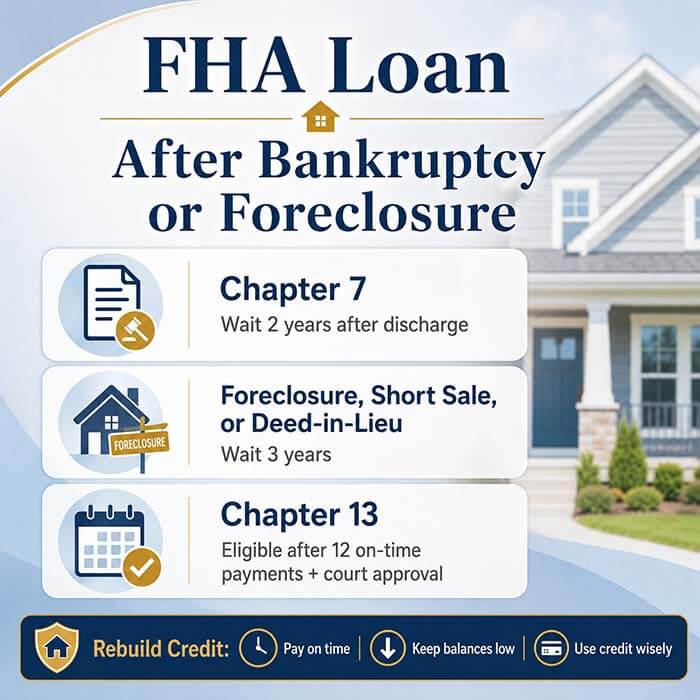 Imagine we’re chatting over coffee, and you’re curious about bouncing back and getting an FHA loan after hitting a rough patch with bankruptcy or losing a home.
Here’s How it Breaks Down into Everyday Talk:
Chapter 7 Bankruptcy:
- Chapter 7 Bankruptcy: This is like hitting the reset button.
- Once you’ve cleared all the steps and your bankruptcy is officially behind you, mark that date.
- Two years later, you can look into getting an FHA loan.
- It’s a time-out period to get you back on your feet.
Foreclosure or Losing Your Home in Another Way:
- If the house was taken back by the bank, sold for less than you owed (short sale), or you handed over the keys to avoid trouble (deed-in-lieu), you’ve got a three-year waiting game.
- After that, the FHA door is open again.
Chapter 13 Bankruptcy:
- This one is a bit different. You’re working on a plan to pay folks back over time.
- Once you’ve made a year of payments right on schedule, and the court gives you the thumbs up, you can start dreaming about an FHA loan.
Now, all this waiting is more than just sitting around. It’s prime time to re-establish credit to qualify for an FHA loan. The people who lend money want to see you back on the horse. No missed payments, juggling different types of credit wisely, and not maxing out those cards are key. It shows you’re managing money smartly, and that’s big for getting a loan.
Updates: New FHA Loan Guidelines
FHA loans remain the go-to option for borrowers with credit challenges. However, lenders are paying more attention to credit re-establishment. This means they want to see at least 12 months of consistent on-time payments on new credit accounts, especially secured credit cards. Additionally, FHA lenders may require a Verification of Rent (VOR) to ensure you’ve been making timely rent payments. This can be a key factor in getting approved, especially if your credit history is thin.
Maintain Stable Employment, as Lenders Prefer at Least Two Years with the Same Employer
- In addition to the 3.5% down payment, budget for other expenses such as closing costs.
- Obtaining pre-approval can help determine affordability and streamline your home search.
- Avoid major financial changes, such as changing jobs, making large purchases, or taking on new credit, until after your home purchase is complete.
FHA loans are available to people with poor credit if they meet certain requirements. By recovering from financial setbacks and following FHA guidelines, you can become a homeowner. Working with qualified professionals can also help you through the process.
Final Thoughts: Take Control of Your Credit Today
Re-establishing credit to qualify for an FHA loan is a journey, but it’s one you can start today. By following the right steps, you can improve your credit, qualify for a mortgage, and make your dream of owning a home a reality. Every punctual payment and every wise credit choice leads you nearer to obtaining the keys to your new home.
At Gustan Cho Associates, we’ve helped countless borrowers raise their credit scores and secure FHA loans—even after bankruptcy or foreclosure. If you’re ready to take the first step toward re-establishing your credit, we’re here to guide you every step of the way.
Need Help? Contact us today at 1-800-900-8569 or email us at gcho@gustancho.com. Our team of experts is available seven days a week, including evenings, weekends, and holidays, to help you achieve your homeownership goals.
Start Your Journey Today
Re-establishing your credit might seem daunting, but with the right steps, you’ll be on your way to a stronger financial future and a new home. Follow the guidelines in this article, stay committed, and remember: the road to homeownership is closer than you think.
FAQs: Re-Establishing Credit to Qualify for FHA Loan
What Does “Re-Establishing Credit to Qualify for FHA Loan” Mean?
Improving your credit to qualify for an FHA loan involves boosting your credit score after facing financial challenges like bankruptcy or foreclosure. This is crucial to demonstrate to lenders that you’re making positive financial progress and can manage a mortgage.
When Should I Start Re-Establishing Credit to Qualify for an FHA Loan?
After your bankruptcy has been discharged or your foreclosure process has concluded, it is crucial to rebuild your credit as soon as possible. Start early to improve your credit rating quickly and qualify for an FHA loan.
How Can I Quickly Re-establish credit to qualify for an FHA loan?
The fastest way to re-establish credit is by getting secured credit cards. Aim for three cards with at least a $500 limit each and pay them off in full every month.
Why is Re-Establishing Credit Important for Getting an FHA Loan?
Lenders need to see that you’ve managed your credit responsibly after a financial setback. Re-establishing credit shows that you’ve learned from past mistakes and are ready to take on a mortgage.
Can I Qualify for an FHA Loan with Bad Credit?
You can still qualify for an FHA loan even with a poor credit history. However, you must improve your credit by paying on time and managing new credit accounts responsibly.
Should I Hire a Credit Repair Company to Help Re-Establish Credit to Qualify for an FHA Loan?
Avoiding credit repair companies is usually better, especially if you plan to apply for a mortgage soon. They can sometimes cause delays or issues during the mortgage process by disputing credit items.
How Long Does Re-Establish Credit for an FHA Loan After Bankruptcy Take?
Improving your credit score can take up to a year if you take the right steps. Using secured credit cards and making payments on time can help you significantly improve your credit score.
What’s the Difference Between Re-Establishing Credit and Credit Repair?
Remember, there are two main approaches when trying to improve your credit. Re-establishing credit means building a new positive credit history, like getting secured credit cards. On the other hand, credit repair involves removing negative items from your credit report, but this only sometimes improves your score.
Can I Still Get an FHA Loan in Foreclosure or Bankruptcy?
If you’ve experienced foreclosure, you can qualify for an FHA loan after waiting three years. After bankruptcy, you must rebuild your credit before applying, and you’ll need to wait two years before qualifying.
What Happens if I Miss a Payment While Re-Establishing Credit to Qualify for an FHA Loan?
Missing a payment could lower your credit score and negatively impact your ability to qualify for an FHA loan. It is crucial to prioritize making timely payments while enhancing your credit to demonstrate to lenders that you are financially responsible.
If you have any questions about Re-Establishing Credit to Qualify for FHA Loan, please contact us at 800-900-8569. Text us for a faster response. Or email us at gcho@gustancho.com. The team at Gustan Cho Associates is available 7 days a week, on evenings, weekends, and holidays. This Guide About Re-Establishing Credit to Qualify for FHA Loan was updated on July 10, 2026.