

Buying a home can get frustrating when you are close to qualifying, but your credit score is holding you back. A few points may affect whether you qualify for a loan, how much you need for a down payment, or the mortgage rate offered to you. Learning how to increase FICO before applying for a mortgage is not about shortcuts or opening new accounts at the last minute. The safest approach is usually to lower reported credit card balances, keep every account paid on time, correct any real errors on your credit reports, and avoid taking on new debt while your lender reviews your file. The score you see in a credit app may not be the same score used for a mortgage. Before making major credit moves, ask your loan officer to review your mortgage credit report and help you focus on the changes that make the most sense for your situation.
Why Your Mortgage Credit Score May Be Different
The credit score you see in a banking app or free credit website may not be the same score your mortgage lender sees. Consumer apps may use a different scoring model, and the information on your report can change from one reporting cycle to the next. Mortgage lenders also review credit reports from all three major bureaus, so the score used for your loan may be different from the one you check on your own. Before paying off accounts, opening new credit, or disputing information, ask your loan officer which credit score model applies to your loan program. A mortgage-specific credit review can help you focus on the changes that matter most before applying. Understanding how to increase FICO through a mortgage-specific credit review can help you target the most impactful changes before submitting your application.
Start With Credit Card Balances
Credit card balances are often one of the fastest areas to review before applying for a mortgage. This is called credit utilization, which is how much of your available credit you use. A high reported balance can negatively impact your score, even if you consistently make all your payments on time.
For example, if your credit card has a $5,000 limit and the balance reported to the credit bureaus is $2,500, that card is using 50% of its available limit. Paying the balance down before the next statement reports may lower the utilization shown on your credit report.
You don’t need to maintain a balance to build credit. If you’re wondering how to increase FICO scores, it’s important to consult with your loan officer before making large payments or transferring funds between accounts to ensure that the timing aligns with your mortgage strategy.
Payment History Has the Biggest Impact
Your payment history shows lenders whether you have paid past credit obligations as agreed. Late payments, collection accounts, and charge-offs can all affect your credit profile, especially when they are recent. While older issues can still have significance, a recent late payment can be particularly harmful when working to improve your FICO score and qualify for a mortgage. A borrower preparing for pre-approval should make every payment on time, including payments on credit cards, auto loans, student loans, personal loans, and collection accounts. One new 30-day late payment can lower a score and raise questions during underwriting, even if the rest of the credit report looks strong. If you have past collections or charge-offs, do not assume paying them will automatically raise your score or remove them from your report. Review the account with your loan officer before taking action so you understand how it may affect your loan program and approval timeline.
Review Your Credit Reports for Real Errors
Before applying for a mortgage, review your credit reports carefully for information that does not belong there. Look for accounts that are not yours, incorrect balances or credit limits, duplicate collection accounts, late payments reported by mistake, and outdated personal information. Pay close attention to unfamiliar accounts or inquiries, which may be signs of identity theft.
Only dispute information that is inaccurate, incomplete, duplicated, or fraudulent. When considering how to increase FICO scores, refrain from disputing accurate negative accounts. Doing so can lead to delays and additional inquiries during the mortgage process.
Keep copies of account statements, payment records, creditor letters, and any identity theft documents that support your claim. Your loan officer should also be aware of any open disputes before your mortgage credit is pulled, especially if you are close to pre-approval.
Avoid New Debt Before Applying for a Mortgage
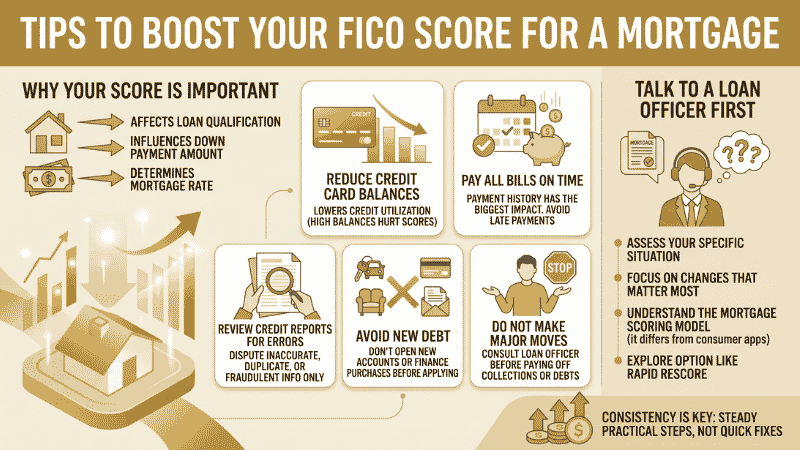 Refrain from taking on new debt while preparing for a mortgage. Opening a new credit card, financing a car, buying furniture on a store payment plan, or using buy-now-pay-later accounts can change your credit profile right before the lender reviews it. Even co-signing for someone else can create a new monthly obligation that may affect your application. New accounts and hard inquiries may affect your FICO score, while new payments can raise your debt-to-income ratio. Higher credit card balances can also hurt both areas at the same time. A lender looks at your monthly debts along with your income, so a new car payment or a financed furniture purchase may reduce the amount you can qualify to borrow. Understanding how to increase FICO is essential to maintaining a healthy credit profile. Keep your spending steady until closing. Before making a large purchase, applying for credit, or co-signing a loan, talk with your loan officer first.
Ready to Boost Your FICO Score and Qualify for a Mortgage?
Contact us today to learn strategies to quickly increase your credit score and get one step closer to homeownership.
Do Not Open Accounts Just to Create a Better Credit Mix
Do not open secured credit cards, installment loans, or credit-builder accounts right before mortgage shopping to try to raise your score. A mix of account types can be part of a credit profile, but opening new accounts shortly before applying may not help in time.
Opening new accounts can lower your credit history’s average age and may add hard inquiries to your report. They can also create new monthly payments that affect your debt-to-income ratio.
For most borrowers, understanding how to increase FICO scores is more effectively achieved by managing existing accounts rather than pursuing quick fixes. If your credit history is thin or you have no active accounts, ask your loan officer before opening any new accounts. The right move depends on how soon you plan to apply and the mortgage program you are using.
When a Rapid Rescore May Help
A rapid rescore is a lender-requested update to a mortgage credit report after a real change in your credit information. It may be useful when you have paid down a credit card balance, corrected an inaccurate account, or received proof that a creditor updated information that has not appeared on your report yet. Your loan officer submits supporting documents through the credit reporting company. A rapid rescore is not credit repair, and it cannot remove accurate late payments, collections, charge-offs, or other negative information just because you need a higher score. A quick rescore could allow your lender to access updated information more promptly, but it does not guarantee an increase in your FICO score or that you will be approved for a mortgage. If you’re looking for ways on how to increase FICO, your loan officer can assess whether a rapid rescore is a beneficial option for your specific circumstances before proceeding with the request.
Your Credit Score Is Not the Only Part of Mortgage Approval
A stronger FICO score can improve your mortgage options, but it is only one part of the approval process. Lenders also review your income, monthly debts, debt-to-income ratio, assets for the down payment and closing costs, employment history, and the property you plan to buy or refinance.
The underwriter also looks at the overall file and the automated underwriting findings, when applicable. A high score does not replace stable income, documented funds, or an acceptable debt-to-income ratio. On the other hand, a borrower with a lower score may still qualify when the rest of the file is strong, and the loan program allows it.
Before focusing solely on how to increase your FICO score, review your full mortgage profile with a loan officer. That can show whether credit is the main issue or whether another part of the file needs attention.
What To Do If You Are Still Below the Needed Score
Not meeting the credit score required for a mortgage doesn’t have to put your home-buying plans on hold. You might need some time to pay down credit card balances, strengthen your payment history, or fix any errors on your credit reports. A loan officer can assist in reviewing your file and provide guidance on how to increase your FICO score, helping you understand what adjustments are necessary before reapplying. Depending on your situation, another loan program may have a different credit requirement or allow a larger down payment. An eligible co-borrower may also strengthen the application, although their income, debts, and credit will be reviewed, too. In some cases, manual underwriting may be available when automated underwriting does not approve the file. The right option depends on the full mortgage profile, not just one credit score. Review the timing and next steps with a loan officer before making major changes to your credit or finances.
Final Thoughts on How to Increase FICO for a Mortgage
Learning how to increase FICO for a mortgage is usually about steady, practical steps instead of quick fixes. Keep credit card balances low, pay every bill on time, review your reports for real errors, and avoid new debt before and during the mortgage process. Before you apply, have a loan officer review your mortgage credit profile along with your income, debts, and available funds. A mortgage-specific credit review can help you understand which steps make sense for your situation and whether you are ready to move forward.
Frequently Asked Questions About How to Increase FICO
How Long Does It Take for a FICO Score to Increase?
The timeline depends on what is changing on your credit report. A lower credit card balance may be reflected after the creditor reports the update, while rebuilding after late payments or other negative credit history often takes longer. There is no set timeline because every credit profile is different.
Can I Increase My FICO Score by 100 Points in 30 Days?
A 100-point increase in 30 days is possible in limited situations, such as correcting a major reporting error or paying down heavily used credit cards. It is not typical, and no company can promise a specific increase in score. Most borrowers make steady progress by making consistent changes and allowing updated information to be reported.
Does Checking My Own FICO Score Hurt My Credit?
Checking your credit score is considered a soft inquiry and will not negatively impact your FICO score. However, applying for new credit—like a credit card, auto loan, or mortgage—results in a hard inquiry that can affect your score.
Does Mortgage Pre-Approval Affect My FICO Score?
Some lenders use a hard credit inquiry when they issue a mortgage pre-approval, while others may start with a soft credit check. Ask the lender before they pull credit. When you compare mortgage offers within a focused shopping period, FICO scoring models generally treat those mortgage inquiries differently from several unrelated applications for new credit.
Can Becoming an Authorized User Raise My FICO Score?
Becoming an authorized user may help if the primary cardholder has a long history of on-time payments and keeps the balance low. It can also hurt if that account has late payments or high credit card utilization. An authorized-user account should not replace building positive credit in your own name.
Should I Request a Higher Credit Limit Before Applying for a Mortgage?
A higher credit limit may lower your utilization percentage if your balances stay the same. However, some credit card companies may perform a hard inquiry before approving an increase. Ask the card issuer whether it will require a hard pull, and speak with your loan officer before making the request.
Can I Get a Mortgage If I Do Not Have a FICO Score?
It may be possible, depending on the loan program and lender. Some mortgage programs allow manual underwriting with non-traditional credit, such as documented rent, utility, insurance, or other recurring payment history. These loans have additional documentation requirements and are not available through every lender.
What FICO Score Do I Need to Buy a House?
There is no single FICO score that guarantees mortgage approval. Minimum score requirements vary by loan program, lender, property type, down payment, and the strength of the rest of your file. Income, debt-to-income ratio, assets, and payment history also affect the decision.
This article about “How To Increase FICO Scores For a Mortgage” was updated on June 25th, 2026.
