

A condo can look perfect on the outside. However, the mortgage can still run into problems if the condo project does not meet lender guidelines. Many buyers get pre-approved based on their credit, income, down payment, and debt-to-income ratio, only to find out later that the condo building itself must also be approved.
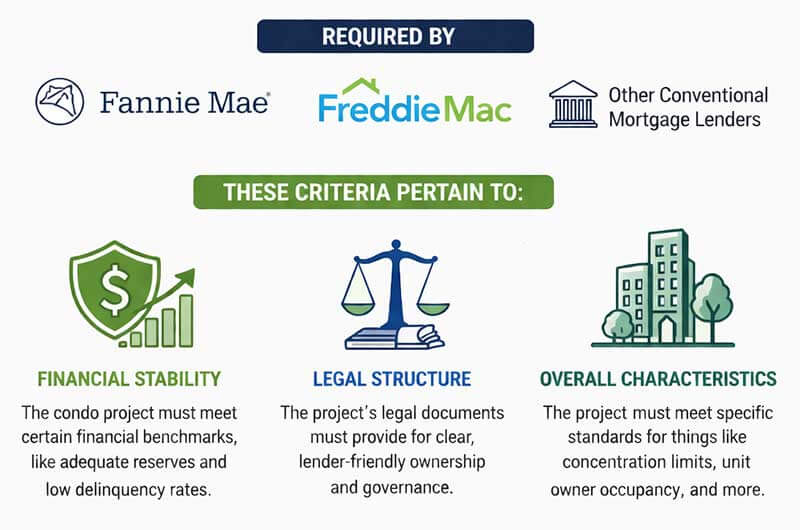
That is why warrantable condos matter. Warrantable condos are condo projects that meet the financing rules for conventional mortgage loans through Fannie Mae or Freddie Mac. Depending on the loan program, the lender may also need to review FHA, VA, or other investor guidelines. The review can include the condo association, budget, reserves, insurance, litigation, owner-occupancy, investor concentration, commercial space, and other project details.
Before a buyer spends money on an appraisal, inspection, or non-refundable costs, it is smart to ask whether the condo project can be financed. A strong borrower can still have a loan denied if the condo project fails review. Understanding how warrantable condo loans work can help buyers avoid delays, denied financing, and last-minute closing problems.
What Are Warrantable Condos?
Warrantable condos are condo projects that meet conventional mortgage guidelines from Fannie Mae or Freddie Mac. When a condo is warrantable, the buyer may be able to use a conventional loan to purchase or refinance the unit.
The key point is that the borrower is not the only one being reviewed. The lender must also review the condo project. This can include the HOA budget, master insurance policy, reserves, pending litigation, commercial space, investor ownership, owner-occupancy, special assessments, and whether the project is complete and properly managed.
If the condo is non-warrantable, that does not always mean the buyer cannot get financing. It means the loan may need a different path. Depending on the situation, the buyer may need an FHA, VA, portfolio, non-QM, jumbo, or another specialty condo loan program. The right option depends on the borrower’s credit, down payment, occupancy, loan size, and the reason the condo project does not meet standard conventional guidelines.
What Makes a Condo Warrantable?
A condo is usually considered warrantable when the condo project meets the mortgage guidelines for the loan program being used. The borrower still has to qualify for the loan, but the condo project must also pass review. Lenders may look at the HOA budget, reserves, insurance, owner-occupancy, investor ownership, litigation, commercial use, special assessments, and whether the project is complete.
HOA Budget and Reserves
The HOA budget is one of the first items a lender may review. The condo association needs sufficient income to cover normal expenses, maintain the property, and fund future repairs. If the HOA has weak reserves, poor budgeting, or too many owners behind on HOA dues, the project may raise concerns during underwriting.
Buyers should ask whether the HOA has enough reserves, whether dues are being collected on time, and whether there are current or planned special assessments. A low monthly HOA fee may sound attractive, but it can be a warning sign if the association is not collecting enough money to maintain the property.
Master Insurance Coverage
The condo association usually needs a master insurance policy that meets lender guidelines. This may include coverage for the building, common areas, liability, and other required protection. If the policy is missing, expired, underinsured, or written in a way that does not meet lender requirements, the loan can be delayed or denied.
Buyers should not assume the warrantable condos have acceptable insurance just because the HOA has a policy. The lender must review the actual coverage. Insurance issues can become a last-minute problem if the documents are not requested early.
Owner-Occupancy and Investor Concentration
Lenders may review the number of units that are owner-occupied and those owned by investors. A project with too many rentals or too much investor ownership may be viewed as higher risk. The lender may also check whether one person, company, or entity owns too many units in the project.
This does not mean every condo with rentals is a problem. The concern is whether the project continues to operate primarily as a residential condo community and meets the loan program’s guidelines.
Pending Litigation or Structural Issues
Pending litigation can affect condo financing. Not every lawsuit will stop a loan, but the lender needs to know what the lawsuit is about. A small collection dispute may be treated differently from a lawsuit involving construction defects, safety issues, structural repairs, water damage, or major financial exposure to the HOA.
Structural issues and deferred maintenance are also important. If the building has major repairs, unsafe conditions, large unpaid repair bills, or unresolved inspection concerns, the lender may require more documentation before approving the project.
Commercial Space and Hotel-Like Use
A condo project may run into problems if too much of the property is used for commercial space or business activities. Lenders may also review whether the project operates like a hotel, condotel, resort, or short-term rental business.
Hotel-like services, front-desk rentals, daily rentals, mandatory rental pools, or heavy business income can make a condo harder to finance with standard conventional financing. Buyers should ask early if the building has short-term rentals, commercial units, or rental restrictions that could affect approval.
New Construction, Conversions, and Phasing
New-construction condos, recently converted buildings, and projects with incomplete phases may require a deeper review. The lender may need to verify whether the project is complete, whether enough units have been sold, whether the HOA has been turned over to the unit owners, and whether the legal documents are acceptable.
A condo project may also be reviewed differently depending on the loan program. Conventional loans follow Fannie Mae or Freddie Mac guidelines. FHA and VA condo loans have their own condo approval rules. This is why a condo may work for one loan program but not another.
Benefits of Buying Warrantable Condos
Warrantable condos can make the mortgage process easier because more lenders may be willing to finance the property. When a condo project meets Fannie Mae or Freddie Mac guidelines, the buyer may have access to standard conventional loan options instead of being limited to specialty condo financing.
This can help buyers who want lower down payment choices, more predictable underwriting, and standard loan pricing. For example, a buyer purchasing a warrantable condo may be able to use a conventional loan if they meet the credit, income, asset, debt-to-income ratio, and occupancy requirements for that program.
Warrantable status does not mean the loan is automatically approved. The borrower still has to qualify for the mortgage, and the condo project must pass the lender’s review. Credit score, down payment, income stability, reserves, loan amount, occupancy, and debt-to-income ratio can all affect the final approval.
The biggest benefit is fewer surprises. When the condo project is reviewed early, the buyer and lender can identify possible issues before the file gets too close to closing. That can help avoid last-minute problems with the HOA budget, insurance, litigation, special assessments, investor concentration, or project approval.
Warrantable Condo Loans—Get Pre-Approved With Confidence
Warrantable condos typically qualify for better rates and smoother approvals. Share the condo address and your details, and we’ll confirm eligibility and match you with the best loan options.What Buyers Should Ask Before Making an Offer on Warrantable Condos
Before making an offer on warrantable condos, buyers should ask whether the condo project is warrantable. A buyer can be fully pre-approved based on income, credit, assets, and debt-to-income ratio. However, the loan can still run into problems if the condo project does not pass the lender’s review.
One of the first questions to ask is whether the lender has already reviewed the condo project. Some condo buildings are easier to approve because the lender has already reviewed them. Others may require a full condo questionnaire, HOA budget, master insurance policy, litigation details, and other project documents before the lender can make a decision.
Buyers should also ask if the HOA has any pending litigation. Not every lawsuit will stop a condo loan, but the lender needs to know what the lawsuit involves. A small dispute may be treated differently from a lawsuit involving construction defects, safety issues, water intrusion, structural repairs, or a large financial risk to the condo association.
Special assessments should also be checked early. A special assessment means the HOA is charging unit owners extra money, often for repairs, improvements, insurance increases, or budget shortages. Some special assessments are manageable, while others may signal more serious financial or property condition issues.
The buyer should also ask if the master insurance policy is current and acceptable to lenders. Condo insurance problems can delay a loan near closing if the coverage has expired, is insufficient, lacks required protections, or is written in a way that does not meet loan program guidelines.
Buyers should not wait until the appraisal is ordered to ask these questions. The safer move is to ask about condo approval before spending money on inspections, appraisals, or non-refundable deposits. A condo may look like a great deal, but the financing has to work before the deal can close.
Why a Condo May Be Non-Warrantable
A condo may be considered non-warrantable when the condo project does not meet standard mortgage guidelines. This does not always mean the buyer cannot get a loan, but it can limit the number of lenders and loan programs available.
A common reason is when the HOA is in a lawsuit. If the condo association is dealing with legal issues, the lender wants to know what’s going on. A minor dispute may not be a major issue, but litigation involving construction defects, safety concerns, structural problems, water damage, or large financial exposure can make the project harder to finance.
Insurance can also create problems. If the master insurance policy has expired, is too low, is missing required coverage, or does not meet the lender’s guidelines, the loan may be delayed or denied until the issue is corrected.
Too many investor-owned units may also make a condo harder to finance. Lenders want to know whether the project is primarily a residential condo community or is heavily controlled by investors, landlords, or a single large ownership group.
Commercial space and hotel-like activity can also affect warrantability. A project may be harder to approve if it has too much commercial use, short-term rentals, front-desk rental services, mandatory rental pools, or operates more like a hotel or resort than a regular condo building.
Pending structural repairs, deferred maintenance, or large special assessments can also raise red flags. If the building needs major repairs or the HOA does not have enough funds to complete the required work, the lender may require additional documentation before approving the project.
Large unpaid HOA dues can be another issue. If too many unit owners are behind on HOA payments, the lender may question whether the condo association has sufficient funds to maintain the property and pay regular expenses.
The important point is this: non-warrantable condos does not always mean impossible. It means the buyer may need a different loan program, a larger down payment, a lender with more flexible condo options, or a full condo project review before moving forward.
Why Condo Guidelines Can Change Before Closing
Condo approval is not always a one-time issue. A condo project may look acceptable early in the process, but new information can change the lender’s decision before closing. This is why buyers should make sure the condo review is started as early as possible.
One issue that can change approval is new litigation. If the HOA becomes involved in a lawsuit after the buyer makes an offer, the lender may need to review the details before moving forward. Litigation involving structural defects, safety issues, water damage, construction problems, or significant financial exposure can delay or create financing problems.
Insurance can also change before closing. If the master insurance policy expires, coverage changes, or the lender determines the policy does not meet loan program guidelines, the loan may be paused until the insurance issue is resolved.
Special assessments can also affect approval. If the HOA adds a new assessment for repairs, insurance increases, budget shortages, or major building work, the lender may need to review whether the assessment creates risk for the condo project or affects the borrower’s monthly payment.
HOA documents can also reveal problems that were not obvious at the start. The lender may find weak reserves, too many unpaid HOA dues, budget shortages, pending repairs, high investor concentration, or project rules that do not meet program guidelines.
A condo can also fail the lender’s project review even if the buyer is fully qualified. This is one of the most frustrating parts of condo financing. The borrower may have strong credit, stable income, and enough money for closing, but the loan can still be denied if the condo project does not meet the lender’s requirements.
The safest approach is to check warrantable condos approval before incurring appraisal, inspection, or other non-refundable costs. An early review gives the buyer more time to fix issues, switch loan programs, or get a second opinion from a lender with more condo financing options.
Final Thoughts on Warrantable Condo Loans
Buying a condo is different from buying a single-family home because the lender must review more than the borrower. Your credit, income, down payment, assets, and debt-to-income ratio matter, but the condo project must also meet the loan program’s guidelines.
Warrantable condos can make financing easier because more lenders may be willing to approve the property through conventional loan programs. A non-warrantable condo may still be financeable, but it can require a different loan option, a larger down payment, stronger borrower qualifications, or a lender with more flexible condo financing programs.
The best time to ask about condo approval is before you spend money on the appraisal, inspection, or other non-refundable costs. Buyers should ask whether the condo project has been reviewed, whether the HOA has litigation, whether there are special assessments, whether insurance is current, and whether the project meets the loan program being used.
If one lender says the condo will not work, that does not always mean the deal is dead. Condo approval can vary by lender, investor, and loan program. A second opinion may help identify another path, especially if the issue is related to overlays, project review type, or specialty condo financing.
The key is to review the condo project early. That gives buyers more time to solve problems, switch loan programs, or avoid a property that may create financing trouble before closing.
Frequently Asked Questions About Warrantable Condos:
Can A Condo Be Approved By One Lender And Denied By Another?
Yes, this can happen. One lender may deny a condo loan due to overlays, investor rules, insurance concerns, litigation, or project review requirements. Another lender may have a different condo review process or access to a loan program that can work. This is why a second opinion can be valuable before giving up on the condo purchase.
How Long Does A Condo Project Review Take?
Condo project review can take a few days or longer, depending on how fast the HOA, management company, insurance agent, and lender provide the required documents. Delays often happen when the condo questionnaire, master insurance policy, HOA budget, litigation details, or special assessment information is incomplete. Buyers should ask for the condo review early in the loan process.
Who Fills Out The Condo Questionnaire?
The condo questionnaire is usually completed by the HOA, property management company, or condo association representative. The lender uses the questionnaire to review project details, including insurance, budget, ownership mix, litigation, reserves, commercial space, delinquent HOA dues, and project completion. Some HOAs charge a fee to complete the questionnaire.
Can A Condo Loan Be Denied After The Appraisal?
Yes, a condo loan can be denied after the appraisal if the condo project fails the lender’s review. The appraisal looks at the unit’s value and condition, but the lender still needs to approve the condo project. Problems with insurance, litigation, HOA finances, special assessments, investor ownership, or project documents can still affect approval.
Is It Harder To Get A Mortgage On A Condo Than A House?
It can be harder because the lender must review both the borrower and the condo project. With a single-family home, the lender mainly reviews the borrower, the property value, and the property condition. With a condo, the lender also reviews the HOA, insurance, reserves, litigation, budget, and project rules. A strong borrower can still run into trouble if the condo project does not qualify.
Can FHA Or VA Approve A Condo That Is Not Warrantable For Conventional Financing?
Sometimes, but it depends on the project and the loan program rules. FHA, VA, Fannie Mae, and Freddie Mac have different condo approval requirements. A condo that does not work for a conventional loan may still have another path, but the lender must review the specific reason the project failed and match it with the right program.
Should I Check Condo Approval Before Making An Offer?
Yes, buyers should ask about condo approval as early as possible. At a minimum, ask whether the project has been reviewed before, whether the HOA has litigation, whether there are special assessments, whether the insurance is current, and whether the project is approved for the loan program being used. An early review can help buyers avoid paying for an appraisal, inspection, or other non-refundable costs before they know whether the condo can be financed.
This article about “Warrantable Condos: Don’t Risk Loan Denial” was updated on June 8, 2026.
